

A new AI-powered simulation model allows researchers and architects to design well-ventilated indoor spaces that keep harmful smoke away.
Articles on Wildfires
Displaying 101 - 120 of 587 articles
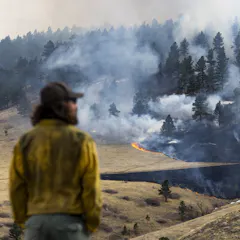
Increasing awareness can help close the gap on the number of people signed up for emergency alerts, but that won’t happen without increased accessibility.

Indigenous forest management practices can help control wildfires’ frequency and severity, while also restoring people’s connections to the land.

Evacuations do not impact everyone the same way, and Indigenous evacuees can be re-traumatized and treated poorly.

The challenge is not firefighting capacity nor convincing people to help; it is coordinating efforts to prioritize safety and efficiency.
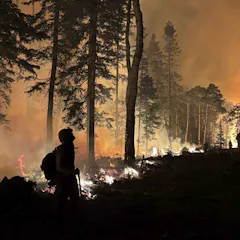
The Trump administration and members of Congress propose cutting environmental reviews and public involvement to boost logging. But data show reviews aren’t the problem.
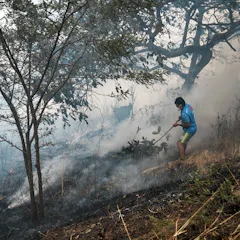
Even though you may mostly hear about fires in the US, Canada, Europe and Australia, it’s Africa that has far and away the most acreage burned and people exposed to fire.

Researchers highlight the experiences of workers across Canada whose livelihoods and communities have been impacted by climate change.

Fire isn’t the enemy. Poorly timed, unmanaged fire is.

AI-generated images of wildfires have been circulating online, leading the British Columbia government to issue an online warning.

Water systems are vulnerable to melting plastic components, toxic contamination and failures that can leave firefighters without flowing water.

As climate change worsens extreme weather events, people in rural areas will increasingly seek refuge in urban areas. Cities must prepare to host and care for them.

Building your own DIY air cleaner is an easy and cost-effective way to remove smoke and harmful particles from the air.
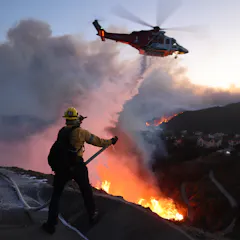
Parts of California are seeing fire season start more than 10 weeks earlier now than in the 1990s.
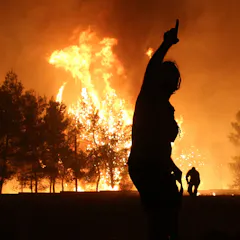
Fire-scorched land is less able to handle climate-driven downpours.

Oral history contributors were able to share their stories, and many felt a sense of healing.
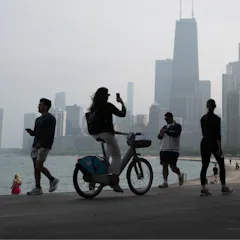
As wildfire smoke becomes a frequent summer hazard across large parts of the US, knowing the risk at the neighborhood scale matters for human health.

Reducing risk and managing beneficial fires require co-ordinated action from governments, communities and individuals.

Knowing how mountain winds create fire conditions is useful for monitoring the danger.
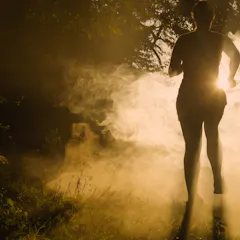
Factors like your health status and how hard you exercise can help gauge the risk of wildfire smoke exposure.
Top contributors
-

Professor of Pyrogeography and Fire Science, University of Tasmania
-
Associate Professor of Civil Engineering, Boise State University; United Nations University
-
Professor of Civil, Environmental and Ecological Engineering, Purdue University
-
Professor of Geography and Director of the Centre for Wildfire Research, Swansea University
-
Professor of Engineering, University of California, Merced
-
Assistant Professor of Environmental and Radiological Health Sciences, Colorado State University
-
Fellow, Queen's Institute for Energy and Environmental Policy, School of Policy Studies, Queen's University, Ontario
-
Tenured Scientist (IMB-CSIC, Spain) & Honorary Associate Prof. (SU, UK), Swansea University
-
Wildfire Specialist, University of California Cooperative Extension; Adjunct Professor at the Bren School, University of California at Santa Barbara, University of California, Santa Barbara
-
Emeritus Professor of Life Sciences, Arizona State University
-
Professor of Geology and Environmental Geosciences, University of Dayton
-
Professor, Disaster & Emergency Management, Faculty of Liberal Arts & Professional Studies & Director, CIFAL York, York University, Canada
-
Professor of Fire Ecology, University of Montana
-
Research Fellow in Environmental Science, University of Tasmania
-
Reader in Cultural Geography and Communication, University of Westminster