
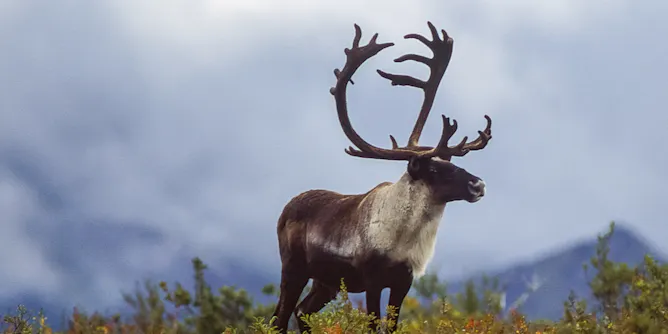
Rapid changes underway in the Arctic affect the region’s people and wildlife, and the entire planet.
Articles on Wildfires
Displaying 181 - 200 of 587 articles
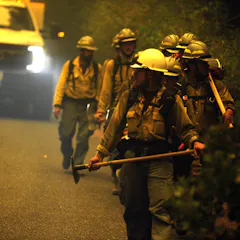
Firefighters work long hours to protect communities, often in dangerous conditions and for low starting pay. Surveys show the impact that can have on their physical and mental health.

The 1,000-ton rule states that a person is killed every time humanity burns 1,000 tons of fossil carbon. Minimizing the deaths caused by climate change should be a global priority.

A powerful storm hitting the West Coast combines these phenomena for a wet week of erratic weather, as a meteorologist explains.
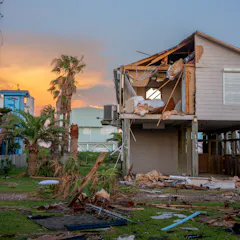
Insurance costs are rising quickly across much of the country. Hurricanes are part of the reason, but it’s the other perils common across the Midwest and Great Plains that complicate costs.
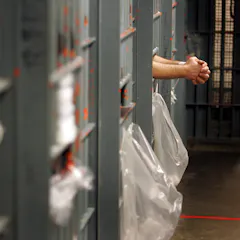
Prisons and jails are difficult to evacuate when wildfires or storms approach. Many of these facilities lack evacuation plans and may keep incarcerated people on-site instead of moving them to safety.
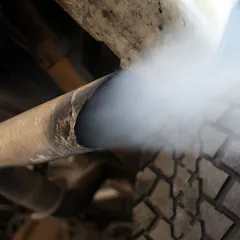
Ultrafine particles are approximately one-thousandth the width of a human hair. But because of their tiny size, they are easily inhaled – and typically more dangerous than larger particles.
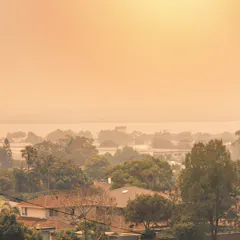
New international research reveals climate change increased the proportion of wildfire smoke-related human deaths tenfold between the 1960s and 2010s. Here’s what that means for Australia.

The municipality of Jasper is located within a national park, making for a unique situation regarding land ownership and planning.
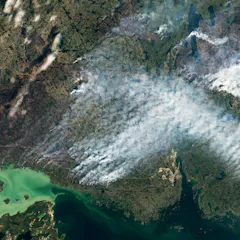
Global carbon emissions from forest fires have increased by 60% over the past two decades, with the largest contributions coming from fires in Siberia and western North America.
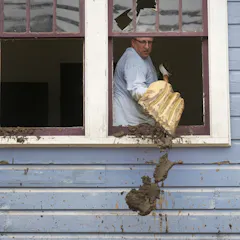
Disasters such as hurricanes Helene and Milton often hit low-income and other disadvantaged groups hardest. 2 policy experts suggest ways long-term aid could help.
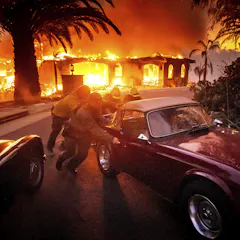
The US has seen huge wildfires in recent years. The vast majority of those that affect communities are started by human activity.
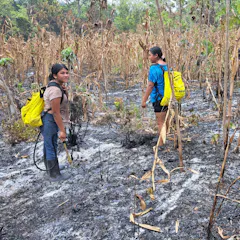
Recent wildfires in Belize shows how we must work together to revitalize Indigenous knowledge systems and plant the seeds of collaborative climate action.
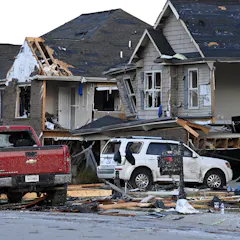
Insurers are raising rates quickly, and it’s not just in California and Florida. They’re often shrinking coverage at the same time.
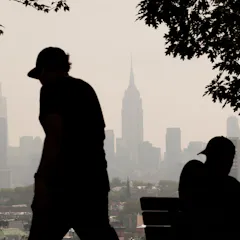
Which is riskier for your health: a few days of very bad PM₂.₅ exposure or many more days of slightly bad exposure? Researchers developed new metrics to provide better answers.
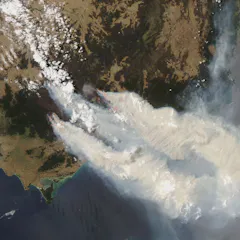
More frequent wildfires, emissions from rocket launches and more satellite debris burning up in the atmosphere all contribute to ozone depletion and could slow the recovery of the ozone layer.
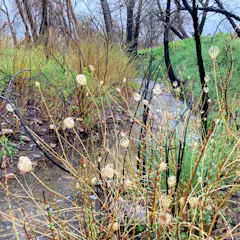
After wildfires in California and Colorado cities, levels of harmful metals in the water jumped. Nature sent up a red flag.

Just like fires can contaminate municipal water systems by melting pipes, farms’ and ranches’ water supply systems are at risk. A first-of-its-kind study after the Maui fires explores the harms.
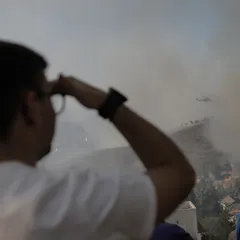
The worst fires have doubled in frequency and intensity since 2003.

Carbon lost during the 2018 fire season in Sweden could take 40 years to return to trees and soil.
Top contributors
-

Professor of Pyrogeography and Fire Science, University of Tasmania
-
Associate Professor of Civil Engineering, Boise State University; United Nations University
-
Professor of Civil, Environmental and Ecological Engineering, Purdue University
-
Professor of Geography and Director of the Centre for Wildfire Research, Swansea University
-
Professor of Engineering, University of California, Merced
-
Assistant Professor of Environmental and Radiological Health Sciences, Colorado State University
-
Fellow, Queen's Institute for Energy and Environmental Policy, School of Policy Studies, Queen's University, Ontario
-
Tenured Scientist (IMB-CSIC, Spain) & Honorary Associate Prof. (SU, UK), Swansea University
-
Wildfire Specialist, University of California Cooperative Extension; Adjunct Professor at the Bren School, University of California at Santa Barbara, University of California, Santa Barbara
-
Emeritus Professor of Life Sciences, Arizona State University
-
Professor of Geology and Environmental Geosciences, University of Dayton
-
Professor, Disaster & Emergency Management, Faculty of Liberal Arts & Professional Studies & Director, CIFAL York, York University, Canada
-
Professor of Fire Ecology, University of Montana
-
Research Fellow in Environmental Science, University of Tasmania
-
Reader in Cultural Geography and Communication, University of Westminster