

The federal government’s role in disaster management has been to provide some funding. However, that limited role can lead to poor co-ordinaton.
Articles on Wildfires
Displaying 41 - 60 of 587 articles
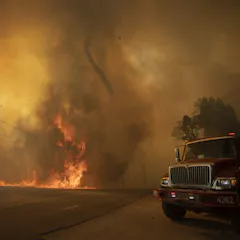
Wildfire smoke can even affect the weather downwind.
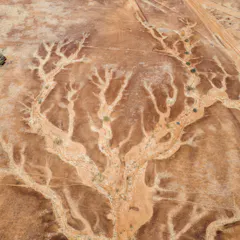
We have to stop thinking of droughts simply as a static state of low moisture. Rapid drought changes can send fire risk soaring.
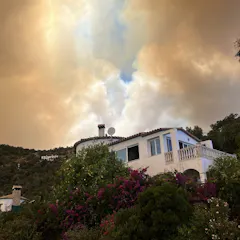
Spain’s building codes and forest management plans do not properly protect homes built in or near wooded areas.

Spain spends huge sums on controlling and putting out wildfires, but often overlooks prevention.
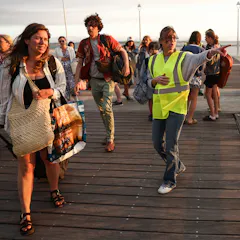
The Gironde wildfires reveal how logistics are key in firefighting. Emergency operations in the French region are twofold: providing relief and evacuating large populations.
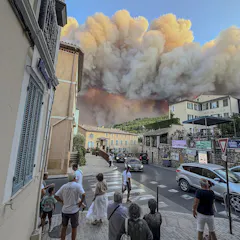
The fires facing Spanish and French firefighters are harder to put out – and much more intense.
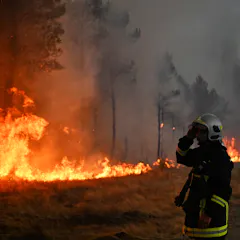
Wildfire smoke does not carry a passport. Canada cannot thin, log, rake or prescribe-burn its way out of a planetary crisis.
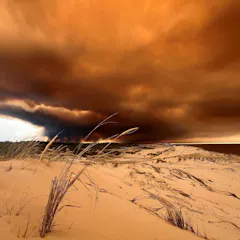
A wildfire can be explained by today’s barbecue, yesterday’s wind direction, a dry spring, four decades of land use change, or a century of emissions.
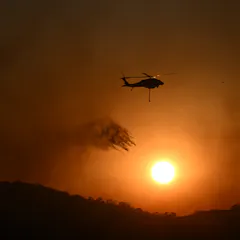
Australia may enter spring with a highly flammable landscape – and no room for complacency.
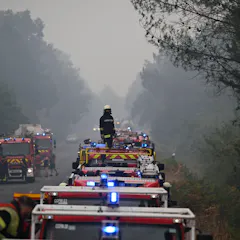
Australia has a well-established national wildfire warning system, so how does this compare with the UK’s approach?

Buying more planes will not help Canada tackle wildfires if there is not a thought-out plan for their use well ahead of a fire.
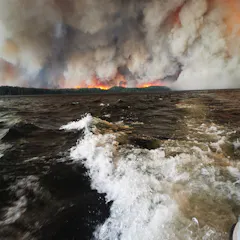
A speedy response to wildfires is essential when a fire is moving fast, but speed becomes a hollow metric when First Nations aren’t involved in managing the emergency.
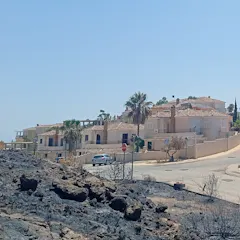
Deadly fires in Almería, Spain, have shown that firefighting alone is not enough – people need to be properly prepared.
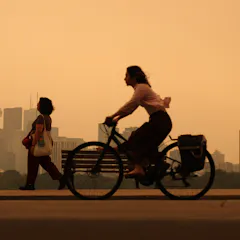
When you breathe in wildfire smoke, harmful particles can travel deep into your body.
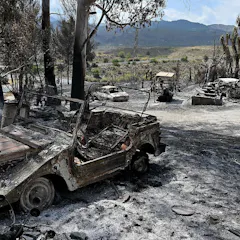
Carefully designed alert systems, evacuation, and a prepared population can save lives.

As climate-related hazards become more frequent and severe, protecting our health will require moving beyond warnings toward prevention.
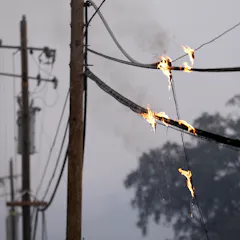
Utilities face a dilemma: How to deliver power through dry, windy regions without accidentally starting a catastrophic fire.
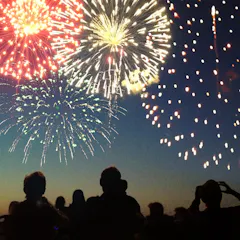
Every year, the number of human-caused fires spikes on July 4, and many of them are related to fireworks. When trees and grasses are dry and the temperature high, the risk rises even more.
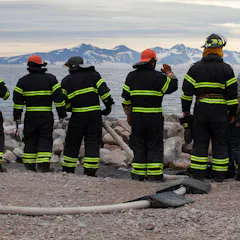
It’s the new reality in an Arctic where the climate is changing fast.
Top contributors
-

Professor of Pyrogeography and Fire Science, University of Tasmania
-
Associate Professor of Civil Engineering, Boise State University; United Nations University
-
Professor of Civil, Environmental and Ecological Engineering, Purdue University
-
Professor of Geography and Director of the Centre for Wildfire Research, Swansea University
-
Professor of Engineering, University of California, Merced
-
Assistant Professor of Environmental and Radiological Health Sciences, Colorado State University
-
Fellow, Queen's Institute for Energy and Environmental Policy, School of Policy Studies, Queen's University, Ontario
-
Tenured Scientist (IMB-CSIC, Spain) & Honorary Associate Prof. (SU, UK), Swansea University
-
Wildfire Specialist, University of California Cooperative Extension; Adjunct Professor at the Bren School, University of California at Santa Barbara, University of California, Santa Barbara
-
Emeritus Professor of Life Sciences, Arizona State University
-
Professor of Geology and Environmental Geosciences, University of Dayton
-
Professor, Disaster & Emergency Management, Faculty of Liberal Arts & Professional Studies & Director, CIFAL York, York University, Canada
-
Professor of Fire Ecology, University of Montana
-
Research Fellow in Environmental Science, University of Tasmania
-
Reader in Cultural Geography and Communication, University of Westminster