

A method for measuring the world’s crucial carbon sinks finds that the ocean’s so-far-increasing ability to help might taper off in the future.
Articles on Forests
Displaying 1 - 20 of 508 articles
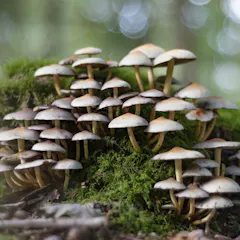
Some fungi are having an abundant year, but other types are struggling because of dry summer weather.
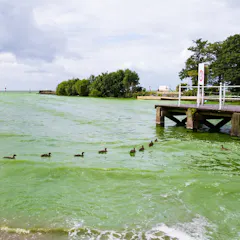
Looking at what happened when Atlantic woodlands covered the British Isles helped researchers understand how to restore polluted waterways.
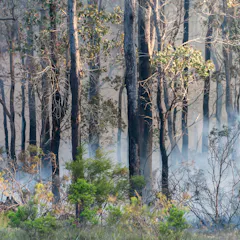
Our latest research examined eucalypt forests burnt by the 2019-20 bushfires.

Extreme greenhouse events in the past killed many plants – but also gave rise to new ones.
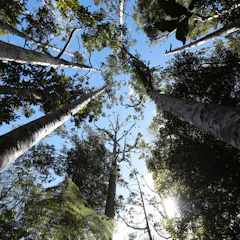
New research shows forests affected by severe kauri dieback can shift from accumulating carbon to losing it, with mature trees particularly affected.

To survive dry spells, trees stop the water-rich process of photosynthesis. When nature’s natural carbon capture machine grinds to a halt entire forests end up producing more CO₂ than they absorb.
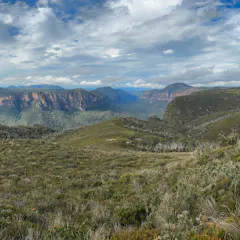
Collecting data from sensors in remote woodlands has long required arduous treks. What if sensors could transmit data in real time?

Wildfire strategy tends to break into three distinct camps today, each focusing heavily on one approach over the others. Successful management requires them all.

As storms, wildfires, and floods strike in ever-closer succession, an architect with disaster risk science expertise explains why resilience is built between hazards, not during them.

The proportion of a watershed that is logged isn’t the only factor that determines flood risk. The landscape and climate matter too.
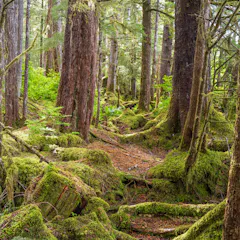
The courts have rejected similar arguments before. Meanwhile, maintenance costs are rising, and the Forest Service’s own data contradicts the administration’s wildfire claims.
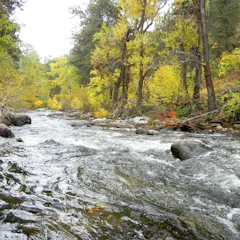
Understanding what happened in these forests 56 million years ago may help humanity recognize similar thresholds before we cross them again, the lead author of a new study writes.
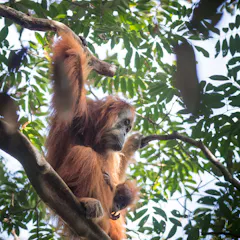
Multiple pressures are acting simultaneously in threatening Tapanuli orangutan — from extractive industries to logging to agricultural expansion and, increasingly, climate-related disasters.
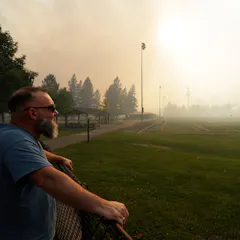
Extreme fire conditions converged in suburban neighborhoods built into the forests, shrubland and grasslands and quickly spread.
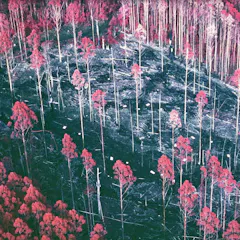
There is no silver bullet for managing forests, but this study answers some historic questions.
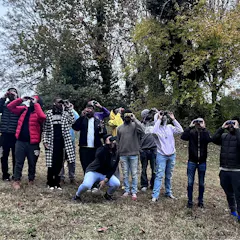
With social media communities and naturalist apps, birding is easier to get into than ever. A psychologist explains why it may also be just what the doctor ordered.
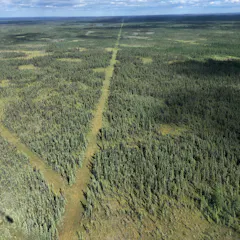
Seismic lines fragment forests and alter their ability to act as habitats and provide climate change mitigation benefits.

A tick disease researcher explains the risks and how she avoids bringing home ticks from both work and walking her dog in the woods. Lint rollers, tick checks and some types of chemicals play a role.

A new study unpacks how Victoria’s eucalypt forests have coped with past bushfires – with lessons for the future.
Top contributors
-

Distinguished Professor of Ecology, Fenner School of Environment and Society, Australian National University
-
Distinguished Research Professor and Australian Laureate, James Cook University
-
Research Associate, University of New South Wales, and Adjunct Associate Professor, Curtin University
-
Professor, University of Tasmania
-
Chief Research Scientist, CSIRO Environment; Executive Director, Global Carbon Project, CSIRO
-
Research Fellow, Fenner School of Environment and Society, Australian National University
-
Professor in Conservation Science, School of the Environment, The University of Queensland
-
Professor Emeritus of International Environmental Policy, Tufts University
-
Master of University House and Professor of Forestry, Australian National University
-
Professor Emeritus of Global Change Biology and Terrestrial Systems Science, Oregon State University
-
Agente de transfert de connaissances pour le Centre de recherche sur la boréalie (CREB), Université du Québec à Chicoutimi (UQAC)
-
Professor in Forest and Landscape Dynamics, The University of Melbourne
-
Honorary Professorial Fellow, The University of Melbourne
-
Associate Professor of Civil Engineering, Boise State University; United Nations University
-
CGIAR