
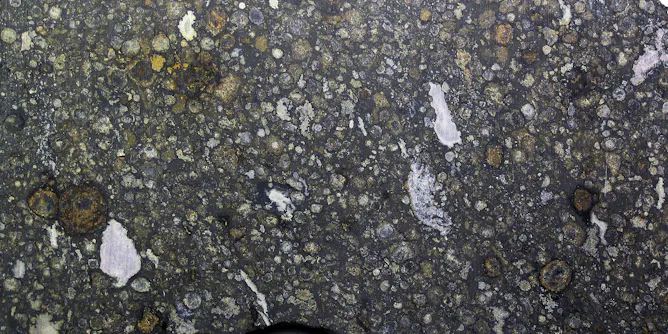
A new machine learning model explores the boundary between biological and nonbiological chemistry.
Articles on Space
Displaying 121 - 140 of 1109 articles

Unlike some other over-hyped meteor showers, this one is the real deal.
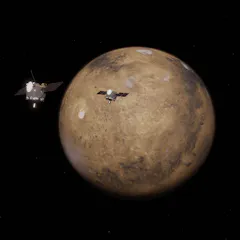
What’s better – many small space missions, or a few large, sweeping ones? Space scientists are asking this question as they face budget uncertainties.

Most of the universe is made up of dark matter and dark energy. The majority of everything else is dispersed throughout space as tiny particles.

Google’s Project Suncatcher would need sophisticated collision avoidance capabilities to navigate a junk-filled landscape.
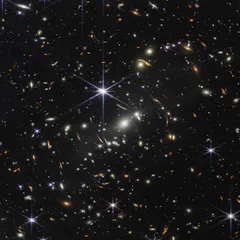
Some unique ‘stars’ might be fueled by dark matter annihilation.

Will the universe keep existing forever? An astrophysicist explains how scientists aren’t entirely sure, but they can make predictions.
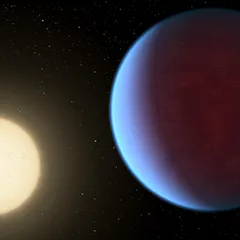
Searching for life on other planets requires more than just measuring their distances from their stars. A future NASA telescope may help search for potentially habitable worlds.
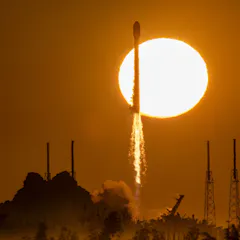
It’s not enough to point a rocket at the Sun and ignite the engines.
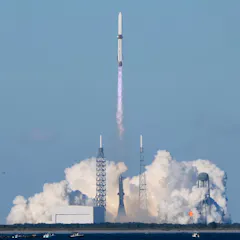
Jeff Bezos’s aerospace company Blue Origin is now the second, after SpaceX, to land a rocket booster for reuse.
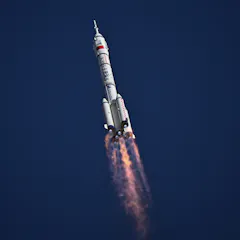
China has created more space debris than any other country. But as its space program grows, it has more to lose from a collision than ever before.

The twin spacecraft Blue and Gold could open a new era in space exploration and planetary science, powered by commercial partnerships and innovations.
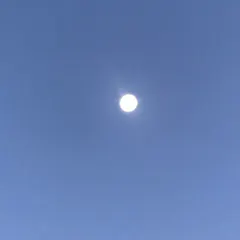
Phones can often take great photos, but why photos of the Moon typically disappointing? The Moon itself and camera design are both part of the answer.

Radio astronomy opened up the universe for scientists. They could map new elements across galaxies and also search for signals from extraterrestrial civilizations.
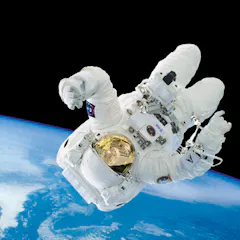
Spaceflight rewires the human body. Muscles shrink, bones thin and fluids shift towards the brain – but these changes may help improve life on Earth.
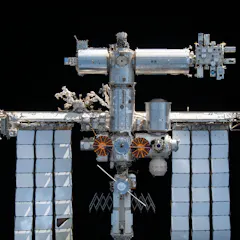
Archaeologists have studied how astronauts use the International Space Station to improve its potential future successors.
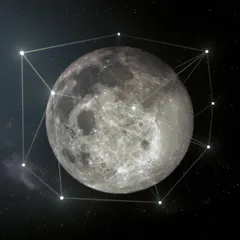
The US doesn’t currently have much ability to monitor what’s going on in the space around the Moon. An effort by the Air Force Research Laboratory could help.
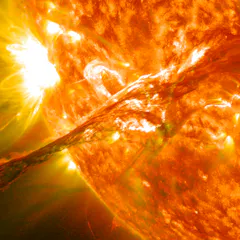
From communications outages to a brush with nuclear war, solar events like flares and coronal mass ejections have shaped human history.
While a recent executive order directed the Department of Commerce to elevate this office, budgetary actions threaten it.

Astronauts generally can’t look out the window like you might in a car – a ‘virtual window’ could instead serve that purpose.
Top contributors
-

University Distinguished Professor of Astronomy, University of Arizona
-
Professor of Strategy and Security Studies, Air University
-
Professor of Planetary and Space Sciences, The Open University
-
Professor (Astrophysics), University of Southern Queensland
-
Associate Professor in Archaeology and Space Studies, Flinders University
-
Associate Professor in Astronomy, Monash University
-
Emeritus Professor of International Law, Western Sydney University
-
Senior Lecturer in Physics, Nottingham Trent University
-
Reader in Astrophysics, Keele University
-
Associate Dean of Innovation and Engagement, Swinburne University of Technology
-
Associate Professor, Astronomy, University of Regina
-
Professor of Air and Space Law, University of Mississippi
-
Kevin Orrman-Rossiter is a Friend of The Conversation.
Sterrenkenner, History & Philosophy of Science, The University of Melbourne
-
Lecturer in Astronomy, Nottingham Trent University
-
Professor of Physics and Astronomy, USC Dornsife College of Letters, Arts and Sciences