
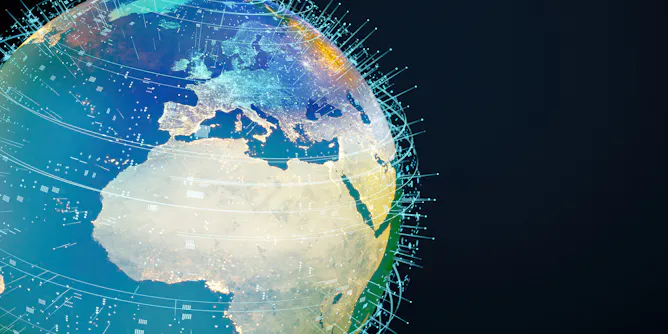
The weather would get wild and windy if one side of the planet was always cold and dark and the other side always hot and light.
Articles on Satellites
Displaying 1 - 20 of 308 articles

After the recent US deployment of a weapon in Earth’s orbit, the space arms race looks increasingly less like something that can be prevented.
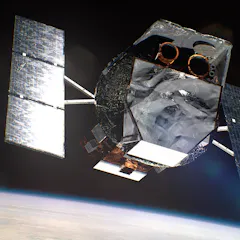
If you bump a spacecraft in orbit, it may start tumbling uncontrollably. To save a falling satellite, the rescuer must be incredibly steady and precise.
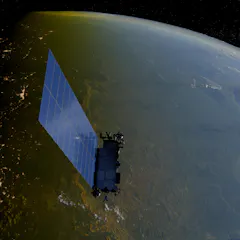
The problem is about to get much worse, with millions more satellites planned in coming years.
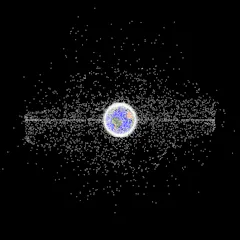
Orbital data centre proposals involve thousands of satellites, each one twice the size of the International Space Station.
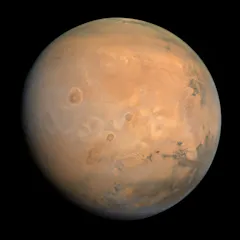
NASA lost contact with its Maven spacecraft – the youngest of its Mars orbiters – at the end of 2025. The others in its fleet are over two decades old.
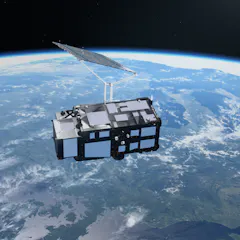
Orbital space management organizations could help ensure that future generations live with stars above their heads, rather than constellations of debris.
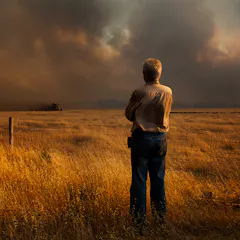
The tool can help communities better understand their local conditions and prepare for bushfires early.

Sharks and rays have been swimming through the oceans for millions of years – but we still don’t really know where.
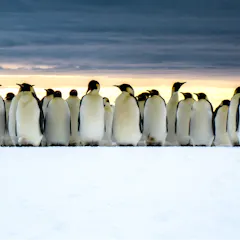
New satellite methods can track penguin colonies in winter – and can judge their health based on the colour of their guano.
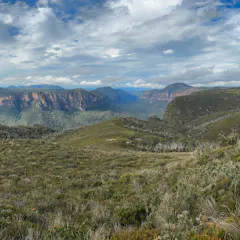
Collecting data from sensors in remote woodlands has long required arduous treks. What if sensors could transmit data in real time?
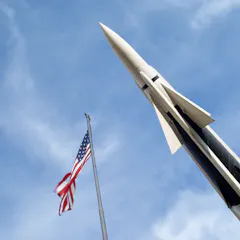
This could mark the start of a major arms race in space, which would threaten all of us on Earth.
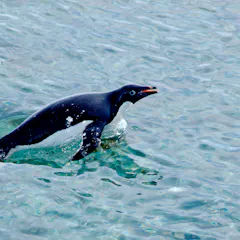
When penguin colonies are surrounded by sea ice, the penguins tend to eat more fish, rather than krill. And colonies that eat more fish are more successful at sustaining their numbers.
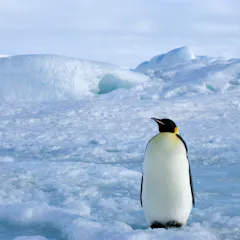
A breakthrough has helped researchers track down penguins living in the dark.

The abrupt disappearance of a lake is one clear sign that the ice below is melting, and a clue to wider permafrost changes.
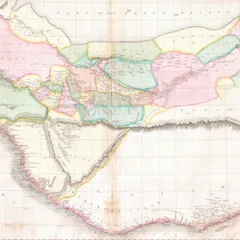
People have always put huge trust in the technology used to create maps, from the ancient Greek dioptra to modern satellites.
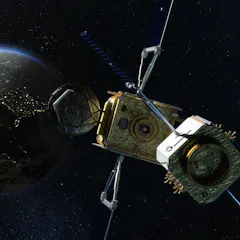
A new mission to save NASA’s Swift observatory shows why catching a satellite that was never designed for rescue is one of the hardest jobs in spaceflight.
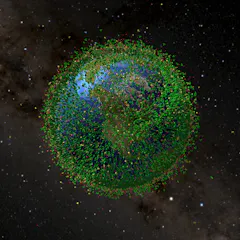
Unlike aircraft or cars, we can’t easily take satellites to a repair workshop.
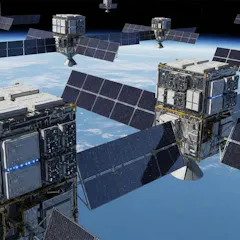
Proposals to put data centres in space have many hidden costs.

From space hotels and artificial meteor showers, to a new giant mirror that reflects sunlight to Earth — low-Earth orbit is getting weird.
Top contributors
-

Associate Professor, Astronomy, University of Regina
-
Associate Professor in Archaeology and Space Studies, Flinders University
-
Andrew Dempster is a Friend of The Conversation.
Director, Australian Centre for Space Engineering Research; Professor, School of Electrical Engineering and Telecommunications, UNSW
-
Professor, Physics and Astronomy, University of British Columbia
-
Associate Professor in Astronomy, Monash University
-
Associate Professor of International Affairs, Georgia Institute of Technology
-
Lecturer in space and military law and strategy, UNSW
-
Chief Executive Officer, Australasian Centre for Space Governance; Associate Expert, National Security College, Australian National University
-
Emeritus Professor of International Law, Western Sydney University
-
Associate Professor, RMIT University
-
Director, Bushfire Research Centre of Excellence, Australian National University
-
Adjunct Senior Research Fellow in Environmental Law, University College Dublin
-
Space Plasma Physicist, Imperial College London
-
University Distinguished Professor of Astronomy, University of Arizona
-
Scientific Officer, Obafemi Awolowo University