
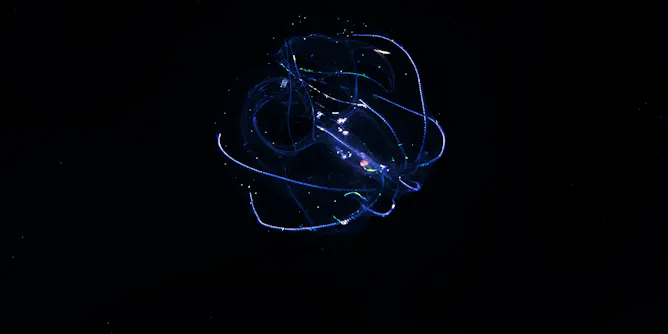
Hundreds of years before dinosaurs, before ammonites, before trilobites … there was a first animal. Here’s the evidence scientists use to think about what it might have been.
Articles on Curious Kids
Displaying 1 - 20 of 833 articles

The weather would get wild and windy if one side of the planet was always cold and dark and the other side always hot and light.
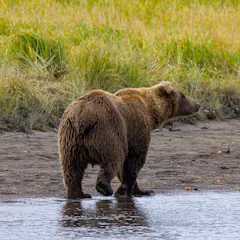
Having a lot of fat is rare among mammals. For people, it may be an evolutionary advantage to help get through the tough times.
Your farts’ aromas are tuned to your diet – and your overall health.
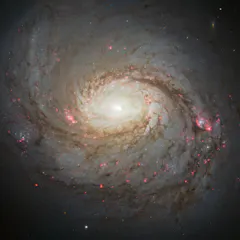
Galaxies act a little bit like figure skaters twirling on the ice – but at an astronomical scale.

Polio can survive only where it finds kids who aren’t protected by a vaccine.
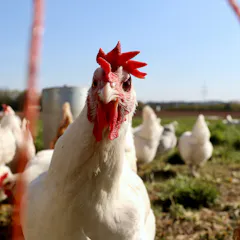
From domesticated foxes to tuskless elephants, humans have directly and indirectly influenced the evolution of a wide range of animals.

Storms big and small can produce a lot of rain. What matters most is how fast they’re moving, as an atmospheric scientist and educator explains.
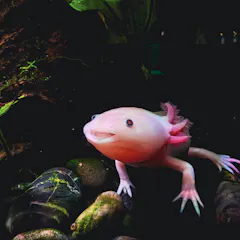
Understanding how certain animals can regenerate entire organs and limbs could help heal injuries in people.

The games created a new way of experiencing video games by building a 3D world in which events could unfold beyond the player’s line of sight.
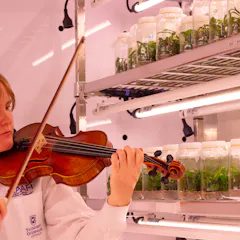
Some people may think it’s nice to listen to music with their plants. But is there any truth to the idea that certain music boosts plant growth?
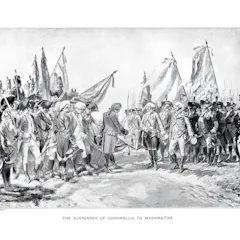
The United States came out of the Revolutionary War victorious. But building a new nation was very different from fighting a war.

It might seem like a weird thing to do, but more than two-thirds of people have talked in their sleep at some point.
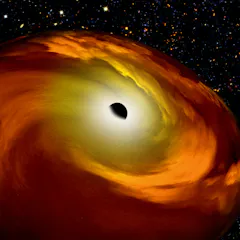
Some stars turn into black holes at the end of their lifespans, once they stop burning the fuel in their cores.

Some animal species have their eyes positioned on their heads differently than how people do – and it comes with pluses and minuses for how they see.

Energy transfer is the secret ingredient that makes iced tea a particularly refreshing drink on a hot day.

Computers break examples of human speech into small bits of sound, then put them together to sound like people do.
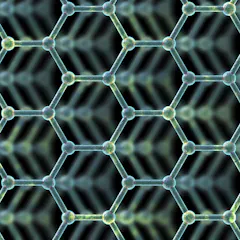
Turns out, changing the way atoms and molecules are arranged in a substance can give it new and fascinating properties.
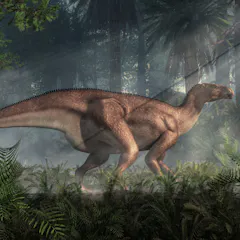
Listen to palaeobiologist Neil Gostling on The Conversation’s Curious Kids podcast talk about how scientists work out what dinosaurs looked like.

It takes an entire team of electricity, calcium, energy and proteins all working together to move your muscles.
Top contributors
-

Reader in Astrophysics, Keele University
-
Associate Professor of Science & Medicine, Bond University
-
Professor (Astrophysics), University of Southern Queensland
-
Associate Dean of Innovation and Engagement, Swinburne University of Technology
-
PhD Candidate, University of Southern Queensland
-
Distinguished Professor Emeritus of Anthropology, Binghamton University, State University of New York
-
Professor, Philosophy of Science, The University of Melbourne
-
Professor, Macquarie University
-
Researcher, The University of Melbourne
-
Assistant Professor of Medicine, Bond University
-
Professor of Science Communication and Chemistry, University of Hull
-
Lecturer, University of Southern Queensland
-
Associate Professor, School of Animal and Veterinary Science, Adelaide University
-
Principal Lecturer in Wildlife Conservation, Nottingham Trent University
-
Whale Scientist and Lecturer, Faculty of Science and Engineering, Macquarie University