
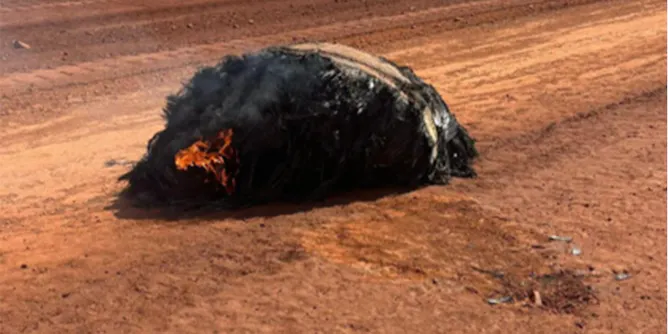
A piece of a suspected rocket found on fire in Western Australia highlights the growing problem of space junk – and how humanity is dealing with it.
Articles on Space
Displaying 141 - 160 of 1109 articles

A planetary scientist who has participated in analog missions describes their value for planning space exploration – and learning about extreme environments on Earth.
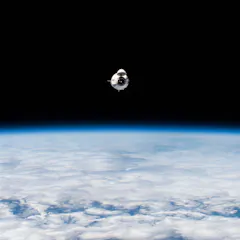
Earth is the only home humans have ever known. But that might not be the case for much longer.
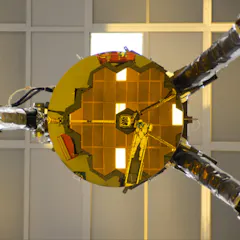
The only Australian hardware on board the legendary telescope is starting to fulfil its duties.
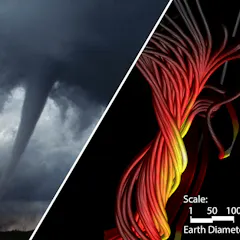
Unprecedented simulations show the formation of space tornadoes capable of causing strong geomagnetic storms around Earth, calling for earlier and more accurate warnings.

The mission should launch on a flyby of the Moon in February 2026.
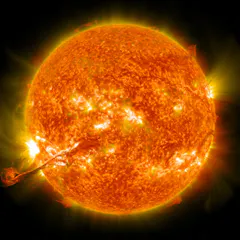
Space weather isn’t referring to rain clouds that float through the galaxy. Instead, it’s caused by massive explosions of particles that shoot out from the Sun.
In the 30 years since the discovery of 51 Pegasi b, more than 6,000 planets outside our Solar System have been catalogued. Two modern-day explorers explain how.
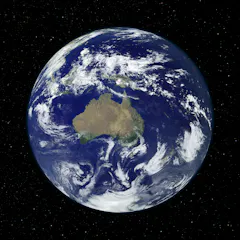
Every single day, space technology impacts our lives. But a new report reveals gaps between what Australians think and what they know about space.
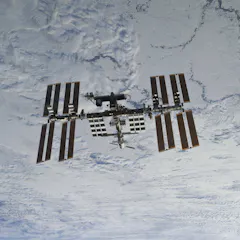
The International Space Station has hosted astronauts and spacefarers continually for 25 years.
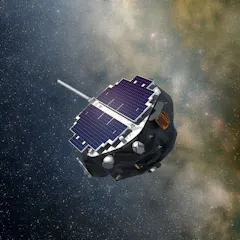
Studying the Sun helps researchers understand how space weather can affect technology back on Earth.

Would you guess that the Earth is spinning at 1,000 mph around its axis and at the same time hurtling through space on its orbit around the Sun at 67,000 mph? Here’s why you don’t feel all that motion.
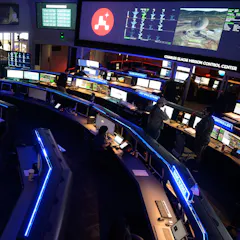
A planetary scientist walks through the sensors and systems that went into the recent detection of potential biosignatures.
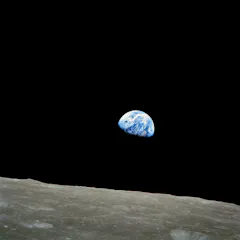
The Moon influences ocean tides – and ocean tides, in some ways, influence the Moon back.
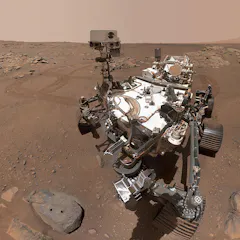
Unique, spotted rocks in Mars’ Jezero Crater could indicate that the planet once hosted life.

How we talk about outer space shapes the futures we imagine and build. Indigenous perspectives offer a better way forward.
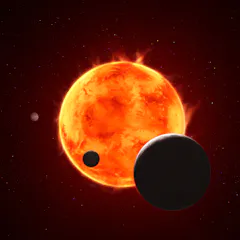
The largest telescope in space has been trained on a rocky exoplanet.
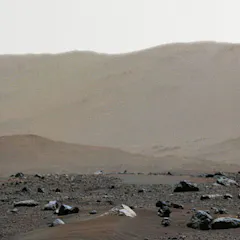
The Viking missions paved the way for future Mars missions and helped researchers understand the red planet’s climate and geology.

How researchers are working what out the incredible optical phenomena in Earth’s skies can tell us about other planets.
Could tiny stars a fraction the size of our solar system’s Sun have habitable planets orbiting them? A new study says it’s possible.
Top contributors
-

University Distinguished Professor of Astronomy, University of Arizona
-
Professor of Strategy and Security Studies, Air University
-
Professor of Planetary and Space Sciences, The Open University
-
Professor (Astrophysics), University of Southern Queensland
-
Associate Professor in Archaeology and Space Studies, Flinders University
-
Associate Professor in Astronomy, Monash University
-
Emeritus Professor of International Law, Western Sydney University
-
Senior Lecturer in Physics, Nottingham Trent University
-
Reader in Astrophysics, Keele University
-
Associate Dean of Innovation and Engagement, Swinburne University of Technology
-
Associate Professor, Astronomy, University of Regina
-
Professor of Air and Space Law, University of Mississippi
-
Kevin Orrman-Rossiter is a Friend of The Conversation.
Sterrenkenner, History & Philosophy of Science, The University of Melbourne
-
Lecturer in Astronomy, Nottingham Trent University
-
Professor of Physics and Astronomy, USC Dornsife College of Letters, Arts and Sciences