
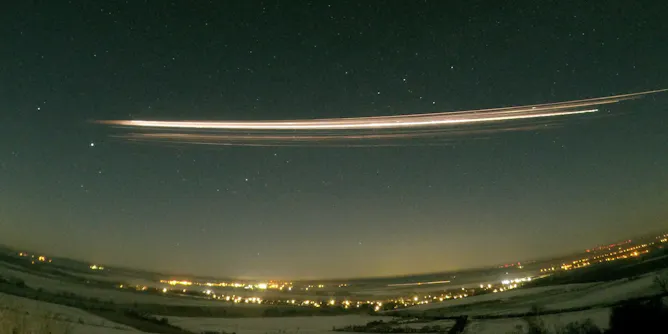
A new study provides the first evidence that re-entering space debris pollutes Earth’s upper atmosphere.
Articles on Space
Displaying 101 - 120 of 1109 articles
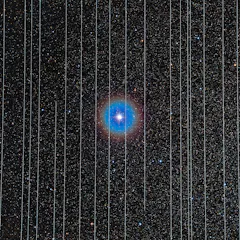
Cultural, spiritual, and most environmental impacts aren’t taken into account when launching thousands of satellites.
These changes aren’t permanent – the brain goes gradually back to normal after coming back to Earth. Understanding the physical effects of spaceflight helps plan space missions.
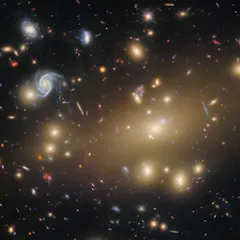
Two ways of measuring how fast the universe is expanding disagree, a puzzle known as the Hubble tension. Tiny magnetic fields from the Big Bang may offer a solution.

Dark matter doesn’t seem to interact with the matter we can see and touch, so scientists look for it in unusual places, like faraway galaxies and underground detectors.

Comet MAPS has the potential to be one of the ‘Great Comets’ of this century.
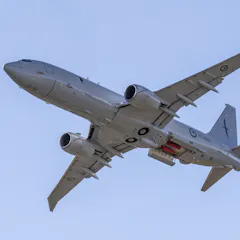
NZ appears to be widening its defence and surveillance capabilities across the region, raising questions about strategic alignment, transparency and independence.

Several robotic spacecraft orbiting the Moon can take detailed pictures of its surface, so why send people around the Moon? A planetary geologist explains the benefits.
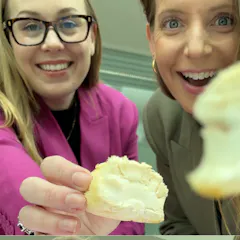
The mushrooms lived in space for over a month – and could be key to the health of astronauts in the future.
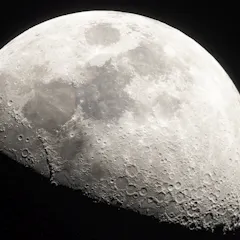
Today, there aren’t just two countries competing to get to the Moon. More countries have space programs, and private industry plays a larger role.
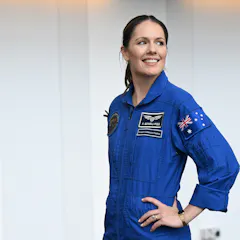
The 41-year-old from South Australia is the first Australian to qualify as an astronaut under the country’s national space program.
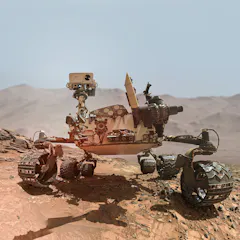
As plans for Moon bases gather pace across the globe, battery science may decide whether humans can live beyond Earth.
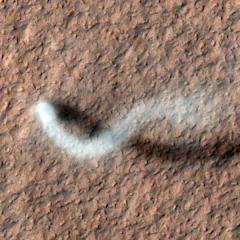
A rover recently captured sounds of lightning crackling on Mars, over a decade after scientists uncovered the first evidence for electric discharges on the planet.
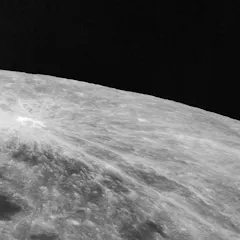
The US, China, India, Europe and Japan all have exciting missions on the horizon in 2026. Many of them are collaborative feats.
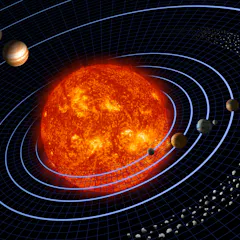
Which way is ‘down’ has a different answer depending on where you are on Earth, in the solar system, in our galaxy and beyond.

The findings from Pandora will complement data from the James Webb Space Telescope to give astronomers more insight into stars and planets outside our solar system.
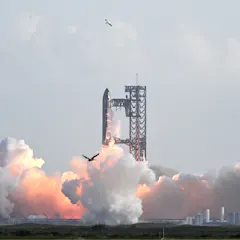
NASA, SpaceX and Blue Origin have all successfully launched superheavy-lift rockets. These massive vehicles are designed to carry a much heavier load.
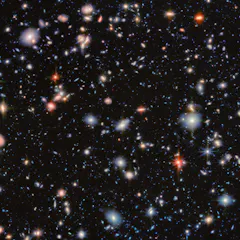
A mysterious anomaly challenges the most widely accepted vision of how the universe works.
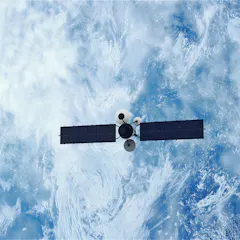
The closer to Earth a satellite flies, the clearer a picture it can take of the surface. But low-flying satellites also have to deal with atmospheric drag.
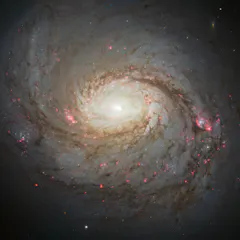
Normal matter – which makes up everything we see and touch – isn’t the only type of matter present in the universe.
Top contributors
-

University Distinguished Professor of Astronomy, University of Arizona
-
Professor of Strategy and Security Studies, Air University
-
Professor of Planetary and Space Sciences, The Open University
-
Professor (Astrophysics), University of Southern Queensland
-
Associate Professor in Archaeology and Space Studies, Flinders University
-
Associate Professor in Astronomy, Monash University
-
Emeritus Professor of International Law, Western Sydney University
-
Senior Lecturer in Physics, Nottingham Trent University
-
Reader in Astrophysics, Keele University
-
Associate Dean of Innovation and Engagement, Swinburne University of Technology
-
Associate Professor, Astronomy, University of Regina
-
Professor of Air and Space Law, University of Mississippi
-
Kevin Orrman-Rossiter is a Friend of The Conversation.
Sterrenkenner, History & Philosophy of Science, The University of Melbourne
-
Lecturer in Astronomy, Nottingham Trent University
-
Professor of Physics and Astronomy, USC Dornsife College of Letters, Arts and Sciences