
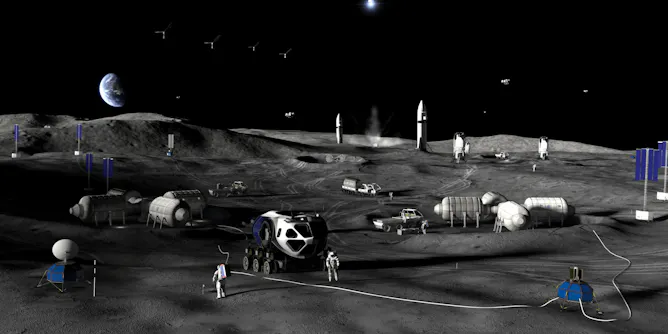
A lunar base could allow for research, economic activities and lunar mining. Such an operation has potential benefits, but lots of challenges await NASA.
Articles on Space
Displaying 41 - 60 of 1109 articles

Venus and Earth share some atmospheric quirks – but how did Venus get so unbearably hot, while Earth is mild and temperate?
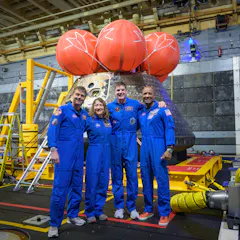
Jenni Gibbons will be lead capsule communicator for NASA’s Artemis III mission, Gordon Osinski is on the science team and Canada also contributes a robotic Lunar Utility Vehicle.

From space hotels and artificial meteor showers, to a new giant mirror that reflects sunlight to Earth — low-Earth orbit is getting weird.

New defence spending offers little clarity on the future direction of military space.
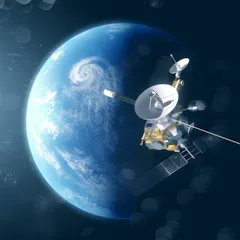
How prepared are we for a solar storm, bad software update or cybersecurity event that could trigger widespread loss of satellite control?
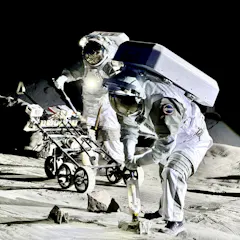
There is no one way to be an astronaut; you can’t go to astronaut school.
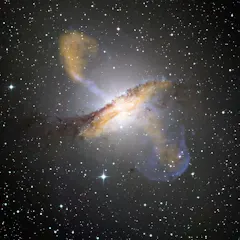
An astronomer explains why artificial black holes are pure science fiction – at least for now.
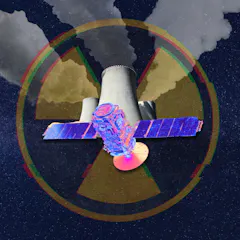
Any talk of nuclear futures in space obliges us to learn from nuclear pasts.
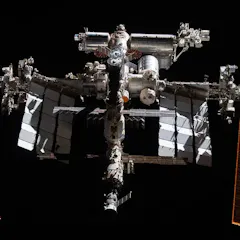
A worsening leak on June 5 forced five crew members to prepare for an emergency evacuation.
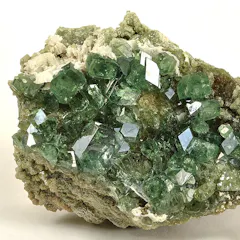
This is the first evidence that the mineral garnet may have been formed within the crust of Mars itself, heralding clues to the planet’s complex history.

It can be easy to lose sight of the fact that the US isn’t the only major actor in space.
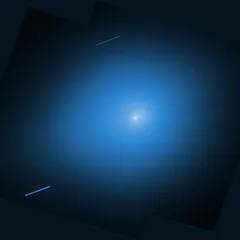
A process called ‘hot bottom burning’ helped scientists determine the age of 3I/ATLAS.

Only by fostering a deeper sense of ‘space citizenship’ will everyone benefit from our journeys to the Moon – and beyond.
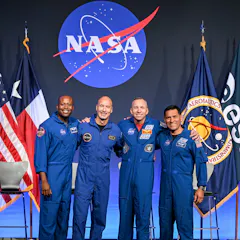
The Artemis program’s timeline and architecture has changed over the past year, so Artemis III will not land on the lunar surface.
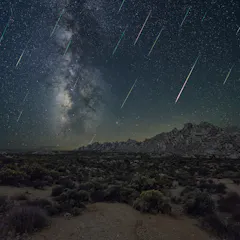
An observatory director describes the differences between the types of rocks that fly through space.
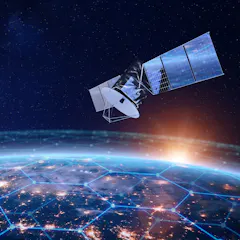
A data center could get more solar power and be kept much colder in space, but it would be extremely difficult to repair and update.
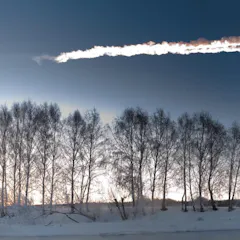
2026 has already been a banner year for meteor spottings and sonic booms across the world.

The nature of space, time and the evolution of life on Earth mean it’s unlikely extraterrestrial life has visited our home planet.
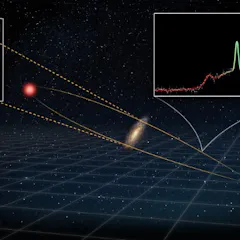
Scientists have discovered the most distant hydroxyl megamaser ever detected. This is a natural space laser.
Top contributors
-

University Distinguished Professor of Astronomy, University of Arizona
-
Professor of Strategy and Security Studies, Air University
-
Professor of Planetary and Space Sciences, The Open University
-
Professor (Astrophysics), University of Southern Queensland
-
Associate Professor in Archaeology and Space Studies, Flinders University
-
Associate Professor in Astronomy, Monash University
-
Emeritus Professor of International Law, Western Sydney University
-
Senior Lecturer in Physics, Nottingham Trent University
-
Reader in Astrophysics, Keele University
-
Associate Dean of Innovation and Engagement, Swinburne University of Technology
-
Associate Professor, Astronomy, University of Regina
-
Professor of Air and Space Law, University of Mississippi
-
Kevin Orrman-Rossiter is a Friend of The Conversation.
Sterrenkenner, History & Philosophy of Science, The University of Melbourne
-
Lecturer in Astronomy, Nottingham Trent University
-
Professor of Physics and Astronomy, USC Dornsife College of Letters, Arts and Sciences