
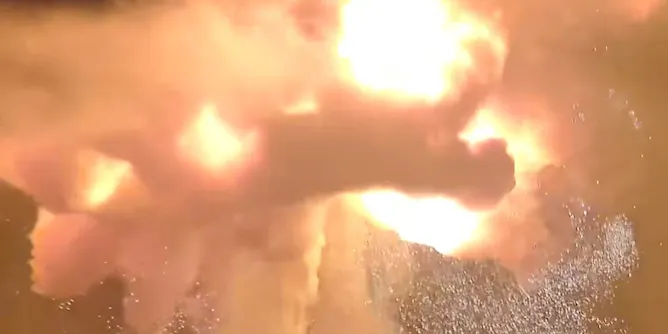
A physical chemist outlines the promises and risks associated with methane fuel and describes why SpaceX and Blue Origin use it in their superheavy rockets.
Articles on Space
Displaying 61 - 80 of 1109 articles
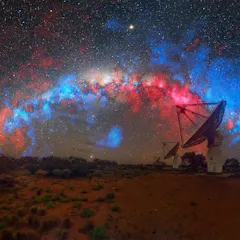
The best map yet of cosmic magnetic fields has been created with Australia’s most powerful radio telescope.

Seeing a signal in different kinds of light is like having a text written in several forms of writing – it makes it easier to decipher.

NASA has several contracts with Blue Origin as part of its Artemis program – this setback for the company could delay the program.
To travel between solar systems, a spacecraft would need extremely sophisticated – if not impossible – technology.

As humanity prepares for future lunar missions and landing on Mars, we need to develop sustainable and mobile medical systems for astronauts.
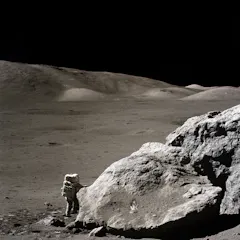
As lunar missions are back in vogue with engineering more sustainable human presence on the Moon in mind, there’s no getting away from the fact that you can’t breathe on a satellite that has no atmosphere.
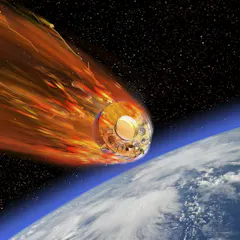
Human activity is causing large disruptions to the near-Earth space environment. We need an intergovernmental panel on space sustainability.
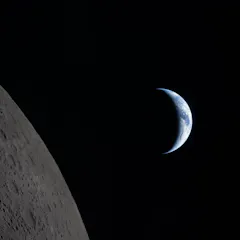
Landing on the Moon can disturb its environment – people are discussing how to balance those concerns with political and economic goals.
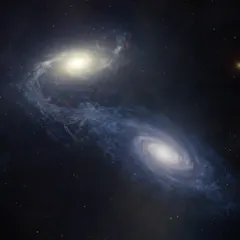
Astronomers want to understand how spiral galaxies form and get their massive spiral arms.
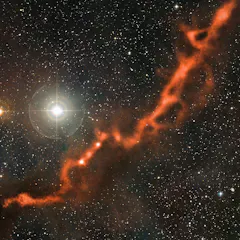
Discoveries of molecules in space that suggest extraterrestrial life are exciting, but they need to be taken with a grain of salt – an astrochemist explains why.

Aristotle believed the planets revolved around Earth and God could not have created other worlds. Today, scientists scour the surface of Mars for ‘biosignatures’ of microbial life.
A photography expert explains how a photographer makes artistic decisions that an AI algorithm or robot can’t replicate.

A space historian explains how the Artemis II crew reimagined some Apollo-era photos and found spectacular new angles.
Going to the Moon isn’t just about science. Novelist Jules Verne predicted some of the societal ramifications modern lunar missions are creating today.

NASA’s Artemis II mission has revived lunar ambition – and a potential new race between nations. Very different visions now complicate the human future of space.
From geology training on Mushuau Innu First Nation territory in Labrador, to a new NASA Science Evaluation Room, Gordon Osinski takes us behind the scenes of Artemis II.
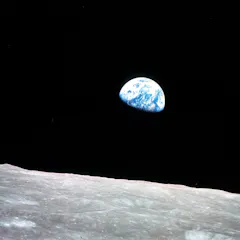
The global climate has changed drastically over the course of the 58 years that separate these two photographs of planet Earth.
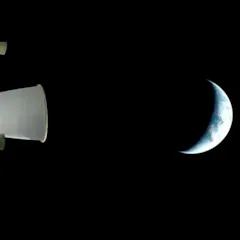
A planetary geologist and member of NASA’s First Artemis Lunar Surface Science Team witnesses the launch of the Artemis II moon rocket.
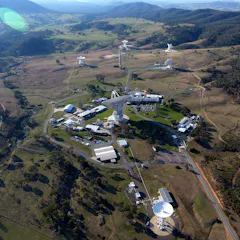
Ground stations in Australia are crucial for contacting the astronauts travelling to the Moon.
Top contributors
-

University Distinguished Professor of Astronomy, University of Arizona
-
Professor of Strategy and Security Studies, Air University
-
Professor of Planetary and Space Sciences, The Open University
-
Professor (Astrophysics), University of Southern Queensland
-
Associate Professor in Archaeology and Space Studies, Flinders University
-
Associate Professor in Astronomy, Monash University
-
Emeritus Professor of International Law, Western Sydney University
-
Senior Lecturer in Physics, Nottingham Trent University
-
Reader in Astrophysics, Keele University
-
Associate Dean of Innovation and Engagement, Swinburne University of Technology
-
Associate Professor, Astronomy, University of Regina
-
Professor of Air and Space Law, University of Mississippi
-
Kevin Orrman-Rossiter is a Friend of The Conversation.
Sterrenkenner, History & Philosophy of Science, The University of Melbourne
-
Lecturer in Astronomy, Nottingham Trent University
-
Professor of Physics and Astronomy, USC Dornsife College of Letters, Arts and Sciences