
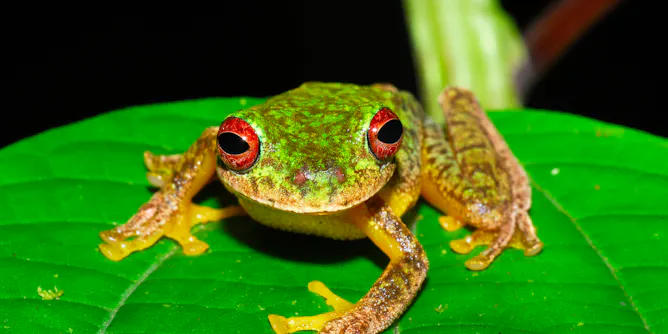
Chytrid fungus has caused declines in 501 amphibian species, according to a new analysis. Most of the damage happened in the 1980s, before the fungus itself was even discovered.
Articles on Invasive species
Displaying 241 - 260 of 391 articles

Invasive tropical fire ants spread by eating their fat useless sons.

Tasmania wasn’t the only part of Australia that burned in January. The remote interior near Alice Springs saw a huge blaze, worsened by invasive buffel grass.
It’s cheaper to prevent biological invasions than to react after they happen. But it’s hard to detect invaders while there are still just a few of them. Knowing when and where to look can help.

Populations of freshwater species are in a state of deep decline. But we know why and we can reverse the trend.
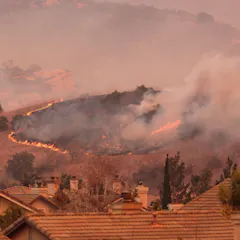
We need to learn to coexist with wildfires the way many ecosystems do. We won’t protect lives in the long term by trying to stamp the fires out.
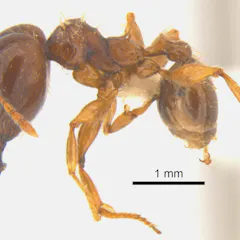
The ants were a threat to many native species on Lord Howe Island. They were also a pest if they got into your home.

New genetic knowledge about cane toads could give us the knowledge we need to throw some more roadblocks in front of this persistent invader as it marches across Australia.

Managing rabbit populations isn’t as simple as declaring ‘open season’.

New findings from the Chagos Islands are a perfect parable for the Anthropocene.
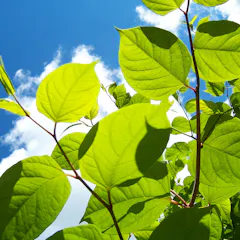
Why home owners shouldn’t panic over knotweed on their property.
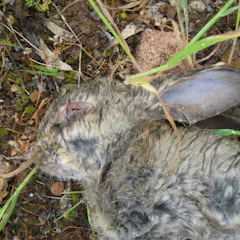
Feral rabbits previously exposed to myxoma virus are more likely to be killed by rabbit haemorrhagic diease, meaning that these two biocontrol agents can become even more powerful when used in tandem.

The average Australian feral cat kills 225 reptiles a year, which adds up to 596 million in total, according to a new estimate. Pet cats, meanwhile, kill a further 53 million.
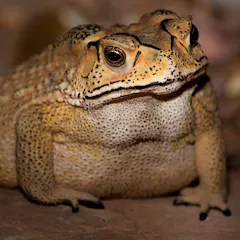
New study confirms fears that the island’s native wildlife can be poisoned by introduced Asian toads.
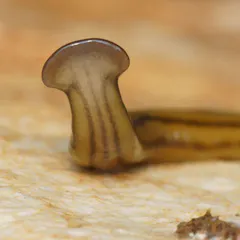
Several giant terrestrial Plathelminth species have invaded France and its overseas territories, threatening biodiversity. Thanks to participatory science, the invasion is finally recognized.
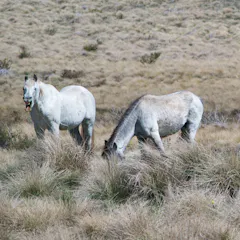
Failing to cull feral horses in Kosciuszko National Park may end up promoting environmental destruction while actually increasing the horses’ suffering.
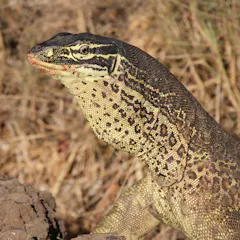
Rat baits are widely used to keep rodent pests at bay. But many Australian reptiles are resistant to the poison, potentially spreading these deadly compounds up the food chain.
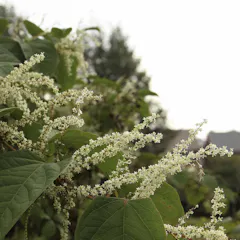
It’s nearly impossible to kill, so we need to start working with Japanese knotweed to control it.
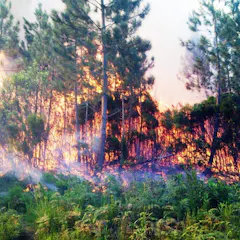
Invasive alien species that costs South Africa’s economy billions can be eliminated.
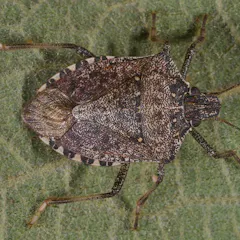
An invasive insect native to Asia, Halyomorpha halys, has been detected in the US, Canada and southern Europe. It’s now made its debut in Paris.
Top contributors
-

Professor in Wildlife Ecology and Conservation, School of Life & Environmental Sciences, Deakin University
-
Honorary Research Fellow, University of Sydney
-
Professor in Terrestrial Ecology, Deakin University
-
Professor in Evolutionary Biology, Macquarie University
-
Professor of Wildlife Conservation, University of Tasmania
-
Professor Emeritus in Terrestrial Ecology, University of Sydney
-
Professor in Environmental Science, Charles Darwin University
-
Professeur, UMR ISYEB (Institut de Systématique, Évolution, Biodiversité), Muséum national d’histoire naturelle (MNHN)
-
Director of the Wildlife Crime Research Hub, Australian Research Council Industry Laureate Fellow, Adelaide University
-
Professor of Conservation Biology, Charles Darwin University
-
Associate Professor, Global Ecology, University of Sydney
-
Research Director CSIRO Health & Biosecurity, CSIRO
-
Professor in Zoology, James Cook University
-
Lecturer in the School of Applied Sciences, Edinburgh Napier University
-
Adjunct Professor, The University of Western Australia