
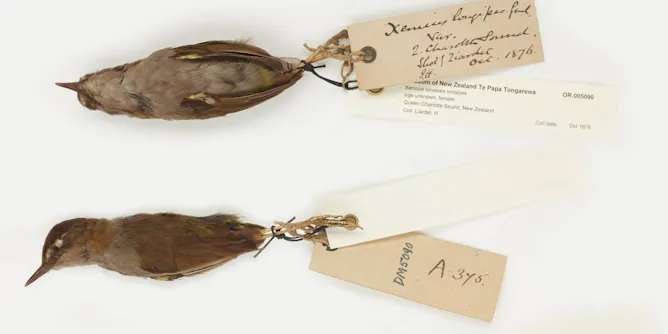
Using ancient DNA from museum specimens, we’ve tracked the evolutionary history of NZ’s bush wrens – and found a new family member.
Articles on Invasive species
Displaying 1 - 20 of 391 articles

In Antarctica’s McMurdo Dry Valleys, microbial communities are unique to each valley. A new study found people move them around with their boots.

When rats and mice are introduced to islands, they can eat native invertebrates to extinction. When rodents are eradicated, recovery begins.

Extreme temperatures combined with withering drought mean plants and animals on Aṉangu land are struggling to bounce back.

Biological control looks like a feasible option for managing invasive brambles.
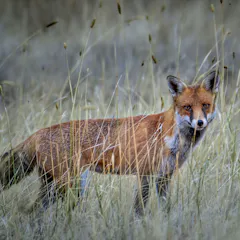
Invasive species only want to live. But their success can come at great cost to native species. If we treat them the same, native animals lose.
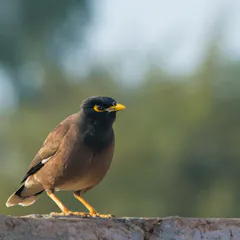
Australians now loathe the common myna. But the bird was introduced for a reason – and was often liked and admired for most of its 164 years here.
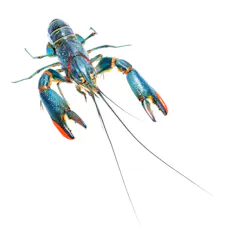
In the 1980s and 1990s, the hardy redclaw crayfish was exported from Australia around the world. But escapee yabbies have become a nightmare.
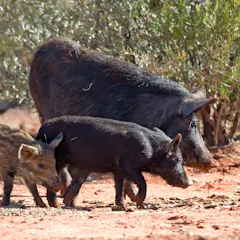
Pigs, camels, rabbits and many others were brought to Australia deliberately as valuable species. But we see them very differently once they become free-roaming.

Native bees pollinate many of Australia’s unique plants and help entire ecosystems thrive.
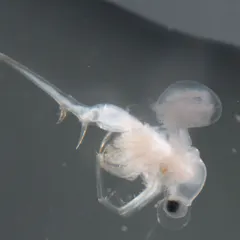
Researchers have discovered the spiny water flea may have existed in North America far longer than previously thought.
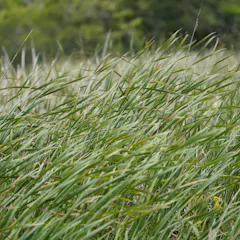
More common extreme weather events can create opportunities for invasive species to spread.
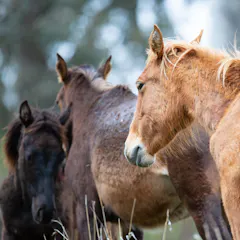
Feral horses can inflict major ecological damage, as two experts explain.
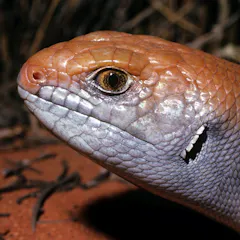
Fenced-off safe havens and islands free from cats and foxes have given endangered mammals breathing space. But they’re not yet helping many other groups of animals.

We cannot fence the whole of Australia. Therefore, we need to know which species are most at risk from cats.
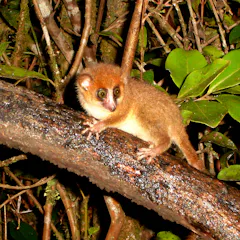
Lemurs and other native animals are rare in recovering forests.
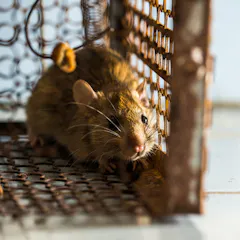
Calling an animal a ‘pest’ can sometimes cause more harm to people than the animal itself.
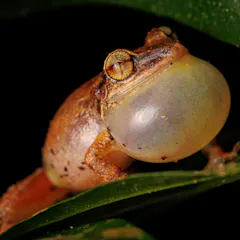
A new study tracks how young frogs are trying to avoid a deadly fungal infection.
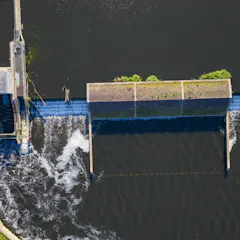
The natural connectivity of rivers acts like a highway, helping invasive species spread rapidly throughout a catchment.
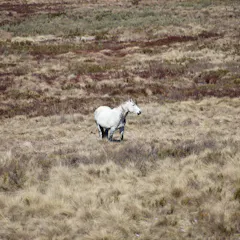
A mild summer led to breeding. And a dry winter could concentrate feral horses around fragile alpine waterways.
Top contributors
-

Professor in Wildlife Ecology and Conservation, School of Life & Environmental Sciences, Deakin University
-
Honorary Research Fellow, University of Sydney
-
Professor in Terrestrial Ecology, Deakin University
-
Professor in Evolutionary Biology, Macquarie University
-
Professor of Wildlife Conservation, University of Tasmania
-
Professor Emeritus in Terrestrial Ecology, University of Sydney
-
Professor in Environmental Science, Charles Darwin University
-
Professeur, UMR ISYEB (Institut de Systématique, Évolution, Biodiversité), Muséum national d’histoire naturelle (MNHN)
-
Director of the Wildlife Crime Research Hub, Australian Research Council Industry Laureate Fellow, Adelaide University
-
Professor of Conservation Biology, Charles Darwin University
-
Associate Professor, Global Ecology, University of Sydney
-
Research Director CSIRO Health & Biosecurity, CSIRO
-
Professor in Zoology, James Cook University
-
Lecturer in the School of Applied Sciences, Edinburgh Napier University
-
Adjunct Professor, The University of Western Australia