

When rats and mice are introduced to islands, they can eat native invertebrates to extinction. When rodents are eradicated, recovery begins.
Articles on Introduced species
Displaying 1 - 20 of 59 articles
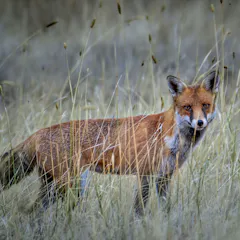
Invasive species only want to live. But their success can come at great cost to native species. If we treat them the same, native animals lose.
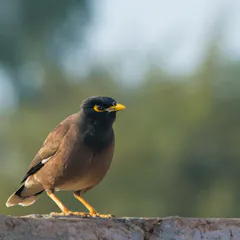
Australians now loathe the common myna. But the bird was introduced for a reason – and was often liked and admired for most of its 164 years here.
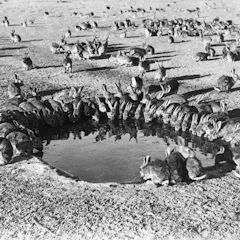
In 1920, an estimated ten billion rabbits roamed Australia. Biological controls have reduced their numbers – but rabbits remain a big problem
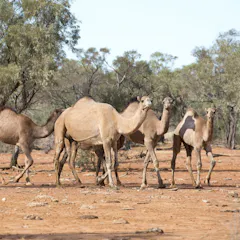
Wild dromedary herds no longer roam the Sahara, while wild banteng are vanishingly rare in Southeast Asia. Should we protect their feral populations in Australia?
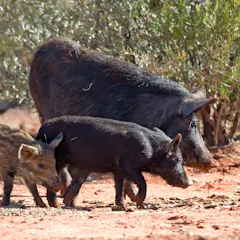
Pigs, camels, rabbits and many others were brought to Australia deliberately as valuable species. But we see them very differently once they become free-roaming.

Blackberries have long been a problem for Australian farmers and bushwalkers. But who would have illegally released a fungus as a biological control?

Isolation has been both blessing and curse for the wildlife of both countries.
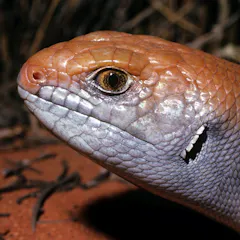
Fenced-off safe havens and islands free from cats and foxes have given endangered mammals breathing space. But they’re not yet helping many other groups of animals.
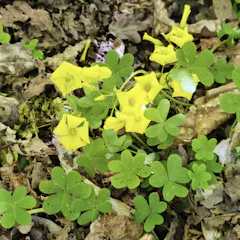
When it comes to a battle of persistence between a weed and a human, the weed will win most of the time. That is one of the things that makes a weed a weed.
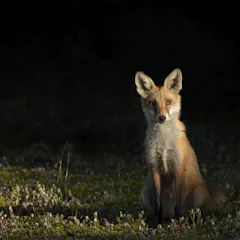
Decades of evidence link foxes and feral cats with extinctions of Australian mammals. Claims these introduced predators aren’t responsible don’t stack up.
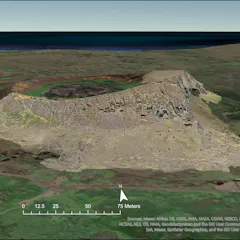
The mysteries of Easter Island, subjects of speculation for centuries, yield to scientific inquiry.

A fossil discovery of an ancient relative of the Australian magpie which lived in New Zealand some 19 million years ago challenges the understanding of ‘native’ species.
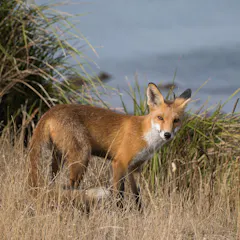
Dozens of Australian mammal species have declined and gone extinct since European colonisation – and introduced predators are often blamed. But evidence is lacking.

Biosecurity policies may seem onerous and expensive – but they are working to prevent new species from pushing native species out in the Antarctic.

This species could be the poster child for conservation on a warming planet.
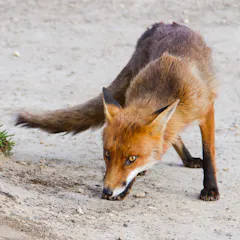
Even though 1080 is derived from native plants, not all of Australia’s native species are resistant to this lethal poison.
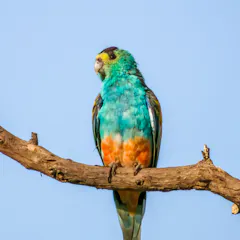
This new research estimates the price and benefits of recovering threatened species – and offers cost-effective ways for environment groups, farmers, governments and others to make a difference.

Bushwalkers with smartphones could help scientists track a fungus lethal to many of Australia’s most loved trees.

We analysed photos of predators and prey from 3,667 camera traps in southwest Victoria. We found feral cats were more abundant and behaved differently in areas where foxes were baited.
Top contributors
-

Professor in Wildlife Ecology and Conservation, School of Life & Environmental Sciences, Deakin University
-
Professor of Conservation Biology, Charles Darwin University
-
Professor of Conservation Biology, School of Life and Environmental Sciences, University of Sydney
-
Postdoctoral Fellow in Ecology, University of Alberta
-
Professor of Wildlife Conservation, Australian National University
-
Associate Professor, Global Ecology, University of Sydney
-
University Fellow in Biodiversity, Charles Darwin University
-
Lecturer in History, The University of Melbourne
-
Professor in Terrestrial Ecology, Deakin University
-
Professor of Conservation Biology, UNSW
-
Professor of Conservation and Sustainable Livelihoods, Charles Darwin University
-
Lecturer in Ecology, University of New England
-
Professor of Ecology, Charles Darwin University
-
Senior Research Associate, School of Agriculture, Food and Ecosystem Sciences, The University of Melbourne
-
Ph.D. student, University of Sydney