

Atlantic halibut are making a strong comeback in the Gulf of St. Lawrence. But how do we know where the fish move throughout their lives?
Articles on Biology
Displaying 121 - 140 of 508 articles
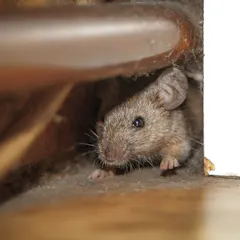
An evolutionary biologist is studying what these resilient urban pests can teach us about adaptation and evolution.
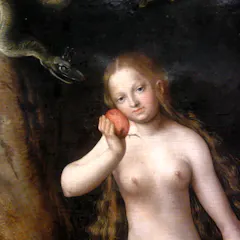
The story of human evolution is inextricable from the story of gynaecology.
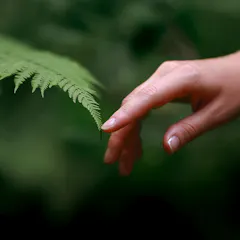
Our bodies have a dedicated channel for sensing only the very lightest of touches.

What if plants in the area surrounding a nuclear reactor could act as radiation detectors, with the help of a drone?

Robots often have a hard time navigating through debris, but robots designed based on worms and snakes could move around obstacles faster, thanks to an idea called mechanical intelligence.

Sugar molecules called glycans cover the surface of all cells, acting as ID cards that broadcast what they are to the rest of the body.
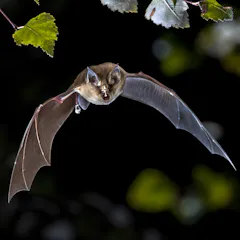
Maths plays a crucial role in new research which finds that bats “leapfrog” their way home at night.

While NASA rovers on the surface of Mars look for hints of life, researchers back on Earth are studying ‘echoes of life’ from ancient basins – hoping that the two sites might be similar.
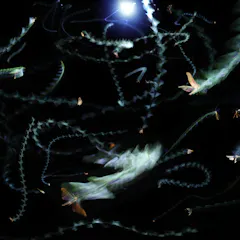
A new study shows how artificial light at night scrambles insects’ normal flight patterns, pulling them off course into orbit around the light.

Anchovies cause a stir as they mate – getting the oceans moving.
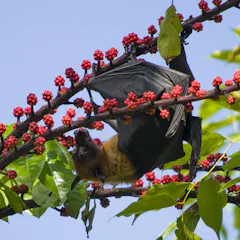
Fruit bats can eat up to twice their body weight in fruit a day. But their genes and cells evolved to process all that sugar without any health consequences − a feat drug developers can learn from.
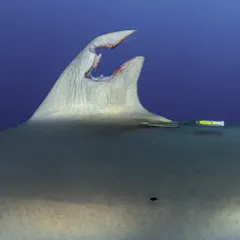
After scientists’ GPS tracking tag was violently removed from one shark’s dorsal fin, they were in for a surprise: The wound didn’t just heal, but the missing tissue grew back.

Researchers have made a fascinating observation: a polar bear used a diving hunting technique, never before reported, to capture large moulting snow geese.

The much understudied fascia – our body’s own version of Spanx – is now coming under increasing scientific scrutiny.
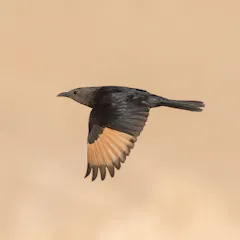
H.B. Tristram was a Victorian clergyman and ornithologist who categorised a list of birds he’d found in Palestine.
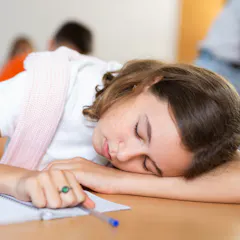
Most teens aren’t getting enough sleep, leading to poorer academic performance. Early school start times combined with natural changes in hormones and the circadian rhythm could be to blame.
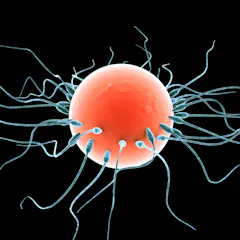
The movement patterns in sperm could be explained by maths often used to describe the way chemicals interact.
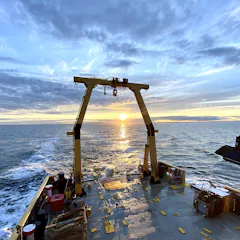
The waters of the St. Lawrence are running out of breath and bottom-dwelling organisms are already feeling the effects. Here’s how ecosystems are reacting.
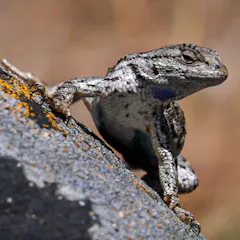
From dark dragonflies becoming paler to plants flowering earlier, some species are slowly evolving with the climate. Evolutionary biologists explain why few will evolve fast enough.
Top contributors
-

Doctoral Student in Biochemistry, University of Washington
-
Emeritus Strategic Professor in Palaeontology, Flinders University
-
ARC Future Fellow, Behavioural Ecology, Macquarie University
-
Associate Professor of Biology, Tufts University
-
Investigador Científico, Estación Biológica de Doñana (EBD-CSIC); The University of Western Australia
-
Associate Professor of Medical Sciences, University of Wollongong
-
Postdoctoral Fellow, EPFL – École Polytechnique Fédérale de Lausanne – Swiss Federal Institute of Technology in Lausanne
-
Senior lecturer, School of Biological Sciences, University of Bristol, University of Bristol
-
Biologist
-
Fellow, Keele University
-
Lecturer, Macquarie University
-
Senior Lecturer in Molecular Biology, University of Sydney
-
Professor of Biological Sciences, University of Maryland, Baltimore County
-
Chercheur à l’Institut de systématique, évolution, biodiversité (ISYEB), Muséum national d’histoire naturelle (MNHN)
-
Professor of Entomology, North Carolina State University