
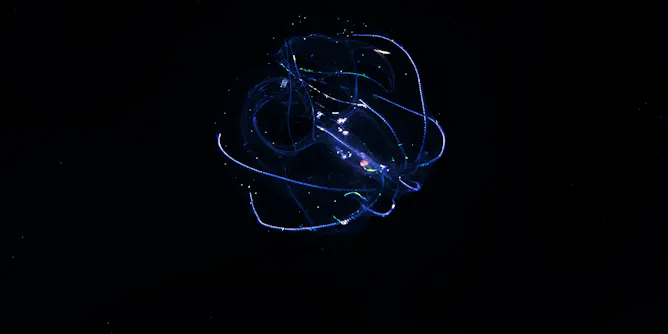
Hundreds of years before dinosaurs, before ammonites, before trilobites … there was a first animal. Here’s the evidence scientists use to think about what it might have been.
Articles on Biology
Displaying 1 - 20 of 508 articles
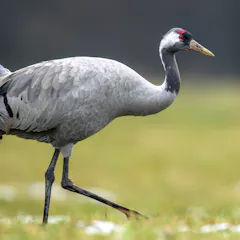
The research shows that two crane species were actually the same one.
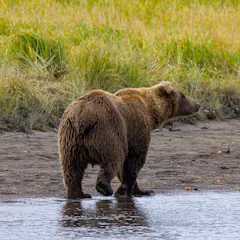
Having a lot of fat is rare among mammals. For people, it may be an evolutionary advantage to help get through the tough times.
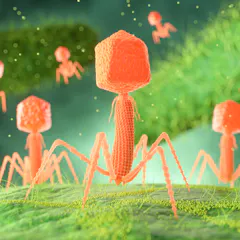
Bacteriophages could help fight antibiotic-resistant infections. New research reveals how their genes work – and may help scientists engineer more effective viruses.
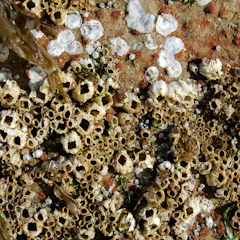
Letting the ordinary become interesting again is a key part of studying natural history and animal behavior.
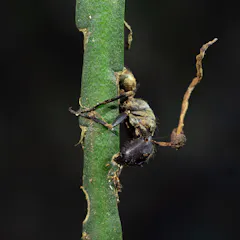
Parasitic fungi, wasps, worms and amoeba can control the behavior of their hosts in various horrifying ways.
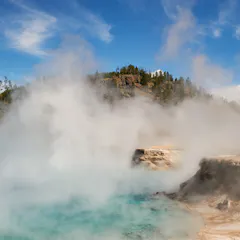
This amoeba lives at hotter temperatures than any other eukaryote previously discovered.

The difference between the colours isn’t just superficial – it affects nutrition, flavour, and more.
What drives scientists to uncover nature’s mysteries is curiosity. But what are they curious about?
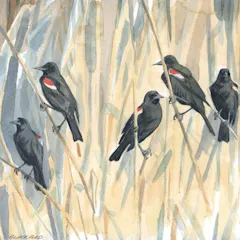
An early clue came from storks found in Europe with African arrows in their bodies. Today, an atlas reveals hundreds of bird migration routes that are both complicated and remarkable.
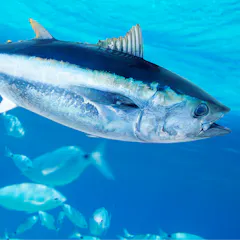
Bones in archaeological sites, ancient rock art, paintings on frescos and vases, written historical records and ethnographic accounts all helped researchers recreate a deep history of people and tuna.
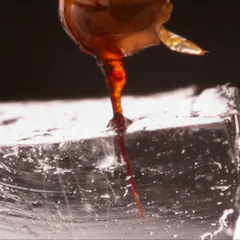
The stinger is effectively a fully autonomous micro-pump, but it works in an unusual way.
Are there risks for scientists who share unpublished work with AI chatbots?
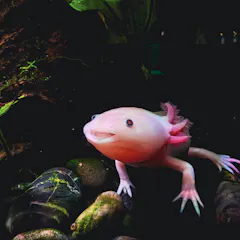
Understanding how certain animals can regenerate entire organs and limbs could help heal injuries in people.
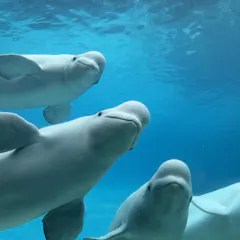
Sea sanctuaries could work well for some animals, but up to this point, only a handful of animals have lived in them.
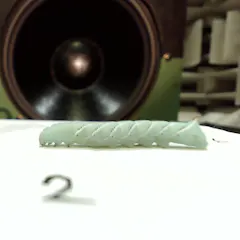
Scientists give caterpillars haircuts and put them in a room isolated from sound to figure out how they’re able to hear without ears.
Scientists studied active matter systems by racing worms through tubes – to unexpected results.

Each person is a mosaic of sex-related and postpubertal biological traits that vary in their degree of femaleness and maleness.
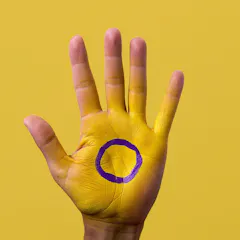
Biological sex isn’t always simple.
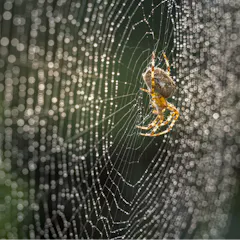
If Spider-Man were real, he could help scientists revolutionize healthcare. Since he’s not, researchers develop creative ways to produce spider silk to study.
Top contributors
-

Doctoral Student in Biochemistry, University of Washington
-
Emeritus Strategic Professor in Palaeontology, Flinders University
-
ARC Future Fellow, Behavioural Ecology, Macquarie University
-
Associate Professor of Biology, Tufts University
-
Investigador Científico, Estación Biológica de Doñana (EBD-CSIC); The University of Western Australia
-
Associate Professor of Medical Sciences, University of Wollongong
-
Postdoctoral Fellow, EPFL – École Polytechnique Fédérale de Lausanne – Swiss Federal Institute of Technology in Lausanne
-
Senior lecturer, School of Biological Sciences, University of Bristol, University of Bristol
-
Biologist
-
Fellow, Keele University
-
Lecturer, Macquarie University
-
Senior Lecturer in Molecular Biology, University of Sydney
-
Professor of Biological Sciences, University of Maryland, Baltimore County
-
Chercheur à l’Institut de systématique, évolution, biodiversité (ISYEB), Muséum national d’histoire naturelle (MNHN)
-
Professor of Entomology, North Carolina State University