
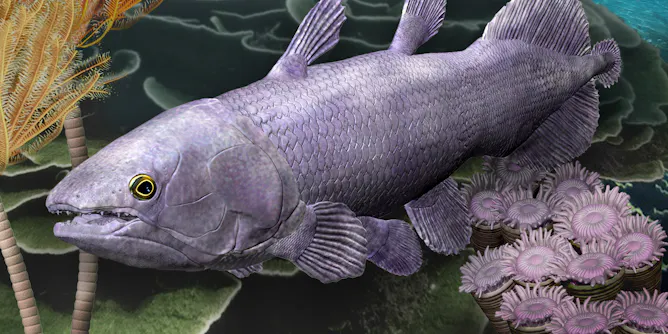
Researchers have discovered a new extinct species of coelacanth that lived 380 million years ago.
Articles on Biology
Displaying 101 - 120 of 508 articles

New techniques monitor the health of lakes in real time by analyzing their microbiome to anticipate and respond to environmental threats such as cyanobacteria.
Given the right conditions, certain types of cells are able to self-assemble into new lifeforms after the organism they were once part of has died.
New theory forces us to rethink some deeply ingrained concepts, such as life, death and disease.

New research demonstrates that the dye that gives nacho cheese its yellow-orange color can also make mouse skin see-through.
Bright lights at night may alter the brains of nocturnal arachnids, our new study shows. And we’re only just learning what this means for our ecosystems.

Canadians are no strangers to cold winters, when everything in nature appears to be frozen solid. However, under the ice cover of lakes, many animals remain active during the winter.
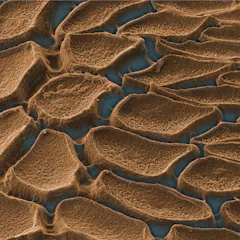
Researchers can use powerful microscopes to capture the tiny teeth in squid suckers.
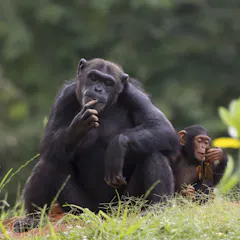
New research reveals that the human heart has evolved distinct structural and functional traits that set it apart from our closest great ape relatives.
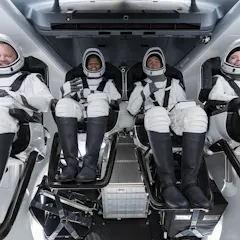
A set of papers published in Nature contain groundbreaking research into how even quick jaunts to space can affect an astronaut’s health.
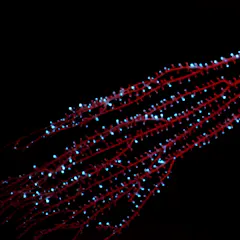
Dozens of animals, some on land but many in the ocean, can produce light within their bodies through chemical reactions. Scientists are still trying to understand when and why this trait developed.

Giraffe necks are a hot topic among biologists. A new study contradicts an older theory that says male giraffes need long necks to fight over mates.

Science has a need to verify results, but DeepMind’s protein prediction tool doesn’t work this way.
Researchers can create ‘single-cell radios’ using bacterial proteins to transmit the invisible activities within cells.

The AI model can predict structures for a vast array of the proteins used by living organisms.

The Perseverance rover has arrived at what’s thought to be an ancient shoreline on Mars.
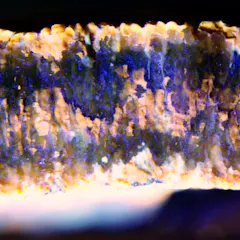
Calcite, the material making up fossilized eggshells, may preserve amino acids better than bone.

In her new book, Who’s Afraid of Gender?, feminist philosopher Judith Butler explains how gender and sex are socially constructed, while fighting critics who see gender as a threat to the social order.
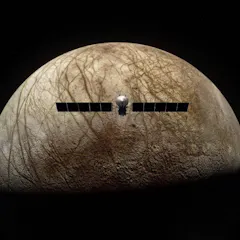
An instrument on the Europa Clipper mission might be able to detect biological cells from space.
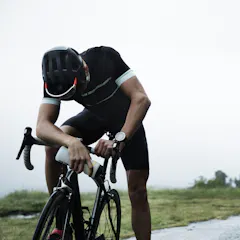
An elite athlete’s metabolism mostly looks different from a patient with COVID-19 − but their occasional similarities can reveal important insights into health and disease.
Top contributors
-

Doctoral Student in Biochemistry, University of Washington
-
Emeritus Strategic Professor in Palaeontology, Flinders University
-
ARC Future Fellow, Behavioural Ecology, Macquarie University
-
Associate Professor of Biology, Tufts University
-
Investigador Científico, Estación Biológica de Doñana (EBD-CSIC); The University of Western Australia
-
Associate Professor of Medical Sciences, University of Wollongong
-
Postdoctoral Fellow, EPFL – École Polytechnique Fédérale de Lausanne – Swiss Federal Institute of Technology in Lausanne
-
Senior lecturer, School of Biological Sciences, University of Bristol, University of Bristol
-
Biologist
-
Fellow, Keele University
-
Lecturer, Macquarie University
-
Senior Lecturer in Molecular Biology, University of Sydney
-
Professor of Biological Sciences, University of Maryland, Baltimore County
-
Chercheur à l’Institut de systématique, évolution, biodiversité (ISYEB), Muséum national d’histoire naturelle (MNHN)
-
Professor of Entomology, North Carolina State University