
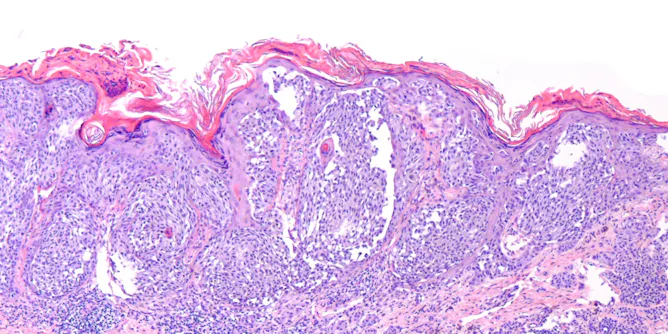
To better understand how cancer tumors grow, mathematicians use diffusion models.
Articles on Biology
Displaying 261 - 280 of 508 articles
New strategy helps build synthetic organs from scratch. This enabled the researchers to grow functioning liver tissue in the lab that could be transplanted into mice with liver disease.
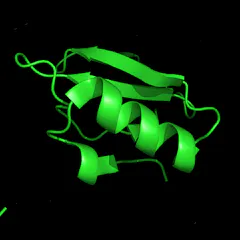
Scientists in an artificial intelligence lab have made a breakthrough in solving the problem of how proteins fold into their final three-dimensional shape. The work could speed up creation of drugs.
DNA from the humble sea sponge is shedding light on the “dark matter” that makes up much of our genomes.
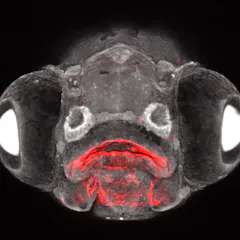
Recent studies using CRISPR to fast-track genetic studies into human disease genes appear flawed.

Research shows the clearing of forests on Indonesia’s Sulawesi island threatens the existence of endemic primates.
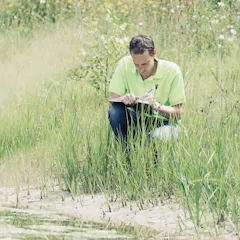
It’s one of the largest funding cuts to any university course, and will leave Australia ill-equipped to deal with the environmental challenges of the future.

Scientists are revealing the extent to which our behaviour is influenced by our genes, calling into question our capacity for free will. But there is still scope for change.
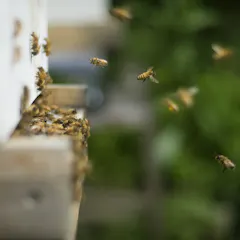
New research suggests individual bees are born with one of two learning styles – either curious or focused. Their genetic tendency has implications for how the hive works together.
Microbes in the gut aren’t just important for digesting your food. In pregnant women, these gut microbes are producing chemicals that are essential for proper brain development of the fetus.
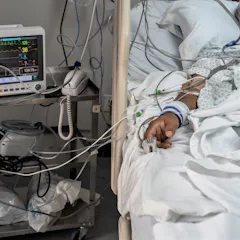
Three new studies show corticosteroids can reduce deaths in critically ill COVID-19 patients. But what about other patients?
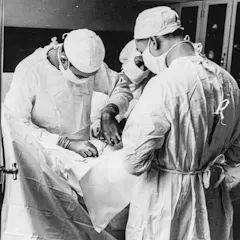
The US has a long history of forced sterilization campaigns that were driven by the bogus ‘science’ of eugenics, racism and sexism.

The extraordinary story of a stingray, its discovery and its uncertain fate in the Yemen war.
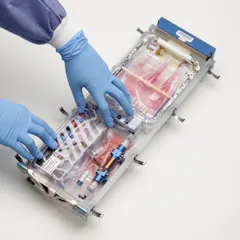
Why are scientists trying to grow organs at the International Space Station? People live on Earth not in zero-gravity. A stem cell expert explains why it is useful to do these experiments in space.
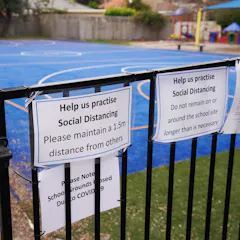
Recent cases among school children has prompted some to wonder: should we close schools again? The short answer is: no.
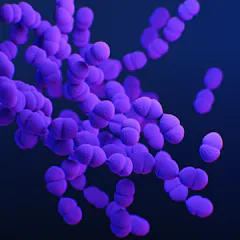
S. pneumoniae, the bacteria responsible for pneumonia, causes about one million deaths each year. Now we know how it uses the sugar raffinose to spread through the body to cause disease.
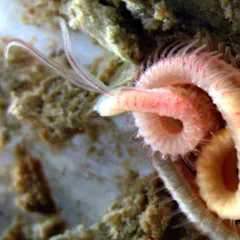
Mud blister worms make their homes in the shells of oysters and other shellfish, where they weaken their hosts.
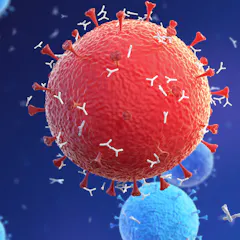
An antigen test was given emergency use authorization by the FDA in early May. A biochemist explains how COVID-19 antigen tests work.
The COVID-19 pandemic is interrupting scientific field work across North America, leaving blank spots in important data sets and making it harder to track ecological change.

Biohackers and other ‘connoisseurs of science’ have important social and scientific contributions to make.
Top contributors
-

Doctoral Student in Biochemistry, University of Washington
-
Emeritus Strategic Professor in Palaeontology, Flinders University
-
ARC Future Fellow, Behavioural Ecology, Macquarie University
-
Associate Professor of Biology, Tufts University
-
Investigador Científico, Estación Biológica de Doñana (EBD-CSIC); The University of Western Australia
-
Associate Professor of Medical Sciences, University of Wollongong
-
Postdoctoral Fellow, EPFL – École Polytechnique Fédérale de Lausanne – Swiss Federal Institute of Technology in Lausanne
-
Senior lecturer, School of Biological Sciences, University of Bristol, University of Bristol
-
Biologist
-
Fellow, Keele University
-
Lecturer, Macquarie University
-
Senior Lecturer in Molecular Biology, University of Sydney
-
Professor of Biological Sciences, University of Maryland, Baltimore County
-
Chercheur à l’Institut de systématique, évolution, biodiversité (ISYEB), Muséum national d’histoire naturelle (MNHN)
-
Professor of Entomology, North Carolina State University