
Some people have subtitles synaesthesia’ which means they see all speech appear as writing in their mind. And they only realised not everyone thinks this way when they saw a research study ad.
Articles on Cognition
Displaying 101 - 120 of 222 articles

Chewing can impact brain function, stress, anxiety, exam performance, pain perception, as well as hunger and food intake.

A new neuropsychology study on California wildfire survivors found chronic cognitive problems in addition to anxiety and PTSD.

When we listen to music, our brain predicts what will happen next. This prediction then influences whether or not we enjoy a song.

Musk’s autistic traits and history of being bullied might help explain why he appears combative on social media

We’ve become used to the term ‘brain fog’ in connection to long COVID. But what is it and how do you know if you have it?

Swearing can raise our pain threshold.

Horizontal number lines are often the default option – but our brains may process numbers more quickly in a vertical arrangement.

Cognition may evolve in response to increasing complexity.
Some scientists believe the ‘free energy principle’ can explain the behaviour of all living things – but others say it paints the world with too broad a brush to be useful.
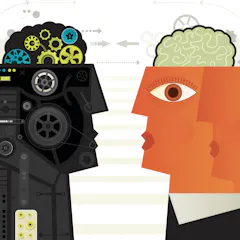
To build a true artificial mind, first map out how thinking works. Enter the Common Model of Cognition.

Ex-pats continually reconstruct mental simulations of scenes, smells, sounds and sights from those places – sometimes causing stressful feelings and anxiety.
Human brains seem to be wired differently to those of chimps or macaques.

A big study accounting for genes and socioeconomic background suggests that video games actually cause children’s intelligence to grow.
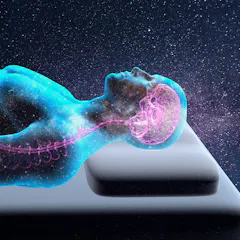
Both too much and too little sleep may interfere with our cognition.

Research highlights the importance of daily meditation, exercise and sleep for improving executive functioning, a component of attention that helps people focus.

Cannabis use is linked to poorer memory, attention and mental health.
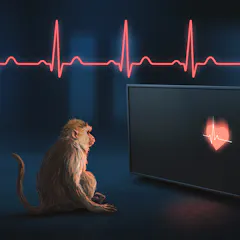
Researchers used a test designed for babies to show that rhesus monkeys can sense their own heartbeats. The finding opens up important paths of research into consciousness and mental health issues.
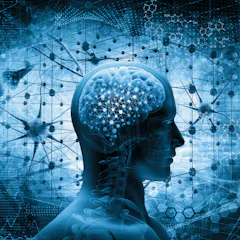
Emotions play a key role in many types of spontaneous thoughts. Even microemotions — which are often fleeting and unconscious — can affect thoughts and influence attention.

What use are we in helping to solve difficult global challenges if we’re so depressed and cognitively depleted that we can’t think of the best actions to take?
Top contributors
-

Professor of Clinical Neuropsychology, University of Cambridge
-
Postdoctoral Research Associate, Cognitive Neuroscience, University of Cambridge
-
Professor of Science and Technology for Brain-Inspired Intelligence/ Computer Science, Fudan University
-
Research Fellow, School of Biological Sciences, Monash University
-
Associate Professor, Department of Physiology, Monash University
-
Senior Lecturer in the School of Psychology, University of Lincoln
-
Researcher and analyst, Monash University
-
Senior Lecturer, Department of Psychological Sciences, Birkbeck, University of London
-
Senior Lecturer in Psychology, Nottingham Trent University
-
Hon Professor of Neuropsychology, Cardiff University
-
Young Principal Investigator of Neuroscience, Fudan University
-
Professeur de Sciences Comportementales, membre du groupe de recherche CNRS-GREGHEC, HEC Paris Business School
-
Postdoctoral research fellow of Neuroscience, Fudan University
-
Associate professor, University of Johannesburg
-
Senior lecturer, Griffith University