

Workplaces the world over tune their thermostats to 22C, because this supposedly optimises mental performance. But the factors that underpin a productive office are much more complicated.
Articles on Cognition
Displaying 161 - 180 of 222 articles

Even when everything’s going great in your relationship, you likely harbor some ambivalence toward your partner deep down. Psychology research suggests it’s not just OK, but normal.
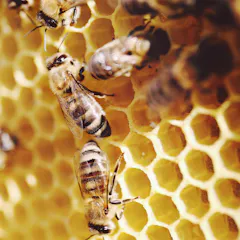
Bee brains contain less than one million neurons. Despite this, new research shows the honeybee can use symbols to perform basic maths, including addition and subtraction.

Research suggests people intuitively draw a distinction between what is known and what is believed. Recognizing the difference can help in ideological disagreements.

Decades of psychological research suggests humans are rather irrational. But a new approach, borrowing an idea from artificial intelligence, challenges this notion.
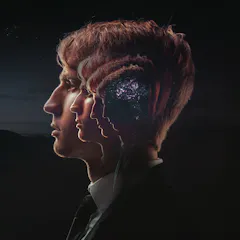
If consciousness is a by-product of our brains’ nonconscious processes, where does that leave us?
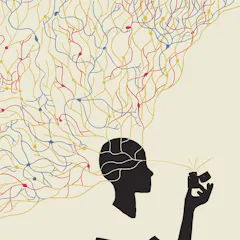
Our everyday lives are full of decision dilemmas. To understand why we make particular choices, scientists investigate how our brain deals with uncertainty.

Higher education for seniors shows promise – for combatting social isolation, increasing well-being and delaying the onset, or slowing the progression, of dementia.
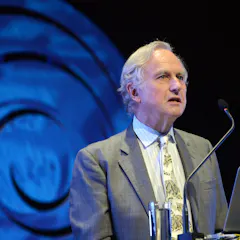
‘I don’t believe in God, I believe in science,’ atheists often argue. But that doesn’t mean their thinking is evidence-based.

Compulsory sport and physical education at school will improve children’s memory, attention and ability to concentrate, not just boost fitness. The evidence is in.

The relentless news cycle has many people feeling overwhelmed and stressed, wondering how to calm their lives and stay healthy. Here are some tips from neuoscience that may help.

Childhood adversity is linked to social and mental health problems later in life. New research suggests brains that aren’t as good at recognizing rewards and responding to change may be to blame.

Aviation safety has much to gain from neuroscience: studying how our brains become “deaf” to alarms allows us to adapt the pilot’s flight instruments.

Time often seems to fly by when you’re a parent. A social psychologist explains why it actually – and fortunately – does not.
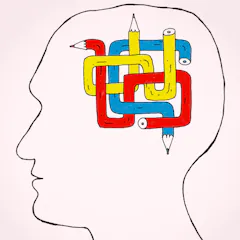
Our minds are wired to anticipate what’s coming next – and fill in the gaps when we don’t have all the information.

As well as increasing physical fitness and mental health, martial arts can boost brain cognition too.

Our study found that office workers performed just the same, whether the air conditioning was set at 22°C or 25°C. But making that tweak can cut energy use by 18%.

Although we can’t change our age or genetic profile, there are fortunately several lifestyle changes we can make that will reduce our dementia risk.

Psychological phenomena have long been thought of as universal. But it turns out scientists may have been blinded by their own culture.

Using simple strategies, parents and teachers can help stimulate linguistic and other cognitive development in children.
Top contributors
-

Professor of Clinical Neuropsychology, University of Cambridge
-
Postdoctoral Research Associate, Cognitive Neuroscience, University of Cambridge
-
Professor of Science and Technology for Brain-Inspired Intelligence/ Computer Science, Fudan University
-
Research Fellow, School of Biological Sciences, Monash University
-
Associate Professor, Department of Physiology, Monash University
-
Senior Lecturer in the School of Psychology, University of Lincoln
-
Researcher and analyst, Monash University
-
Senior Lecturer, Department of Psychological Sciences, Birkbeck, University of London
-
Senior Lecturer in Psychology, Nottingham Trent University
-
Hon Professor of Neuropsychology, Cardiff University
-
Young Principal Investigator of Neuroscience, Fudan University
-
Professeur de Sciences Comportementales, membre du groupe de recherche CNRS-GREGHEC, HEC Paris Business School
-
Postdoctoral research fellow of Neuroscience, Fudan University
-
Associate professor, University of Johannesburg
-
Senior lecturer, Griffith University