
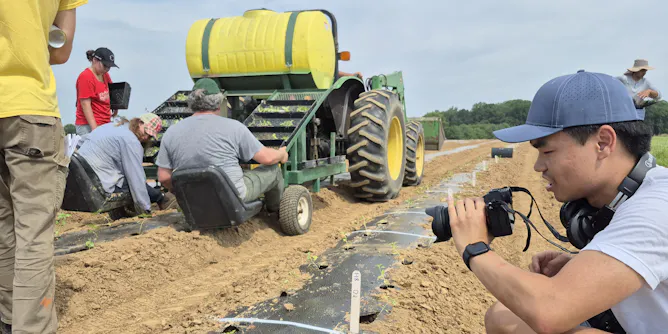
In a Rutgers University lab, students and scientists collaborate to tell the story behind scientific research.
Articles on Learning
Displaying 1 - 20 of 414 articles

Working with the traces of thought instead of the process of thinking means AI systems are limited – and they limit their users, too.
You might even be putting off studying right now, but that doesn’t mean the whole day is a lost opportunity.
Sweeping changes to the curriculum, NCEA and school governance have divided the education sector, all while major challenges remain overlooked.

South Africa wants teachers to change society. So why are they being trained to fit in?
The number of uncertified teachers rose, while enrolled student numbers dropped, following a state takeover of Houston. Data shows other uneven results across districts.

Generative AI can make learning faster and easier, but that does not necessarily mean we are learning better.
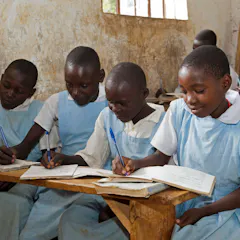
In Kenyan classrooms, it’s not always practically possible for teachers to follow the recommended approach.
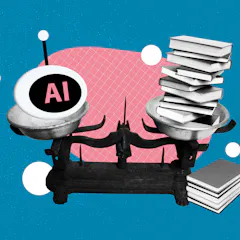
Understanding the technological shift from a literary to a post-literary society is crucial for rethinking AI’s place in learning environments.

Filling every spare moment with a podcast, message or social-media scroll may deny the brain a useful window for consolidating new memories.

Bacteria use strategies similar to artificial neural networks to use the past to adapt to the future.

High school and uni students may wonder how best to prepare for upcoming exams. Here’s how they can use their time wisely.
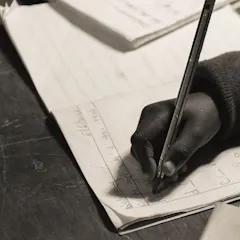
In a case study, parents responded positively to their children being taught science in two languages.

New research shows that YouTube is used not just as an occasional supplement, but as a staple of classroom instruction.
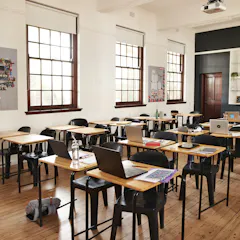
Rather than considering how much time students spend on screens, the more useful question is whether they are asking questions and solving problems with the help of technology.
Listening to stories can remove the ‘decoding’ process that dyslexia sufferers struggle with.

A little boredom can be good for you.

Playing improv music activates the reward system of the brain.
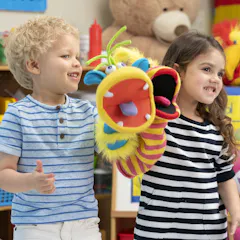
Play-based early childhood programs can help young kids develop emotional regulation and problem-solving skills, traits that can serve them well throughout childhood.

A rising number of school districts across the country are beginning their new academic years in July or August, raising the likelihood that kids and educators will encounter scorching days.
Top contributors
-

Professor of Reading and Children’s Development, The Open University
-
Professor of Higher Education, Rhodes University, South Africa, Rhodes University
-
Research Scientist, African Population and Health Research Center
-
Associate Professor of Teacher Education, University of Sydney
-
Professor of Educational Psychology, University of Wollongong
-
Director of the Learning, Instruction & Technology Lab and Professor of Educational Psychology, School of Education, The University of Queensland
-
Scientia Professor and Professor of Educational Psychology, UNSW
-
Professor of Early Childhood Studies, The University of Melbourne
-
Campus and Secondary Principal at the International School of Geneva's La Grande Boissière, Research Associate at the University of Geneva's department of Education and Psychology, Université de Genève, Université de Genève
-
Professor, School of Education, University of Southern Queensland
-
Professor of Education, Durham University
-
Professor, Melbourne Graduate School of Education, The University of Melbourne
-
Senior Lecturer (Adjunct), Nutritional neuroscientist, Adelaide University
-
Deputy Director, ARC Centre of Excellence in Cognition and its Disorders, Macquarie University
-
Professor Emeritus, Swinburne University of Technology