
Whether AI can ‘think’ is a different question than whether it is ‘intelligent.’
Articles on Cognition
Displaying 41 - 60 of 222 articles

Chimpanzees’ turn-taking shows skills that may have supported the evolution of human conversation.

How researchers measure the logical reasoning of monkeys, pigeons, rats, fish and wasps shapes how they understand mental processes in animals − and in people.

Older adults are generally good at judging their capacity for handling their finances, but
cognitive impairment degrades that skill. Proactive planning can help protect them from fraud.

During the Industrial Revolution, craftsmanship retreated to the margins. As AI becomes widely adopted, will the same happen to original thinking?

Scientists have created a universal colour experience using lasers.

Perseverance helps people achieve goals and is linked with well-being. But combined with chronic societal stressors, it can lead to cognitive overload that puts a strain on brain health.

Moving your body can have a big impact on your brain – and it doesn’t have to be a workout at the gym.

If our brain health isn’t optimal, it’s hard to achieve physical fitness challenges.
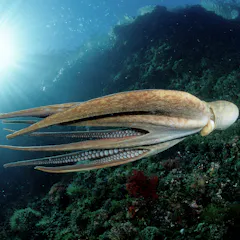
Animal welfare laws don’t protect invertebrates, but there’s evidence that some, such as octopuses, are as intelligent as many mammals – even if their cognition takes very different forms.

Understanding how new neurons affect brain function throughout adulthood can offer new approaches to treating epilepsy and dementia.

What does it mean if young men sense that their masculinity is under threat? Or if they sense a bleak and hopeless future?

Our new research found behaving superstitiously could benefit us psychologically, even if we know it has no real effect on the outcomes of our actions.

The creation of delusions may involve a fair bit of rational thinking.

Some athletes seem to have an ability to predict what’s going to happen in their sports but anticipation is an attribute anyone can develop.

Communication mishaps can happen, but many may be a sign of impaired social cognition.
Our ability to adapt to changing circumstances plays an important part in our health decisions. New research suggests health education campaigns need to take this into account.
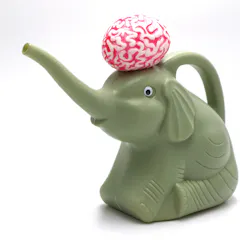
Brains evolve with body size according to a simple rule. Exceptions to that rule include our own species with enormous brains.
This phenomenon can help us understand polarisation in society.

We locate beautiful items quicker than less appealing ones.
Top contributors
-

Professor of Clinical Neuropsychology, University of Cambridge
-
Postdoctoral Research Associate, Cognitive Neuroscience, University of Cambridge
-
Professor of Science and Technology for Brain-Inspired Intelligence/ Computer Science, Fudan University
-
Research Fellow, School of Biological Sciences, Monash University
-
Associate Professor, Department of Physiology, Monash University
-
Senior Lecturer in the School of Psychology, University of Lincoln
-
Researcher and analyst, Monash University
-
Senior Lecturer, Department of Psychological Sciences, Birkbeck, University of London
-
Senior Lecturer in Psychology, Nottingham Trent University
-
Hon Professor of Neuropsychology, Cardiff University
-
Young Principal Investigator of Neuroscience, Fudan University
-
Professeur de Sciences Comportementales, membre du groupe de recherche CNRS-GREGHEC, HEC Paris Business School
-
Postdoctoral research fellow of Neuroscience, Fudan University
-
Associate professor, University of Johannesburg
-
Senior lecturer, Griffith University