

Stacking up bursts of reading, puzzles and journalling is being promoted as a way to boost brainpower.
Articles on Cognition
Displaying 1 - 20 of 222 articles

The time, energy and skills needed to verify AI’s answers to your queries can erase any productivity gains that the technology provides.

For veterans with brain injuries, noisy, overstimulating environments can lead to high stress and irritability, making them want to avoid such situations altogether.
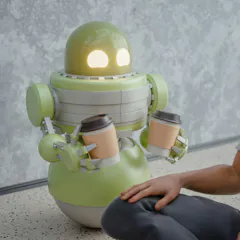
‘World models’ are an emerging technology that could help AI systems anticipate what might happen and use that to act. This is not the same as human ‘thinking.’

Offering daily recess to young children and teenagers alike can help strengthen students’ executive functioning skills, focus and creativity, among other benefits.

A recent experiment found that people working with ChatGPT generated fewer unique ideas than those who collaborated with other humans.
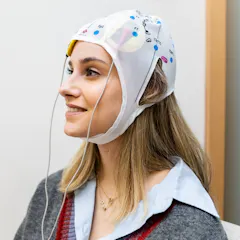
Researchers are exploring whether stimulating the brain with electric currents or magnetic fields helps people learn physical skills more effectively.

Ageing isn’t all downhill – science shows we gain more than wrinkles.

Advertising can turn our fears about aging, failure and belonging into reasons to buy, and repeated exposure can reshape what we see as a good life.

You might be tempted to go for a run to control your anger. But that can make things worse. Here’s what the evidence tells us actually works.

We risk replacing genuine knowledge with ‘work slop’.

The modern scientific consensus is that your unconscious mind does the heavy lifting.

Mild cognitive decline doesn’t necessarily mean you’ll develop dementia. But it’s a common fear.
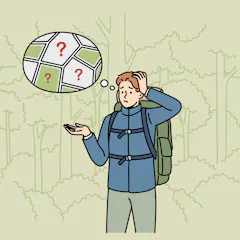
The condition is more than merely being bad with directions.

A database of great ape research promises to unlock deeper understanding of their cognition, intelligence and social behaviour.

Do you knit or solve puzzles for fun? Research suggests hobbies such as these could help keep your brain healthy, particularly in older age.
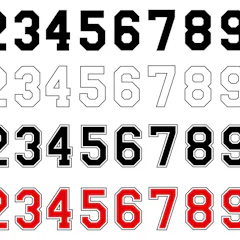
On your mental number line, are the numbers smaller on the left or on the right? Two comparative cognition researchers explain how culture may influence the orientation – but also may not.

There’s a difference between using a tool to assist you, and using one to replace cognitive effort.

Do you actually know how a bicycle or a zipper work, or what a penny or a common brand logo look like? Intellectual humility can help reduce overconfidence in what you don’t understand.

Physical activity improves cognitive function – our ability to think and process information.
Top contributors
-

Professor of Clinical Neuropsychology, University of Cambridge
-
Postdoctoral Research Associate, Cognitive Neuroscience, University of Cambridge
-
Professor of Science and Technology for Brain-Inspired Intelligence/ Computer Science, Fudan University
-
Research Fellow, School of Biological Sciences, Monash University
-
Associate Professor, Department of Physiology, Monash University
-
Senior Lecturer in the School of Psychology, University of Lincoln
-
Researcher and analyst, Monash University
-
Senior Lecturer, Department of Psychological Sciences, Birkbeck, University of London
-
Senior Lecturer in Psychology, Nottingham Trent University
-
Hon Professor of Neuropsychology, Cardiff University
-
Young Principal Investigator of Neuroscience, Fudan University
-
Professeur de Sciences Comportementales, membre du groupe de recherche CNRS-GREGHEC, HEC Paris Business School
-
Postdoctoral research fellow of Neuroscience, Fudan University
-
Associate professor, University of Johannesburg
-
Senior lecturer, Griffith University