

From algae to a Nobel prize: listen to The Conversation Weekly podcast to hear Karl Deisseroth explain his brain science breakthrough.
Articles on Neuroscience
Displaying 1 - 20 of 857 articles
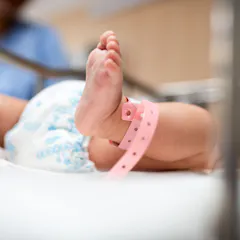
Detecting impaired motor function in infants using AI-driven motion capture is producing promising results. A French research team introduces the new screening tool for spinal muscular atrophy (SMA).
Neuroscientific advances follow a pattern of visualizing the brain, measuring its function and then controlling it. Optogenetics may lead to a new era of medical treatment.
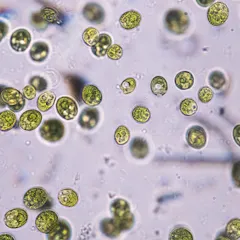
Karl Deisseroth, Peter Hegemann and Georg Nagel won for optogenetics, a technique that uses light to switch brain cells on and off.

Noises that aren’t nerve-wracking for most people can trigger intense stress in people with misophonia.

Here’s what more than 150 years of science really tells us about being left-brained vs right-brained.

Ageing isn’t all downhill – science shows we gain more than wrinkles.

Research on how heading to a museum could be good for the brain and general wellbeing suggests that culture fixes are an important resource for public health and social cohesion.

Advertising can turn our fears about aging, failure and belonging into reasons to buy, and repeated exposure can reshape what we see as a good life.
Surgery can restore communication between the hand and brain, but new research suggests the brain’s response to individual fingers may change.

An MRI study zeroes in on the brain networks that underline collective appreciation of art.
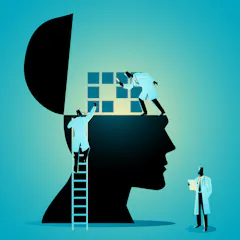
Despite advances in neuroscience, the underlying biology of mental illness has remained elusive. The DSM-6 will attempt to integrate neurobiology into how clinicians diagnose and treat psychiatric conditions.

There is not only one way to learn to read, as people who are deaf, blind or dyslexic demonstrate.

Brains scans show a signature linked to a dissolved separation between the self and the world.

Caregivers often seek a specific age that their child can be left home alone. However, the neuroscience of brain development suggests that readiness depends on much more than a birthday.
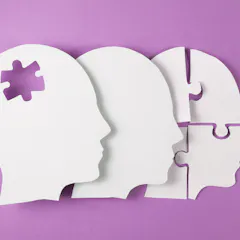
Millions of people suffer from debilitating symptoms their doctors don’t quite believe. But advances in neuroscience and education may be changing the tides for treatment.

Alcohol abstinence alters brain activity in ways that may drive someone with alcohol use disorder to relapse.

From pidgins to Tolkien and Esperanto, humans have created entirely new languages for many different reasons.

Think your dog can tell when you’re angry rather than sad? New research inside dogs’ brains suggests the answer might be more complicated than you think.

Working with and living in spatially complex environments may help delay cognitive decline, though more research is needed.
Top contributors
-

Professor of Clinical Neuropsychology, University of Cambridge
-
Penn State
-
Postdoctoral Research Associate, Cognitive Neuroscience, University of Cambridge
-
Senior Lecturer (Adjunct), Nutritional neuroscientist, Adelaide University
-
Head of Developmental Psychobiology Lab, Deakin University
-
Postdoctoral Researcher in Cognitive Neurosciences, The University of Queensland
-
Senior Research Fellow, Uehiro Centre for Practical Ethics, University of Oxford
-
Professor of Anatomy, University of Bristol
-
Professor Emeritus of Cognitive NeuroImaging, Aston University
-
Professor of Cognitive Neuroscience, Bangor University
-
Senior Research Fellow, The Perron Institute for Neurological and Translational Science, and Faculty of Health Sciences, Curtin University
-
Associate Professor of Family & Community Medicine and Pediatrics, retired, University of California, San Francisco
-
Professor of Behavioral Neuroscience, University of Richmond
-
Lead, Cognition and Consciousness Imaging Group, Division of Anaesthesia, University of Cambridge
-
Associate Professor in Clinical Psychology and Neuropsychology, Trinity College Dublin