

The remote Bassari community, located between Senegal and Guinea, experiences climate change as one of many changes. They are best placed to come up with solutions that work for them.
Articles on Solutions
Displaying 121 - 140 of 144 articles
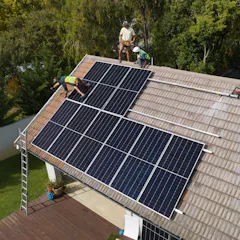
Only 5% of South Africa’s energy comes from solar power while 85% is generated from coal. Loans, more subsidies and security for rooftop solar panels need to be put in place.
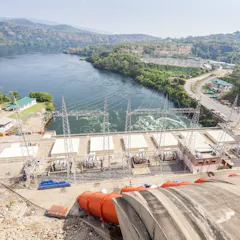
As renewable energy becomes cheaper and climate change affects water availability, the contribution of hydropower will decline.
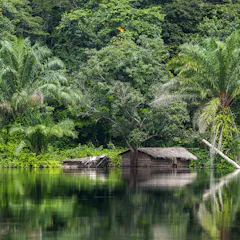
The carbon stored by forests can be bought by polluting companies to offset their emissions. This can displace communities who depend on natural forests for their livelihoods.

Kenya, Ethiopia, Djibouti, South Sudan and Uganda are investigating whether deep groundwater bores could support drought stricken communities. Could a networked approach help?

Sweet sorghum has multipurpose post-harvest uses. It can produce grains, animal feed and sugary juice, making it unique among crops.
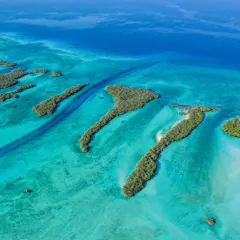
Baby corals may hold promise for building coral reef resilience in Seychelles and beyond.
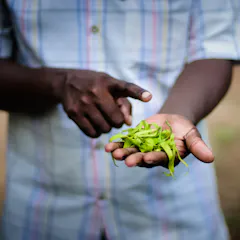
Biogas systems that generate cooking gas from plant waste can be relatively low-cost to set up. They come with environmental and health benefits for rural people who have only firewood to cook with.
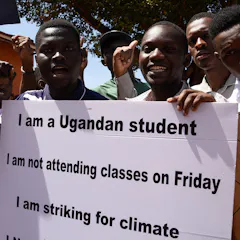
Business and management graduates can become the kind of sustainability champions the world needs today.
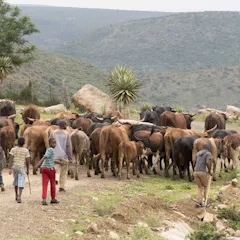
Planting millions of trees in natural grassland is largely ineffective in the battle against global warming because it adds little or no additional carbon storage.
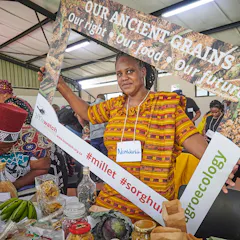
African governments must acknowledge the universal right to diverse and nutritious food if they are to end malnutrition. Five projects show how this can be done.
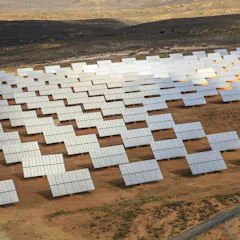
If Africa built only all the renewable power plants it has already planned, this would be enough to generate 76% of all electricity needed on the continent by 2040.

In South Africa, a group of citizen scientists who test water quality and log the results on a specialised app have helped keep the water supply for 4.3 million people clean.
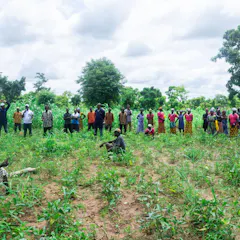
Smallholder contract farmers in Ghana have benefited from loans for fertiliser, drought resistant seeds, guaranteed markets and training in how to farm differently to meet changes in the climate.

A growing number of people are opting to generate their own renewable energy and escape load shedding.
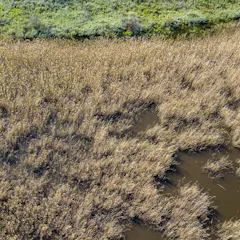
Wetlands can prevent flooding, trap carbon and support livelihoods, as long as they are protected and managed.
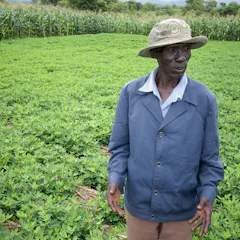
Just three plant species – wheat, maize and rice – account for 60% of all food eaten globally. A crop science expert argues that many of Africa’s 30,000 edible plants must be revived.
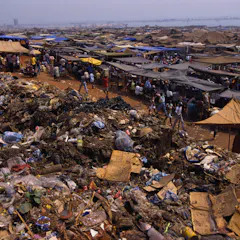
Garbage is decomposing in landfill sites across sub-Saharan Africa, releasing methane gas. If governments harnessed this as clean energy, Africa would avoid environmental damage worth US$6.7 billion.

Drexel researchers evaluated a 2014 program implemented by Kevin Bethel when he was deputy police commissioner that led to fewer arrests of students in schools.
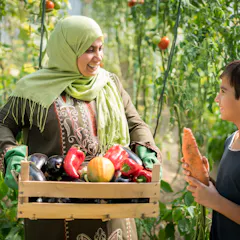
Though entrepreneurship of any kind is not easy, it can instil tenacity in the face of adversity. There are lessons here for trainee teachers.
Top contributors
-

Professor of Climate Change, Food Systems and Health and Director of The Lancet Countdown in Africa, London School of Hygiene & Tropical Medicine
-
Senior research officer: Climate Adaptation in the African Climate and Development Initiative (ACDI), University of Cape Town
-
Professor in Mechanical and Mechatronic Engineering, Stellenbosch University
-
Senior Lecturer at Oyo State College of Agriculture and Technology, Igboora, Nigeria and Extraordinary Senior Lecturer at Indigenous Knowledge Systems Centre, North-West University, Mafikeng, South Africa, North-West University
-
Research Scientist: Centre for Global Change, Walter Sisulu University
-
Director of African Climate and Development Initiative, Professor in Environmental and Geographical Science, University of Cape Town
-
Researcher, Centre for Global Change, Walter Sisulu University
-
Professor of Environmental Science, Rhodes University
-
Professor in Engineering, Stellenbosch University
-
Professor and Head of the Department of Geography, Geoinformatics & Meteorology, University of Pretoria
-
Researcher in Environmental Science, Rhodes University
-
Ass. Professor, University of Maryland Eastern Shore; North-West University
-
Lecturer, University of Fort Hare
-
Senior Research Associate, University of Johannesburg
-
Lecturer in the Department of Management, Uganda Management Institute