
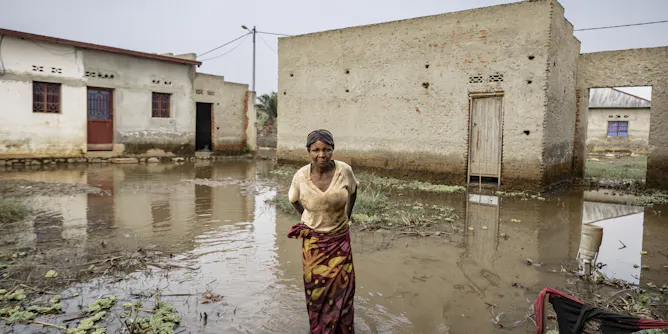
South Africa’s G20 presidency is a chance to lobby for investment in drought-tolerant crops, better irrigation, and early warning systems.
Articles on Solutions
Displaying 61 - 80 of 144 articles
South Africa’s coal mines seem to be leaking far more methane than official records show.

An EcoBall match is a live demonstration of the circular economy.

Public ponds, fountains and new reflective buildings are needed to protect Yaoundé’s people from the heat island effect.
Africa’s small-scale aquaculture practitioners need cold storage facilities to stop their fish from going to waste.
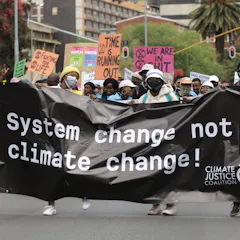
Recycling and cutting personal waste isn’t enough. Polluters must be regulated, and reparations paid by companies that have harmed the environment.
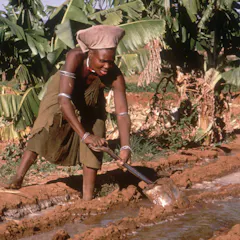
The G20 must collect ancient practices that can help the world withstand climate change so that this knowledge is available for future generations.

Africa’s second climate summit agreed that climate finance to Africa must be a legal obligation and that every country on the continent should have a climate law.

The Amadiba community in South Africa holds fast to traditional farming. They have also withstood pressure to mine their land.
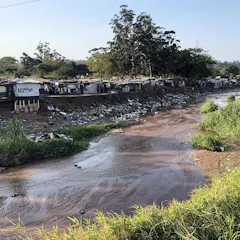
Researchers have found six steps to overturn unfair economic and social systems that leave disadvantaged people at risk of climate disasters.

Millions of jobs could be created from sustainable economic ocean development.
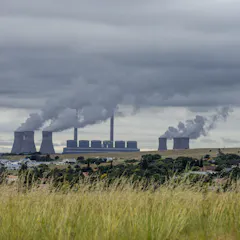
South Africa’s new climate targets cut emissions only modestly by 2035; a cautious path risks missing green investment, even though deeper cuts are within reach.

South Africa’s G20 presidency is working on getting communities ready to survive disasters.
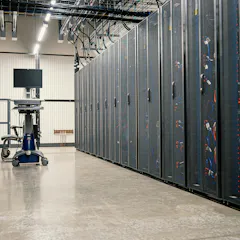
Stored data contributes to greenhouse gas emissions by needing power for servers and cooling systems.
Africa’s Second Climate Summit in Ethiopia will try to find ways to bring in more finance to help the continent adapt to climate change.
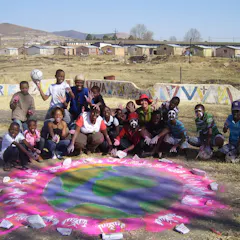
Low-income communities in Africa have done nothing to cause climate change but are worst affected by climate-related disasters, which are expensive to recover from.
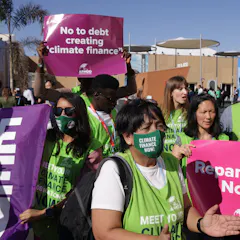
State-contingent debt instruments allow countries hit by economic and climate crises to restructure their debt repayments.
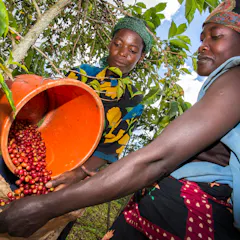
Agriculture is not just a victim of climate change. It is key to the solution. It must receive the same attention globally as fossil fuels and energy transitions.

In his new book, Carl Death weighs up climate policies in African countries with each country’s stories and films about climate change.

Successful applicants will be invited to the November event to present details of their project.
Top contributors
-

Professor of Climate Change, Food Systems and Health and Director of The Lancet Countdown in Africa, London School of Hygiene & Tropical Medicine
-
Senior research officer: Climate Adaptation in the African Climate and Development Initiative (ACDI), University of Cape Town
-
Professor in Mechanical and Mechatronic Engineering, Stellenbosch University
-
Senior Lecturer at Oyo State College of Agriculture and Technology, Igboora, Nigeria and Extraordinary Senior Lecturer at Indigenous Knowledge Systems Centre, North-West University, Mafikeng, South Africa, North-West University
-
Research Scientist: Centre for Global Change, Walter Sisulu University
-
Director of African Climate and Development Initiative, Professor in Environmental and Geographical Science, University of Cape Town
-
Researcher, Centre for Global Change, Walter Sisulu University
-
Professor of Environmental Science, Rhodes University
-
Professor in Engineering, Stellenbosch University
-
Professor and Head of the Department of Geography, Geoinformatics & Meteorology, University of Pretoria
-
Researcher in Environmental Science, Rhodes University
-
Ass. Professor, University of Maryland Eastern Shore; North-West University
-
Lecturer, University of Fort Hare
-
Senior Research Associate, University of Johannesburg
-
Lecturer in the Department of Management, Uganda Management Institute