
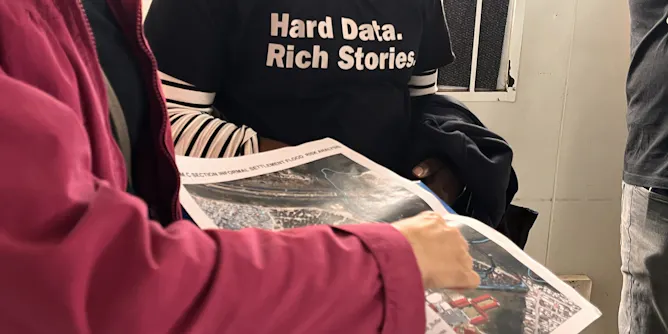
Climate adaptation funders want projects ready to launch. But new research shows why communities must help design climate solutions if the projects are to last.
Articles on Climate solutions
Displaying 1 - 20 of 158 articles
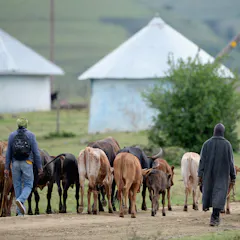
Smallholder farmers have time to set up shared shady areas with water and feed for livestock that might die in the Super El Niño – if they get support now.
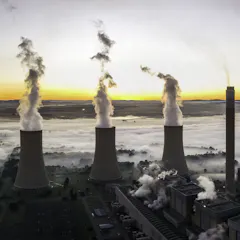
As COP31 approaches, South Africa must enforce its climate laws, reduce coal dependence and protect workers and communities who rely on coal to survive.

As the climate changes, bats will need both suitable foraging landscapes and caves for roosting.

Africa’s circular economy is already at work in repair shops and scrap yards. Backing the people who keep goods in use could cut waste and create better jobs.
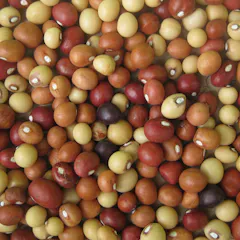
Using daily weather instead of seasonal averages, researchers mapped where and when to plant bambara groundnut in Eswatini and South Africa.
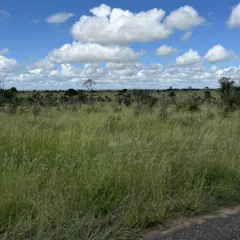
New research in the Kruger National Park has found that rising CO₂ in the atmosphere helps savanna grasses grow when less water is available.
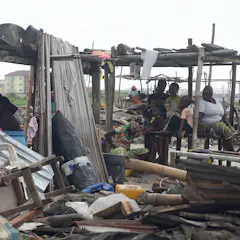
Residents whose homes cluster along waterways, canals and shorelines have built organised systems for living with climate change.
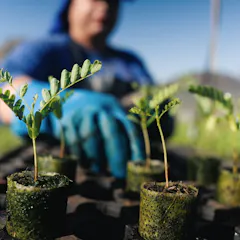
Change happens rapidly when we know where to look: these solutions could tip the world towards a better future.

People restoring Africa’s ecosystems need climate services that combine forecasts with Indigenous knowledge and information about land, water and livelihoods.

Climate finance should not be separated from development funding.
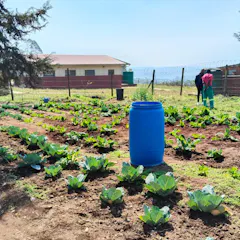
In a rural South African village, climate action is influenced by ubuntu: the belief that people are connected and have a responsibility to one another.
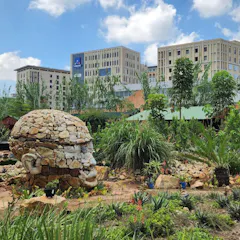
Parks do more than cool cities. They also help people work together to cope with climate change, but only if local communities help design, manage and care for them.

Anna Turns (AT), senior environment editor and Rachael Jolley (RJ), environment editor, showcase climate-friendly ways to transform your living spaces.

Factories that process crops and agricultural products need training and support to help them face climate risks.
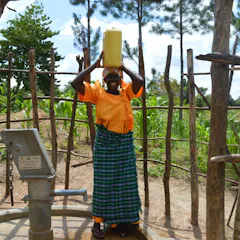
Solutions for food systems exist; scaling them is where the challenge lies.

From roadside plots to community gardens, urban farmers in Alexandra township, South Africa are growing food, earning income and coping with climate change.
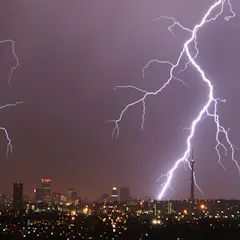
Citizens don’t just respond to disasters. They also respond to how governments manage them.
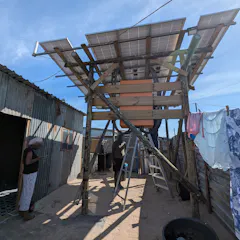
A new basic solar grant made electricity more affordable for families in the Qandu Qandu shack settlement in Cape Town, South Africa.
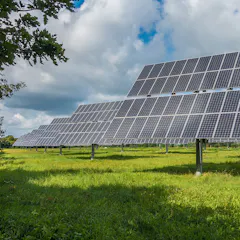
Africa is rapidly expanding electricity generation, but new research shows energy planning must also account for water scarcity and carbon dioxide emissions.
Top contributors
-

Professor of Climate Change, Food Systems and Health and Director of The Lancet Countdown in Africa, London School of Hygiene & Tropical Medicine
-
Senior research officer: Climate Adaptation in the African Climate and Development Initiative (ACDI), University of Cape Town
-
Director of African Climate and Development Initiative, Professor in Environmental and Geographical Science, University of Cape Town
-
Senior Lecturer at Oyo State College of Agriculture and Technology, Igboora, Nigeria and Extraordinary Senior Lecturer at Indigenous Knowledge Systems Centre, North-West University, Mafikeng, South Africa, North-West University
-
Professor of Environmental Science, Rhodes University
-
Ass. Professor, University of Maryland Eastern Shore; North-West University
-
Researcher, Centre for Global Change, Walter Sisulu University
-
Adjunct Associate Professor of Population Health Sciences, University of Wisconsin-Madison
-
Professor of Environmental Medicine, University of Wisconsin-Madison
-
Professor Emeritus of Environmental and Occupational Health Sciences, University of Washington
-
Professor in Engineering, Stellenbosch University
-
Professor and Head of the Department of Geography, Geoinformatics & Meteorology, University of Pretoria
-
Researcher in Environmental Science, Rhodes University
-
Associate Professor of Climate Change, Technology and Policy, Carleton University
-
Professor of Policy Analysis, RAND School of Public Policy