
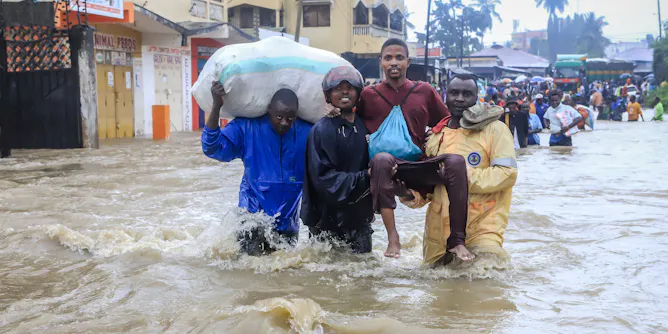
Climate information services that warn of impending disasters need to be set up fast if African countries are to have a chance of minimising the damage caused by extreme weather.
Articles on Solutions
Displaying 101 - 120 of 144 articles
The South African Reserve Bank’s mandate is price and financial stability. It has the tools to identify, analyse and manage these risks, including those linked to climate change.
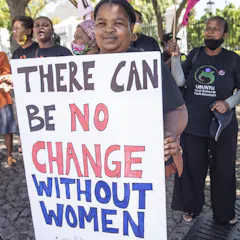
Evidence suggests that a low-carbon transition could worsen gender inequalities if not properly addressed in climate policy.

The green talent in short supply includes wind and solar farm technicians and engineers, solar panel installers, green energy auditors, hydrogen fuel cell specialists, and data scientists.
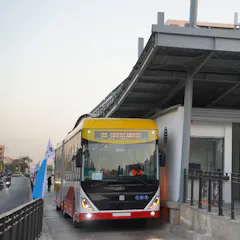
Sub-Saharan Africa is lagging behind in the transition to electric cars and motorbikes. Investment in local manufacturing, renewable energy and storage systems to supply charging stations is needed.
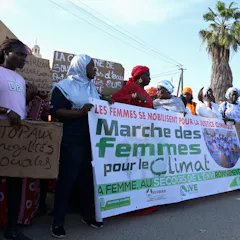
The media must do more to create awareness about the role communities can play in adapting to climate change.
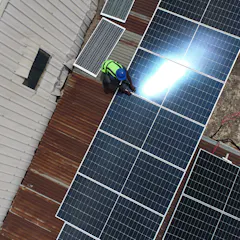
Off-grid solar energy is a panacea to the electricity crisis in Africa.
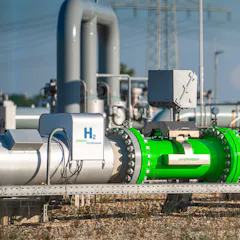
The European Union gave South Africa grants of €32 million to set up a green hydrogen industry. But the real cost to do this will be €20 billion. More funds are needed.

Smallholder farmers in Nigeria have told researchers they’d benefit from livestock index insurance which pays farmers when weather stations indicate that a severe drought or storm has hit the area.
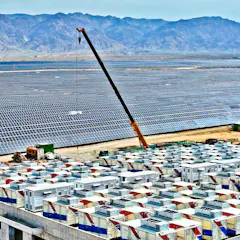
To harness its abundant sunlight and wind, South Africa needs renewable energy storage systems to store this clean power. The government must encourage companies to set up giant battery systems.

Baobabs have been a source of food, fibre and medicine in Africa for centuries.
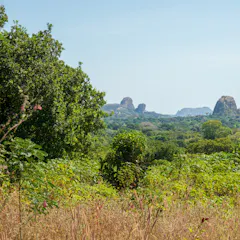
Scientists find miombo woodlands are likely to be storing up to twice the amount of carbon previously thought.
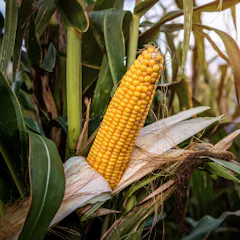
Hundreds of small-scale farmers in South Africa’s North West province who switched to eco-friendly, climate-smart farming have seen their maize harvest shoot up and their soil improve.

Climate and weather play a large role in people’s leisure travel decisions.
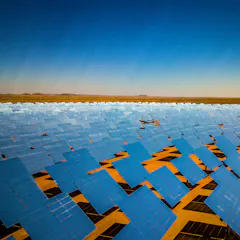
Africa could be headed for a green growth scenario, where it curbs greenhouse gas emissions and grows economies through local manufacturing of green energy equipment.
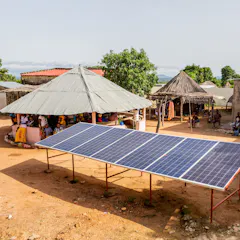
The principles of ubuntu (a person is only human through others) should underpin the rollout of renewable energy in rural Zimbabwe if everyone is to get equal access to solar power.

With the climate heating up rapidly, African cities must green every space to cool down and absorb more rain water, minimising floods. Nature-based solutions can make a huge difference.
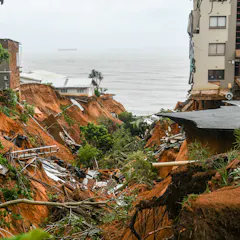
South Africa’s game reserves, tourist parks, chalets and ocean activities are being disrupted by extreme weather. To protect livelihoods, urban planning needs to adapt to climate change fast.
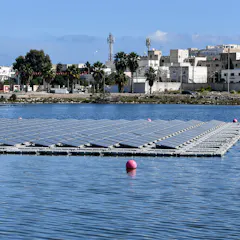
Floating solar panel systems on lakes and dams could generate much of Africa’s energy, decrease greehouse gas emissions, and stop freshwater evaporating, new research has found.
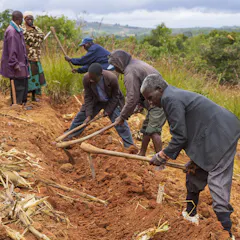
New research has found that smallholder farmers in Malawi can grow bigger maize crops if they plant maize with legumes in deep beds with natural ditches to catch water alongside.
Top contributors
-

Professor of Climate Change, Food Systems and Health and Director of The Lancet Countdown in Africa, London School of Hygiene & Tropical Medicine
-
Senior research officer: Climate Adaptation in the African Climate and Development Initiative (ACDI), University of Cape Town
-
Professor in Mechanical and Mechatronic Engineering, Stellenbosch University
-
Senior Lecturer at Oyo State College of Agriculture and Technology, Igboora, Nigeria and Extraordinary Senior Lecturer at Indigenous Knowledge Systems Centre, North-West University, Mafikeng, South Africa, North-West University
-
Research Scientist: Centre for Global Change, Walter Sisulu University
-
Director of African Climate and Development Initiative, Professor in Environmental and Geographical Science, University of Cape Town
-
Researcher, Centre for Global Change, Walter Sisulu University
-
Professor of Environmental Science, Rhodes University
-
Professor in Engineering, Stellenbosch University
-
Professor and Head of the Department of Geography, Geoinformatics & Meteorology, University of Pretoria
-
Researcher in Environmental Science, Rhodes University
-
Ass. Professor, University of Maryland Eastern Shore; North-West University
-
Lecturer, University of Fort Hare
-
Senior Research Associate, University of Johannesburg
-
Lecturer in the Department of Management, Uganda Management Institute