

New statistics show that people with dementia have been particularly vulnerable during the pandemic.
Articles on Alzheimer's disease
Displaying 241 - 260 of 455 articles

Architects need to learn to see dementia not as a disease but as a disability, and shift the design focus to spaces that can help maintain the everyday functions of people with the condition.
Dementia and depression are two diagnoses that rob older adults of health and happiness. Despite their obvious differences, it is becoming ever more apparent that the two conditions are connected.

Drinking at “safe” levels was shown to reduce the amount of a person’s total brain tissue.

September is Alzheimer’s Awareness Month and therefore a good time to talk about dementia. Alzheimer’s is the most common dementia, but there are others to be aware of, a gerontologist explains.
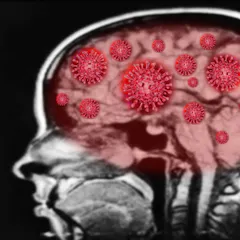
Many patients suffering from COVID-19 exhibit neurological symptoms, from loss of smell to delirium to a higher risk of stroke. Down the road, will COVID-19 survivors face a wave of cognitive issues?

The social isolation older adults are experiencing as they try to stay safe from the coronavirus pandemic is raising new mental health risks, but people can take steps to protect themselves.

A blood test to detect Alzheimer’s disease in people who have symptoms and even those who don’t has been shown to work. Scientists still need to improve its accuracy rate to almost 100%, however.

Though a recent study’s results were promising, there is still much that researchers don’t know.

Stress, depression, and high blood pressure were just some of the risk factors the study’s researchers identified.

Having extra copies of a gene called BACE2 can slow down the development of Alzheimer’s disease in human brain cells.

The Federal Bureau of Prisons recently opened a unit for people suffering dementia. But is incarceration a ‘cruel and unusual’ punishment for those who don’t understand why they are behind bars?

What does an artist do when the subject is a disease as much as a person, and when the disease then subsumes the person – to the point where he can’t recognize his own son?

Our study found that people who had higher repetitive negative thinking patterns experienced more cognitive decline over a four-year period.

The antibody can be used to diagnose Alzheimer’s disease.
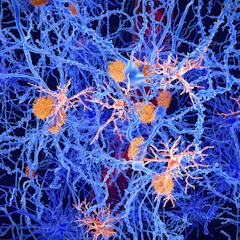
Between 10-15% of all cells within the brain are microglia.

Tiny parts of our genome once thought useless are being turned into ways to diagnose and treat disease.

Foods rich in flavonoids (such as apples, berries, or tea) are important for cognitive health, research suggests.

Blacks are at higher risk for many diseases. This is partly due to poverty, discrimination and lack of access to care. But there may be something different about the higher rates of Alzheimer’s.

Assisted living facilities are one option for seniors. But finding clear and accurate information about them isn’t easy.
Top contributors
-

PhD Candidate, Neuroscience, University of Sheffield
-
Research Fellow in Neuroimmunology, UCL
-
Professor of Chemistry and Senior Scientist of the Krembil Research Institute, University Health Network, University of Toronto
-
Professor of Biological Psychology, Loughborough University
-
Head of Clinical Services, Dementia Support Australia, & Associate Professor of Psychiatry, Monash University
-
Professor Emeritus of Molecular Neurobiology at the University of Manchester and a Visiting Professorial Fellow, University of Oxford
-
Associate Professor, Turner Institute for Brain and Mental Health, Monash University
-
Professor of Neurology and Neuroscience, University of Florida
-
Étudiant au doctorat en psychologie, Université du Québec à Montréal (UQAM)
-
Post grad student at University of Edinburgh, University of Edinburgh
-
Host, The Conversation Weekly Podcast, The Conversation
-
Professor of Neurology, UCL
-
Associate Professor in Cellular Neuroscience, University of Reading
-
Professor of Psychology in Epidemiology, UCL
-
Affiliate Professor, Department of Family Medicine, McGill University