
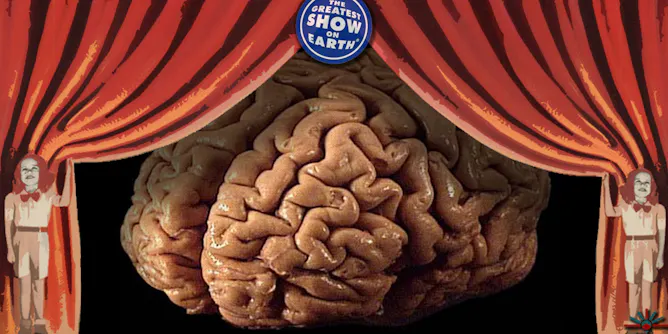
The human brain is the most extraordinary and complex object in the known universe, a kilogram and a half of soft tissue that, at its peak, leaves computers behind with its endless capacity for problem…
Articles on Alzheimer's disease
Displaying 381 - 400 of 455 articles

Every 67 seconds someone in the United States is diagnosed with Alzheimer’s disease and new estimates suggest that it may be the third leading cause of death of older people. Alzheimer’s disease is associated…

In some ways the human brain is like a well-oiled car engine, purring along without being noticed, until something goes awry. Neuro-imaging techniques such as electroencephalogram (EEG) or fMRI – which…
The practice of physically stimulating the brain in order to alleviate symptoms of illness and injury has been around since the early 20th century. For example, electroconvulsive therapy (ECT) is still…

Dementia and cognitive decline have a huge impact on the overall health and activity of the ageing population and come with a substantial social and economic cost for society. But for those who have dementia…

I don’t want to sound too cynical, but recent research findings in dementia seem hard to believe. A study of over 1,000 people has found people who scored higher on a measure of cynicism during late life…

Alzheimer’s disease is typically a disease of later life, and age is the biggest known risk factor for the condition. But babies with Down syndrome, who always develop brains like those with Alzheimer’s…
The least-processed form of cocoa may improve brain cell activity in Alzheimer’s disease patients. Researchers tested the…
Memories can be selectively removed in rats with an altered memory reactivated in its place, according to a new study by…

The Conversation organised a public question-and-answer session on Reddit in which Barbara Sahakian, professor of Clinical Neuropsychology at Cambridge University, discussed subjects from depression to…
Scientists have used a new molecular compound to restore appropriate behaviour in mice affected with Alzheimer’s disease…
Just prior to him leaving office, I was asked by John Beddington, the UK’s chief scientific adviser, to scope the future of neuroscience over the next ten years. It seemed to me that the best way to consider…

Alzheimer’s disease causes progressive damage to the brain, resulting in problems with memory, cognition, social engagement, and, ultimately, a person’s ability to care for themselves. Alzheimer’s is the…

The media are always fascinated by medical “breakthrough” stories: tales of hope that scientists have found cures for our most threatening diseases and tales of woe that our lifestyles are doing us harm…

US scientists recently announced they had developed a blood test that could predict your chances of developing Alzheimer’s disease, with 90% accuracy, up to three years in advance of other known symptoms…
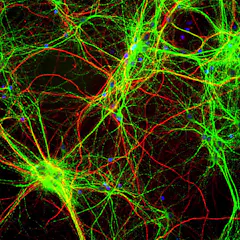
Let’s say Martians land on the Earth and wish to understand more about humans. Someone hands them a copy of the Complete Works of Shakespeare and says: “When you understand what’s in there, you will understand…
Brain nerve cell damage occurs ten to 20 years before any Alzheimer’s symptoms occur in the 1% of Alzheimer’s sufferers who…

Jason Shepherd, assistant professor of neurobiology and anatomy at the University of Utah answered questions posed by the public on Reddit. The Conversation has curated the highlights. Cognitive disorders…
A common antidepressant reduces agitation associated with Alzheimer’s disease, according to a recent study. Some 186 patients…

Christmas can be a stressful time for hosts and guests alike, and it’s more so for carers of people living with dementia.
Top contributors
-

PhD Candidate, Neuroscience, University of Sheffield
-
Research Fellow in Neuroimmunology, UCL
-
Professor of Chemistry and Senior Scientist of the Krembil Research Institute, University Health Network, University of Toronto
-
Professor of Biological Psychology, Loughborough University
-
Head of Clinical Services, Dementia Support Australia, & Associate Professor of Psychiatry, Monash University
-
Professor Emeritus of Molecular Neurobiology at the University of Manchester and a Visiting Professorial Fellow, University of Oxford
-
Associate Professor, Turner Institute for Brain and Mental Health, Monash University
-
Professor of Neurology and Neuroscience, University of Florida
-
Étudiant au doctorat en psychologie, Université du Québec à Montréal (UQAM)
-
Post grad student at University of Edinburgh, University of Edinburgh
-
Host, The Conversation Weekly Podcast, The Conversation
-
Professor of Neurology, UCL
-
Associate Professor in Cellular Neuroscience, University of Reading
-
Professor of Psychology in Epidemiology, UCL
-
Affiliate Professor, Department of Family Medicine, McGill University