

Researchers have found evidence of the same brain pathologies in dolphins that are present in the brains of humans who died with Alzheimer’s. What might this suggest about Alzheimer’s in humans?
Articles on Alzheimer's disease
Displaying 321 - 340 of 455 articles
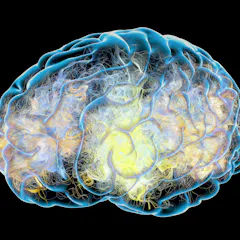
New research is helping us understand exactly how Alzheimer’s works – and how to treat it.

A new study has been found that television viewing increases your risk of dying from an inflammatory-related condition like Alzheimer’s or Parkinson’s disease. But it’s more complicated than that.
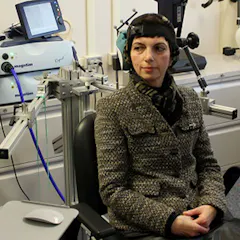
When Zahra Moussavi’s mother developed Alzheimer’s, the scientist pursued a technology that directly stimulates the brain with electromagnets to mitigate the effects of the disease. It worked.

A society which values people with dementia is one that values people in general – something we should be running towards, not away from.

Brain games, learning languages, rowing? Beware of snake oil salesman claiming we know it all.

Tough events are tough on the brain.

Areas of the brain are being mapped, much like the towns, cities and countries represented in a typical atlas.
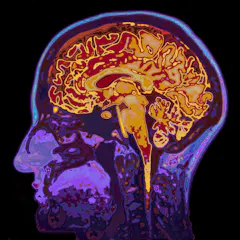
Many case of dementia can be avoided, and it’s never too early to start taking preventative action.

A recent study finds that friends ought not let friends with dementia be lonely. The surprising part? Why staying friends is good for the friend without dementia as well as for the one who has it.

Activities that engage your brain, such as learning a new language and completing crosswords, as well as having high levels of social interaction, can reduce your risk of dementia.

Alzheimer’s disease is the most common form of dementia, but treatments are still far from successful in clinical trials. Here is what we know about the disease, and what is yet to be uncovered.

What does dementia feel like?

For couples, families or friends who share a significant song, the effects of music can be powerful and persistent, lasting well into old age, even piercing through dementia.

People with neurological disorders such as Alzheimer’s often have difficulty swallowing, a dangerous condition. Here’s why treatment of these illnesses should include attention to swallowing problems.

New research shows that exposure to fine particulate air pollution may double the risk of dementia in older women by increasing growth of beta-amyloid plaques in the brain.

Many brain training programs are based on the principles of neuroplasticity. But a new study shows that less than 40% are backed by proof of efficacy.

Vitamin B1 can reduce your risk of getting Alzheimer’s disease, but some groups, such as the elderly, aren’t getting enough.

There are a number of myths associated with what happens to our brain and bodies as we age.
Cells and processes in our body have existed for longer and longer periods of time.
Top contributors
-

PhD Candidate, Neuroscience, University of Sheffield
-
Research Fellow in Neuroimmunology, UCL
-
Professor of Chemistry and Senior Scientist of the Krembil Research Institute, University Health Network, University of Toronto
-
Professor of Biological Psychology, Loughborough University
-
Head of Clinical Services, Dementia Support Australia, & Associate Professor of Psychiatry, Monash University
-
Professor Emeritus of Molecular Neurobiology at the University of Manchester and a Visiting Professorial Fellow, University of Oxford
-
Associate Professor, Turner Institute for Brain and Mental Health, Monash University
-
Professor of Neurology and Neuroscience, University of Florida
-
Étudiant au doctorat en psychologie, Université du Québec à Montréal (UQAM)
-
Post grad student at University of Edinburgh, University of Edinburgh
-
Host, The Conversation Weekly Podcast, The Conversation
-
Professor of Neurology, UCL
-
Associate Professor in Cellular Neuroscience, University of Reading
-
Professor of Psychology in Epidemiology, UCL
-
Affiliate Professor, Department of Family Medicine, McGill University