
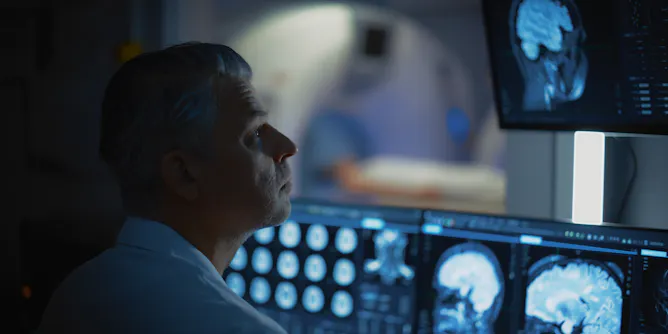
A brain lesion can be an old scar or a sign of active disease. Some can be left alone, while others need monitoring or urgent treatment.
Articles on Brain health
Displaying 1 - 20 of 114 articles

Lifting weights takes coordination as well as strength. A trial in older adults tested whether training could also improve thinking and memory.

Brain ‘resilience’ may hide the disease until it’s too late.

For veterans with brain injuries, noisy, overstimulating environments can lead to high stress and irritability, making them want to avoid such situations altogether.

MRI can detect tiny changes in the brain, yet conditions such as epilepsy and migraine may leave no visible trace. Here’s what brain scans can and cannot tell us.

Your muscles need fuel during exercise, and during sustained mental effort your brain needs energy, too. What you eat, and when, can affect how you feel and perform.

Reading draws on brain systems involved in language and imagination. Studies are exploring how it relates to wellbeing and understanding others.

Our study shows that brain remains malleable and can learn new things well into older age.

Everyday activities can require enormous effort for people living with post-COVID fatigue. This study examines the brain mechanisms that may contribute to fatigue.
Our understanding of the causes of Alzheimer’s disease is evolving. Recent discoveries have revealed the important role of the cerebral vascular system.
A new technique can reveal cellular changes linked to the disease that were previously visible only in brain tissue after death.
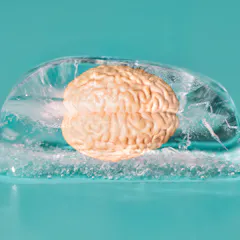
From referred pain to migraine, here’s what research reveals about the sudden headache that can follow an enthusiastic bite of ice cream.

Luckily, there are many things you can do to help your brain cope.

Working with and living in spatially complex environments may help delay cognitive decline, though more research is needed.

A new review looked at 1,734 people with amyotrophic lateral sclerosis (ALS). But it couldn’t separate pesticide from other risk factors, such as head trauma.

Specialized health care for brain-related issues can be lacking in rural areas, but collaborative, community-based approaches can help address these inequities.
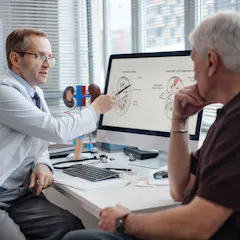
Kidney disease is often associated with dialysis or transplants, but it also affects memory and concentration, and increases stroke risk.
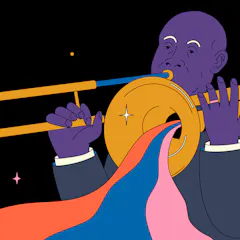
Playing improv music activates the reward system of the brain.

Research links repeated head impacts with poorer brain health in some former players, although the evidence cannot yet prove cause and effect.

This little-known brain disorder is currently one of the biggest challenges facing medicine where age-related diseases are concerned.
Top contributors
-

Professor of Biological Psychology, Loughborough University
-
Research Fellow in Neuroimmunology, UCL
-
Professor, Adjunct Research Fellow, School of Health Science, Swinburne University of Technology
-
Research Fellow, UQ School of Human Movement and Nutrition Sciences, The University of Queensland
-
Professor of Anatomy, Lancaster University
-
Affiliate Professor, Department of Family Medicine, McGill University
-
Assistant Professor, Faculty of Law, Bond University
-
Senior Nurse Lecturer, London South Bank University
-
Physical activity researcher, Deakin University | Lecturer in science communication, The University of Melbourne
-
Professor and Tier 1 Canada Research Chair in Developmental Neurogenetics, University of British Columbia
-
Professor of Public Health; Director, Centre for Public Health Research, Te Kunenga ki Pūrehuroa – Massey University
-
Lecturer in Cognitive Neuroscience, City St George's, University of London
-
Contract Lecturer in Digital Media, Toronto Metropolitan University
-
Professor of Behavioral Neuroscience, University of Richmond
-
Senior Lecturer in Healthy Ageing, The University of Queensland