
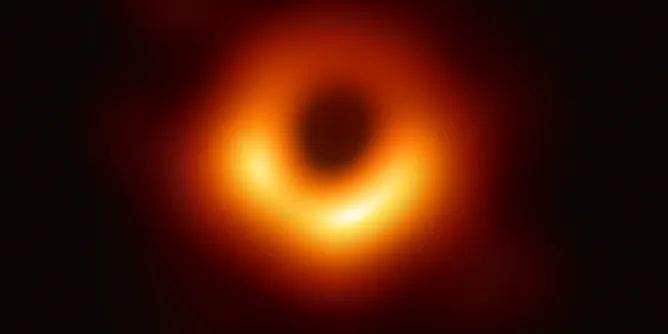
New results provide a fresh perspective on the iconic ring structure of the M87 black hole.
Articles on Space
Displaying 1 - 20 of 1109 articles
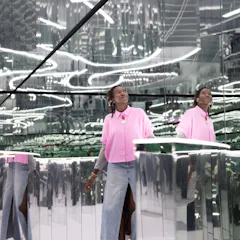
The new museum opens with dazzling architecture and enticing exhibitions that intertwine the permanent collection with major international loans and art commissions.
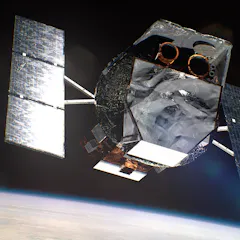
If you bump a spacecraft in orbit, it may start tumbling uncontrollably. To save a falling satellite, the rescuer must be incredibly steady and precise.
The Swift Observatory allowed astronomers to study events that happen quickly in the universe, such as stars exploding.
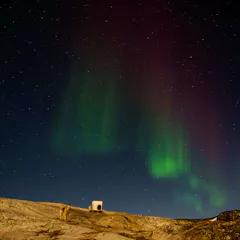
When an aurora lights up the sky, electric currents can also flow through the ground beneath your feet.
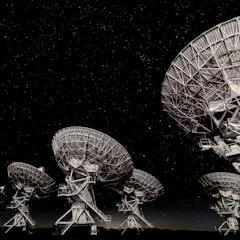
A researcher just won a Nobel Prize for detecting tiny particles from space. Scientists now want to get better at figuring out where in the cosmos they come from.
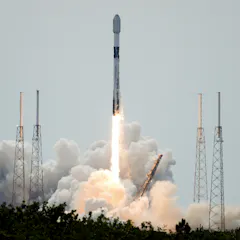
SpaceX’s Falcon 9 rocket has allowed NASA, private companies, universities and nonprofits alike to launch satellites, spacecraft and even astronauts to orbit.
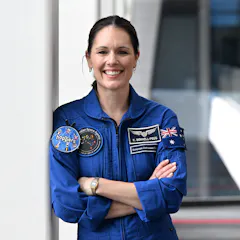
Sending Katherine Bennell-Pegg to the International Space Station is an investment in Australia’s space future.
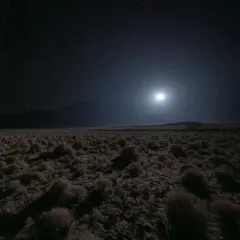
Reflect Orbital wants to use giant mirrors in space to light up the ground at night, and there are few rules to regulate what they can do.
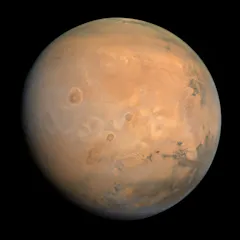
NASA lost contact with its Maven spacecraft – the youngest of its Mars orbiters – at the end of 2025. The others in its fleet are over two decades old.
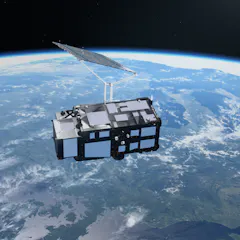
Orbital space management organizations could help ensure that future generations live with stars above their heads, rather than constellations of debris.
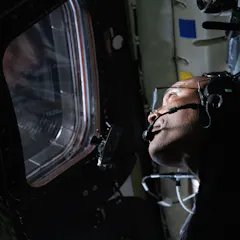
What happens to astronauts’ circadian rhythms when the Sun no longer provides a reliable schedule?

Starship’s heat shield is made of up of an array of ceramic tiles. Each is a small component, but together they have large consequences.
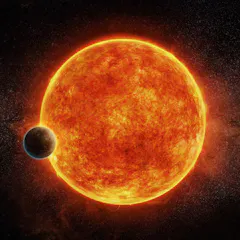
The exoplanet LHS 1140b may have a temperature that could allow for liquid water on its surface. Just possibly, it could support the existence of life.
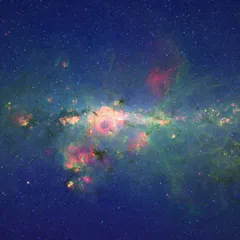
From supernovae in distant galaxies to the packed centre of the Milky Way, the new Roman telescope will help us see and understand the ever-changing cosmos.
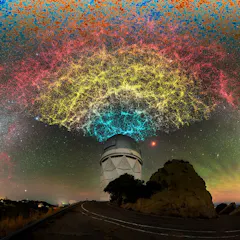
Sometimes, mapping the whole universe starts with getting thousands of tiny robots to move in exactly the right way.
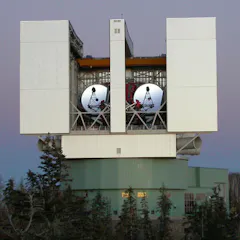
The early universe was kind of like a big game of musical chairs – scientists are figuring out how many particles were able to find ‘seats’ to understand the cosmos.
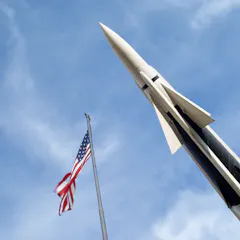
This could mark the start of a major arms race in space, which would threaten all of us on Earth.
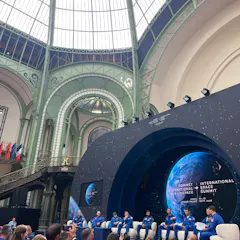
Paris’ International Space Summit was an opportunity to understand what and who Europe needs to reliably sustain its launch ambitions and become a world-class leader in Space.

Massive objects bend light around them, a quirk that opens up unique opportunities for astronomical surveys.
Top contributors
-

University Distinguished Professor of Astronomy, University of Arizona
-
Professor of Strategy and Security Studies, Air University
-
Professor of Planetary and Space Sciences, The Open University
-
Professor (Astrophysics), University of Southern Queensland
-
Associate Professor in Archaeology and Space Studies, Flinders University
-
Associate Professor in Astronomy, Monash University
-
Emeritus Professor of International Law, Western Sydney University
-
Senior Lecturer in Physics, Nottingham Trent University
-
Reader in Astrophysics, Keele University
-
Associate Dean of Innovation and Engagement, Swinburne University of Technology
-
Associate Professor, Astronomy, University of Regina
-
Professor of Air and Space Law, University of Mississippi
-
Kevin Orrman-Rossiter is a Friend of The Conversation.
Sterrenkenner, History & Philosophy of Science, The University of Melbourne
-
Lecturer in Astronomy, Nottingham Trent University
-
Professor of Physics and Astronomy, USC Dornsife College of Letters, Arts and Sciences