

The consequences will be far more severe and long lasting in poorer countries.
Articles on World Health Organization (WHO)
Displaying 281 - 300 of 491 articles

Emphasizing foreign origins of a disease can have racist connotations and implications for how people understand their own risk of disease.
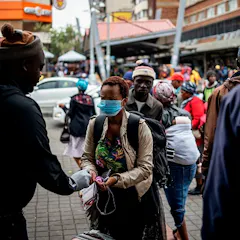
Reactions in South Africa give little reason for hope that the virus will bring people closer together or trigger more energetic action against poverty.
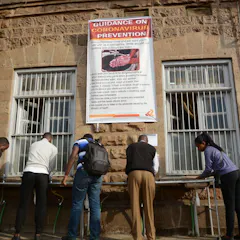
Health literacy is the degree to which people can get, understand and use basic health information to make decisions about health issues.
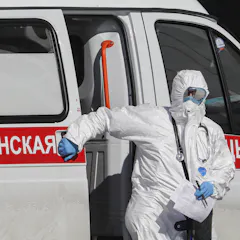
Sometimes low numbers are a cause for concern.

The World Health Organisation has a plan to halve deaths and disability from snakebites
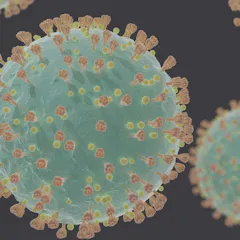
There is no evidence that the coronavirus has evolved into a deadlier strain. It is almost certainly less lethal than initially reported, but that might mean there are more cases than we realised.
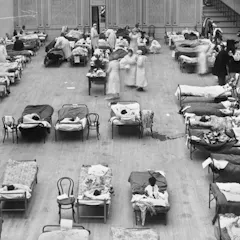
From the neighborhood to the newsroom to the White House, nobody stays silent during a health emergency. These terms are often mixed up, and it matters who is using them and when.
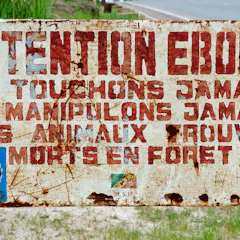
The biggest lesson has been that controlling a disease outbreak like Ebola is impossible without community trust and engagement.

In some communities, over a quarter of the children were misclassified as iron replete whereas they were iron deficient.
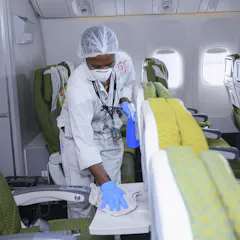
A key component of how the coronavirus could be spreading is the environment.

The federal government has activated its emergency response plan to deal with a spread of the coronavirus locally, in anticipation of it becoming a “pandemic”.
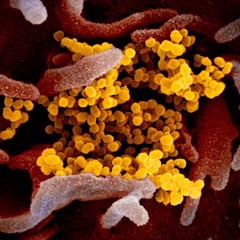
While identifying a new disease by its place of origin seems intuitive, history shows that doing so can have serious consequences for the people that live there.
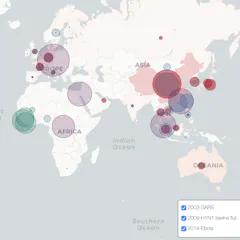
A new tool has been developed to track the history of the novel coronavirus and other recent outbreaks.
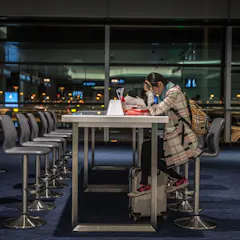
Suspending flights and screening passengers is mainly about reassuring us, not keeping us healthy.

The declaration does not mean the risk to Canadians has changed, but it does mean Canada must step up to help those countries with weaker heath-care systems.
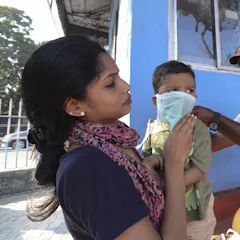
The World Health Organization declared the new coronavirus to be a public health emergency on Jan. 30, 2020. Does the action really change anything? An expert answers four questions.
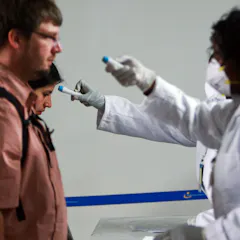
Airport public health officials have got better at screening at ports of entry especially for international arrivals.
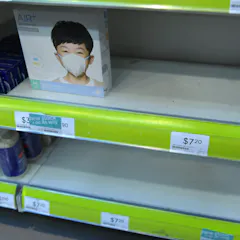
The World Health Organization decided that the coronavirus outbreak in China is not a public health emergency of international concern. At least, not at the moment.
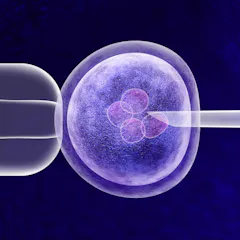
One year after the first CRISPR babies were announced, changes in policies and regulations have meant that there have been no new CRISPR announcements since.
Top contributors
-

Associate professor, University of Sydney
-
Fellow, Nigerian Academy of Science
-
Associate Principal Research Fellow, Burnet Institute
-
Professor of Global Biosecurity, NHMRC L3 Research Fellow, Head, Biosecurity Program, Kirby Institute, UNSW
-
Professorial Fellow, University of Canberra
-
Professor of Sociology, USC Dornsife College of Letters, Arts and Sciences
-
Professor and Tier 1 Canada Research Chair in Global Health Governance; Scientific Co-Director, Bridge Research Consortium, Simon Fraser University
-
Professor of Law, University of Waikato
-
Professor of Public Health, La Trobe University
-
Professor of Global Health and Director, O'Neill Institute, Georgetown University
-
Senior Research Fellow in Global Health, University of Southampton
-
Senior Research Scientist, African Population and Health Research Center
-
Professor, Paediatrics and Child Health, UNSW
-
Director of Koi Tū, the Centre for Informed Futures; former Chief Science Advisor to the Prime Minister of New Zealand, University of Auckland, Waipapa Taumata Rau
-
Canada Research Chair of Epidemiology & Global Health, McGill University