
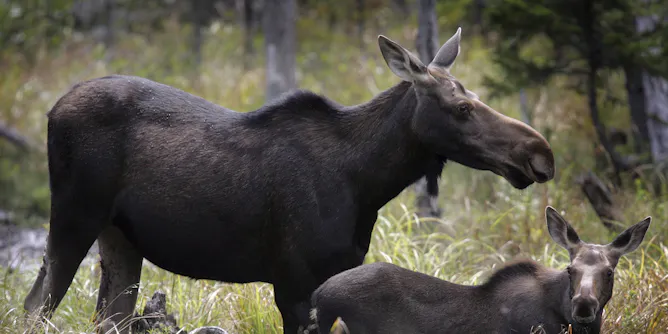
White-tailed deer host these brain worms, but they don’t actually get the disease, which makes it harder for biologists to monitor its prevalence.
Articles on Wildlife
Displaying 121 - 140 of 848 articles
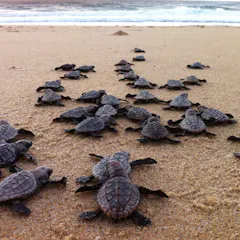
Little is known about the early life of sea turtle hatchlings but a modelling study shows the importance of ocean currents in their journeys.

There are other parts of popular areas – and different locations altogether – that can be great places for outdoor recreation and enjoyment.
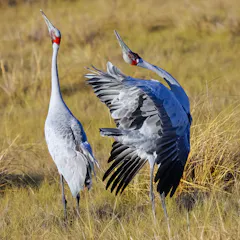
It’s entirely possible to see shy mountain pygmy-possums, alpine dingoes or furry cuscus with your own eyes – if you know where to go and how to look.
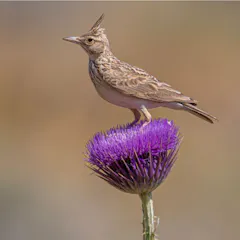
Iran’s accelerating biodiversity crisis is a warning sign, but it does not exist in isolation.
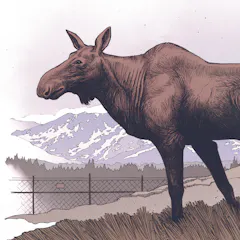
During much of the last century, moose were apparently rare in Colorado. But lately, encounters with humans are becoming more common as the population increases.
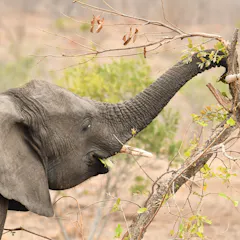
Elephants were found to gesture intentionally when they wanted humans to give them apples. This trait was thought to exist mainly in primates.

The National Park Service is not just focused on helping people enjoy the outdoors, but also on conserving wild places.
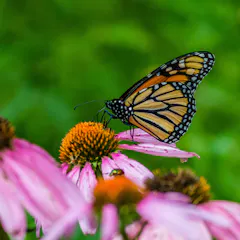
There is a wide range of simple actions anyone can take to regenerate and conserve biodiversity right at home.
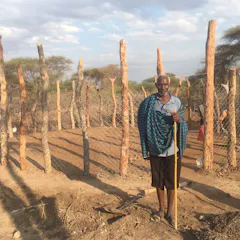
Management and protection of livestock is fundamental for reducing conflict with wildlife.

To protect wildlife, pets, farmed animals and people, lead ammunition needs to be replaced by non-lead alternatives everywhere.
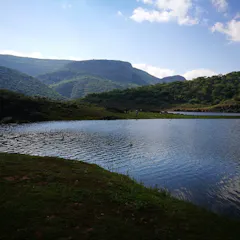
Sacred natural sites could contribute to conservation targets.
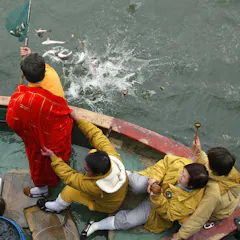
Humans change the urban landscape with religious, cultural and political activities, which in turn can influence the evolution of urban animals and plants.

Thousands of birds flying south for the winter stop off in Nigeria’s Hadejia Wetlands National Park. Researchers mapped the park, uncovering hundreds of species.
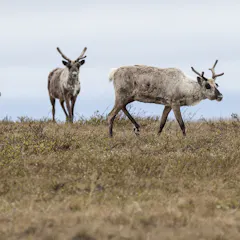
Caribou, migrating birds and many other types of wildlife rely on this expanse of wetlands and tundra. But about 5.5 million acres are being put up for oil and gas leases in March 2026.
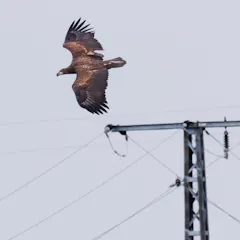
As electricity networks expand, the risk of birds becoming injured or electrocuted by power lines increases. How can we protect them?
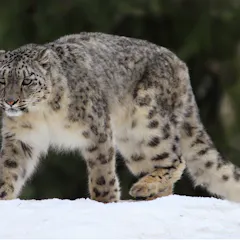
Conservationists have to search rough terrain and thousands of automated photographs to find the elusive cats. Artificial intelligence can help them work more accurately and more efficiently.
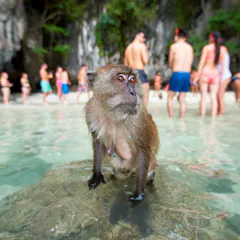
Recent research explores what drives this human behaviour.

Our proposed system of coloured pawprints would provide consistent countryside guidelines for dog walkers.
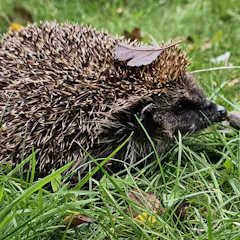
The spiny mammals are on the decline, but they hold the secrets to biodiversity in their local areas.
Top contributors
-

Professor in Wildlife Ecology and Conservation, School of Life & Environmental Sciences, Deakin University
-
Professor of Conservation Biology, Charles Darwin University
-
Professor in Ecology, Charles Sturt University
-
University Fellow in Biodiversity, Charles Darwin University
-
Professor in Conservation Science, School of the Environment, The University of Queensland
-
Professor, Urban Ecology and Biodiversity, The University of Melbourne; RMIT University
-
Professor in Conservation Science, School of Ecosystem and Forest Science, The University of Melbourne
-
Senior Researcher and Statistician, University of Hohenheim
-
Distinguished Professor of Ecology, Fenner School of Environment and Society, Australian National University
-
Associate Professor, Global Ecology, University of Sydney
-
Principal Lecturer in Wildlife Conservation, Nottingham Trent University
-
Senior Research Associate, School of Agriculture, Food and Ecosystem Sciences, The University of Melbourne
-
Professor of Environmental Management, The University of Queensland
-
Emeritus professor, La Trobe University
-
Research Associate, Department of International Relations, University of the Witwatersrand; Chief Research Officer, Good Governance Africa; Managing Director, Harvey Economics Pty Ltd.