
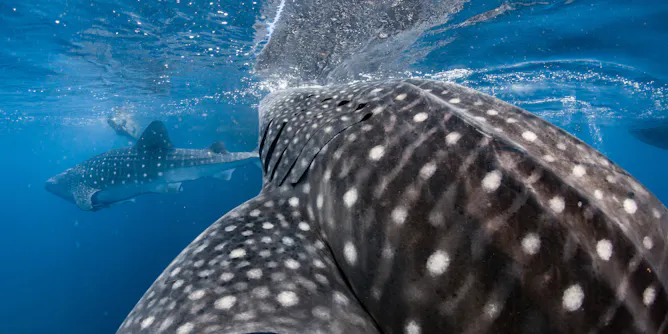
Experts have interviewed fishers, tourism operators and recreational sea users in 50 marine protected areas to see how well any negative human impacts are being reduced.
Articles on Oceans
Displaying 221 - 240 of 935 articles
Safely landing a spacecraft that’s falling from the sky very quickly is easier said than done.
Taking more carbon dioxide out of the atmosphere by stashing it in the ocean seems like a good idea, but it could backfire if tiny marine animals called zooplankton get extra hungry.

When human remains are found underwater, forensics needs a different approach. To understand what happens at sea, we need to study it.
New research has revealed the scale of the carbon-storage potential of the seabeds around Canada, conservation efforts must take this new data into account.
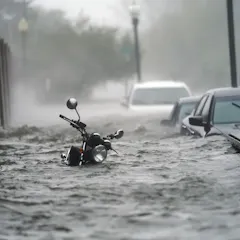
Global ocean temperatures have been at record highs almost daily for over a year, and economies are feeling the heat.

Analysis of data from underwater microphones could help researchers discover the fate of missing flight MH370.
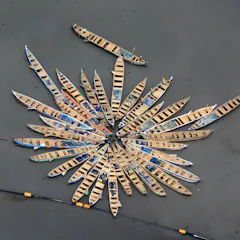
A new report estimates the impacts of big fishing businesses with a previous track record of unsustainability on the local economy, jobs and people’s welfare in five developing countries.
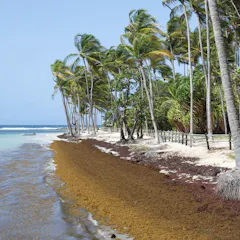
A leading driver of this seaweed invasion is pollution, carried down rivers and into the Atlantic Ocean from the continents.
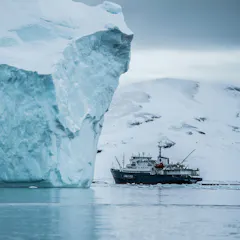
If the ocean circulation, known as AMOC, shuts down, it would be a climate disaster, particularly for Europe and North America. New research shows why that might not happen as soon as some fear.
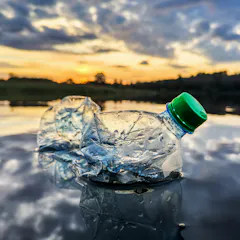
Understanding how plastic pollution moves in rivers is key to effective cleanup strategies.

A new film charts the voyage of an all-women crew who crossed oceans to sample microplastic pollution.

While humanity often has a negative impact, people may inadvertently play a pivotal role in this Maldivian seagrass success story.
Marine species respond to ocean deoxygenation in different ways depending on where in the ocean they live.
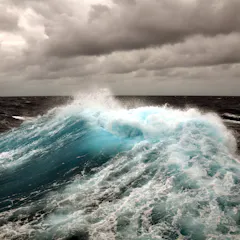
Warmer water holds less oxygen, while warmer fish need more oxygen.

Nine artists have taken part in a snorkelling artists’ residency that began underwater in Scotland.

Saturn’s moon Enceladus has geysers shooting tiny grains of ice into space. These grains could hold traces of life − but researchers need the right tools to tell.

A new treaty could help protect cetaceans in the Pacific, but more needs to be done internationally.

Maritime folklore is awash with tall tales of monstrous waves. A new study gets closer to understanding where they come from and how to predict them.
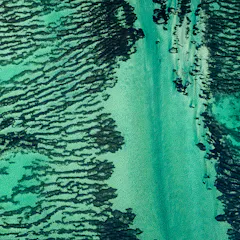
Blue carbon is stored in mangroves, seagrass and sediments. Discussions at the UN Ocean Decade conference reiterate the importance of preserving existing sea floor habitats, before it’s too late.
Top contributors
-

Professor, School of the Environment, The University of Queensland
-
Harold T. Stearns Professor of Earth Science, Wesleyan University
-
Director of the ARC Centre of Excellence for Our Future Oceans and Scientia Professor in Oceanography, UNSW
-
Research Scientist, Stanford University
-
Distinguished Professor of Marine Science, King Abdullah University of Science and Technology
-
Distinguished Scholar, National Center for Atmospheric Research; Affiliate Faculty, University of Auckland, Waipapa Taumata Rau
-
Senior Principal Research Scientist, Environment, CSIRO
-
Faculty Research Associate in Marine Biology, Arizona State University
-
Chief Research Scientist - Environment, CSIRO
-
Professor of Marine Botany, The University of Western Australia
-
Professor of Biology, Department of Biology, University of Victoria
-
Reader of Applied Mathematics, Cardiff University
-
Associate Professor in Marine Biology, Swansea University
-
Adjunct Research Associate, Faculty of Fisheries and Marine Sciences, IPB University
-
Professor in Conservation Science, School of the Environment, The University of Queensland