
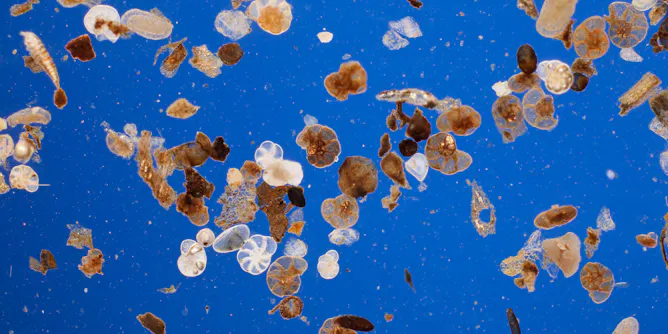
Scientists have compared data from the last ice age, around 21,000 years ago, and modern records to see what happened to plankton when the world has previously warmed.
Articles on Oceans
Displaying 181 - 200 of 935 articles
A thin layer at the ocean surface called the “ocean skin” increases CO₂ uptake by about 7%. That’s equivalent to the CO₂ absorbed by the entire Amazon rainforest each year.

Conservation measures can be designed in ways that improve nutrition and health of people.

Measuring the ‘ecosystem services’ that the ocean provides is difficult, but an essential step to understand how best to protect marine ecosystems.

Smellscapes of the sea are multi-layered - they are shaped by interactions between water, marine life and environmental conditions.
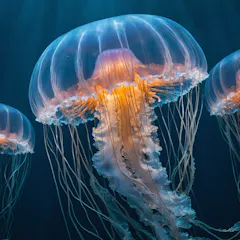
Since 2022, the network of global ocean-protected areas has grown by only 0.5% to 8.3%.
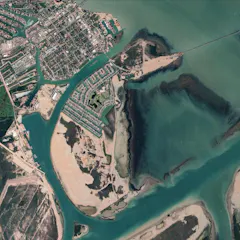
Some cities are building huge gates and barriers to counter the flood risk from estuary urbanization. But putting nature to work in a big way might be more effective.

These powerful ‘rivers in the sky’ provide a huge share of annual precipitation in many regions, including California. They can also melt sea ice, with global climate implications.
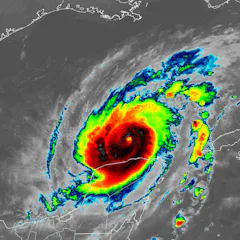
Milton’s fast spin-up in the Gulf of Mexico was one of the most rapid intensifications on record. Two scientists who study hurricanes explain why this happens and what’s changing.
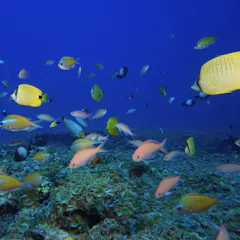
What have global efforts to protect oceans actually achieved? Our study of nearly 2,600 tropical coral reefs around the world is the first to answer that question.

Sharks easily consumed large, spiky sea urchins – sometimes in just a few gulps. See it for yourself, in our new Footage from the Field Series.

Modern pharmaceuticals have revolutionised disease prevention and treatment. But eventually, the chemicals can end up in rivers, oceans and soils.
Tiny phytoplankton have an outsized influence on the entire ocean.
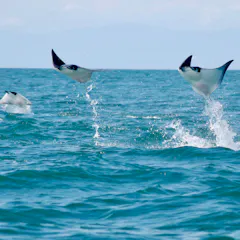
Breaching is one of the most spectacular behaviors among marine animals. A recent review shows that many shark and ray species breach, and identifies the most commonly hypothesized reasons.

Creating 3D computer models of entire reefs – sometimes known as digital twins – can help researchers monitor these precious ecosystems faster and more accurately than ever before.

Anna Turns sets sail from Plymouth Sound to explore the significance of blue carbon in marine habitats around the UK.
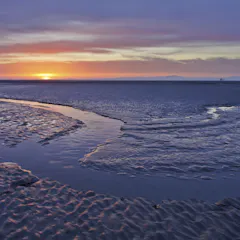
A new map collating important data could be used to introduce more robust protections for blue carbon in UK waters.
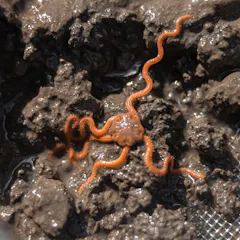
There is a diversity of life within our seabeds, capable of moving mountains of mud and slowing the effects of climate change.
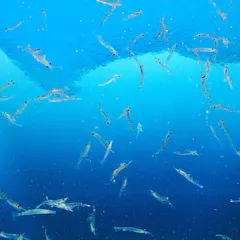
For the first time, we used a computer model of ocean currents to show that krill waste products don’t need to reach great depths to achieve carbon storage for at least 100 years.
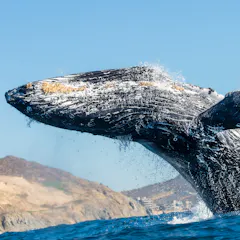
Baleen whales include the blue whale, the largest animal ever known.
Top contributors
-

Professor, School of the Environment, The University of Queensland
-
Harold T. Stearns Professor of Earth Science, Wesleyan University
-
Director of the ARC Centre of Excellence for Our Future Oceans and Scientia Professor in Oceanography, UNSW
-
Research Scientist, Stanford University
-
Distinguished Professor of Marine Science, King Abdullah University of Science and Technology
-
Distinguished Scholar, National Center for Atmospheric Research; Affiliate Faculty, University of Auckland, Waipapa Taumata Rau
-
Senior Principal Research Scientist, Environment, CSIRO
-
Faculty Research Associate in Marine Biology, Arizona State University
-
Chief Research Scientist - Environment, CSIRO
-
Professor of Marine Botany, The University of Western Australia
-
Professor of Biology, Department of Biology, University of Victoria
-
Reader of Applied Mathematics, Cardiff University
-
Associate Professor in Marine Biology, Swansea University
-
Adjunct Research Associate, Faculty of Fisheries and Marine Sciences, IPB University
-
Professor in Conservation Science, School of the Environment, The University of Queensland