

Ocean therapy provides a lens to see, understand and experience the ocean as healing, restorative and health-enabling.
Articles on Oceans
Displaying 201 - 220 of 935 articles
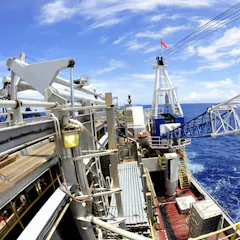
The National Science Foundation says that the JOIDES Resolution has become too costly to fund. But scientists say its $72 million annual budget pales compared with discoveries the ship has enabled.

Looking at, listening to, and immersing ourselves in inland and coastal waters can directly benefit our physical and mental health - here’s how the study of blue health has evolved.
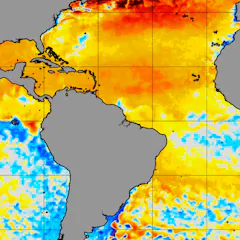
It’s rare to see both Nina’s at the same time, but both appeared to be developing in 2024. That could help soften hurricane season, but don’t bet on it.

We studied 230 fisheries around the world, and found populations of many overfished species are in far worse condition than has been reported.

Underwater search and rescue teams have been working in challenging conditions off the coast of Sicily.

The rise of ‘pyrokaryotes’ could reduce the availability of fish humans eat, and hamper the ocean’s ability to absorb carbon emissions.
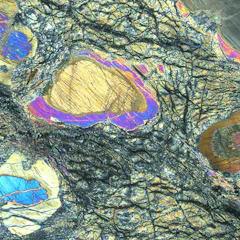
New research that offers valuable insights into the Earth’s mantle.
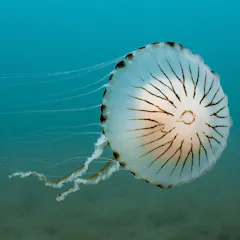
A new glossary of environmental science terms offers deaf people a new way to visualise and understand marine ecosystems.
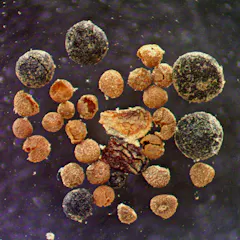
Our discovery of a tundra ecosystem, frozen under the center of Greenland’s ice sheet, holds a warning about the threat that climate change poses for the future.

Certain sunscreens could harm the marine environment - here’s how to choose ones with environmentally friendly UV filters.
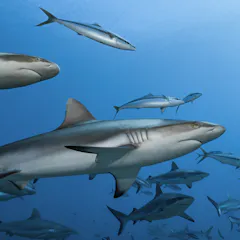
A broad review of shark research shows that sharks play critical roles in keeping ocean ecosystems such as coral reefs and seagrass beds healthy.
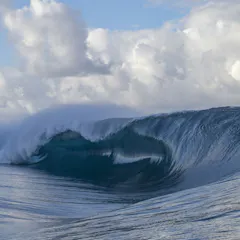
There are some great surfers vying for gold in Tahiti, but arguably the star of the show is the famous Teahupo'o wave itself. Here’s what makes it special, and why surfers respect its power.

Litter reduces the beneficial effects of being by the sea.
Wallace J. Nichols, who recently died age 56, was the first to clarify the link between neuroscience and the healing power of the ocean.
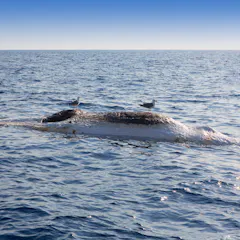
Whale strandings are undoubtedly sad events. But with the help of science, the body can be disposed of in a way that doesn’t harm nature or people.

Kids love digging and may not realize the dangers a hole in the sand can pose.
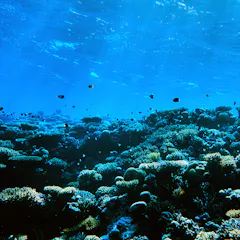
By the end of the century, half the world’s deep ocean could be acidic – with serious consequences for some marine animals.

Recording soundscapes in seagrass is useful because it allows researchers to detect creatures that can’t be seen, because they’re camouflaged, hiding or nocturnal.
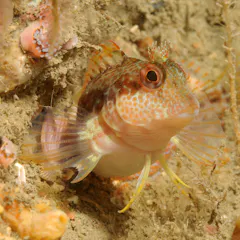
Although marine conservation around Britain has shown some success, many of the tools that are in use today are irrelevant, or missing entirely.
Top contributors
-

Professor, School of the Environment, The University of Queensland
-
Harold T. Stearns Professor of Earth Science, Wesleyan University
-
Director of the ARC Centre of Excellence for Our Future Oceans and Scientia Professor in Oceanography, UNSW
-
Research Scientist, Stanford University
-
Distinguished Professor of Marine Science, King Abdullah University of Science and Technology
-
Distinguished Scholar, National Center for Atmospheric Research; Affiliate Faculty, University of Auckland, Waipapa Taumata Rau
-
Senior Principal Research Scientist, Environment, CSIRO
-
Faculty Research Associate in Marine Biology, Arizona State University
-
Chief Research Scientist - Environment, CSIRO
-
Professor of Marine Botany, The University of Western Australia
-
Professor of Biology, Department of Biology, University of Victoria
-
Reader of Applied Mathematics, Cardiff University
-
Associate Professor in Marine Biology, Swansea University
-
Adjunct Research Associate, Faculty of Fisheries and Marine Sciences, IPB University
-
Professor in Conservation Science, School of the Environment, The University of Queensland