
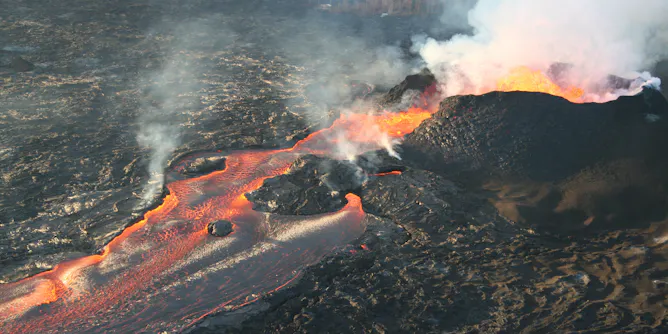
Melbourne lies at the eastern end of a volcanic province, but when’s it going to blow? Understanding the geology of Melbourne and comparing it to Hawaii is really helpful in calculating risk.
Articles on Geology
Displaying 301 - 320 of 461 articles

Some diamonds come from depths of more than 650km. Tiny imperfections in these gems give us clues about what’s happening in Earth’s hidden geological layers.
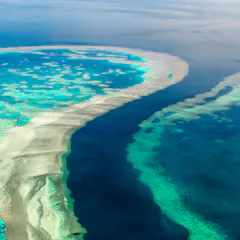
The $444 million awarded to the Great Barrier Reef Foundation has been criticised as a politically calculated move. But governments have been asking what the reef can do for them ever since colonial times.
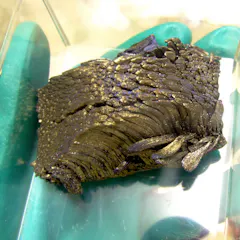
A geologist explains the basics about these elements, which are crucial for modern electronics.

Zirconia is a mineral with a crystal structure made from the elements zirconium and oxygen. It looks pretty like diamond, but is only worth a fraction of the value.
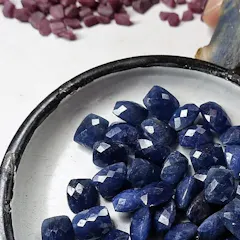
Sapphires and rubies are both crystals of the mineral corundum - but with different impurities to create blue and red hues. Australian sapphires are renowned for being inky blue.
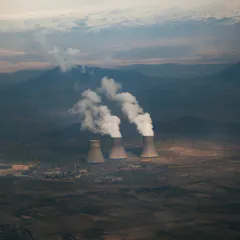
When it comes to the geological record, airbrushing out humans’ impact on the environment makes little sense.
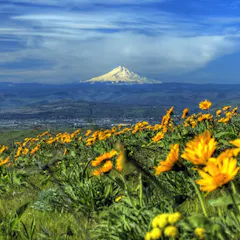
A new array of seismometers provides a glimpse of what’s happening deep beneath this geologic fault. New data help explain why the north and south of the region are more seismically active than the middle.
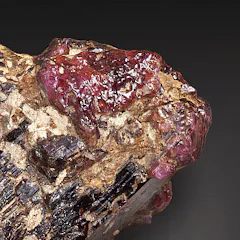
What makes a stone a gem? It boils down to a few key qualities: beauty and durability. But opal, the national gemstone of Australia, is an anomaly - it’s soft.
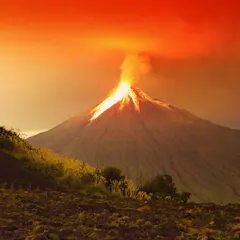
When magma rises towards the surface gas bubbles start to form. Whether or not they can escape as the magma is rising affects how explosive the eruption will be.

It’s been half a century since Jim Bowler discovered Mungo Lady, which changed the course of Australian history. But now he says the find has fallen off the national radar, leaving a legacy of shame.
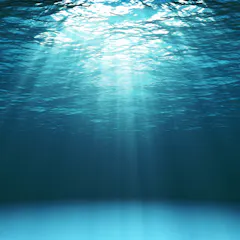
The Big Bang created a cloud of dust and rocks that included a lot of rocks that were made of ice, like giant snowballs. That’s where some of the water came from.

Wine drinkers are taking notes from the land now too, but it may not be entirely useful.
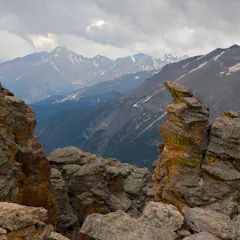
Scientists have long thought most nitrogen in Earth’s ecosystems comes from the air, but new research shows it also is released as rocks weather. This could boost plant growth and help sequester carbon – but not fast enough to avert climate change, as some pundits have claimed.

The remote Pilbara region of Western Australian formed many billions of years ago when the Earth was much hotter and the crust softer than it is today.
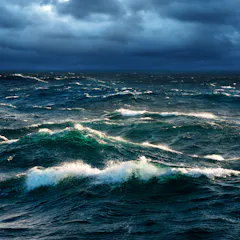
Tides are the largest they have been for 250m years.
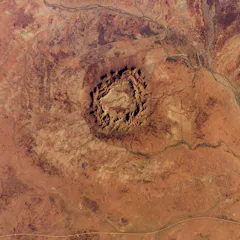
Large asteroids have hit Australia over many millions of years and the evidence is in the landscape, if you know where to look.
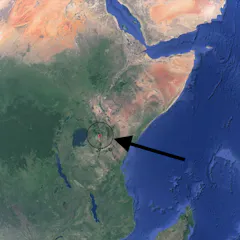
East Africa Rift is undergoing a process that will see the Horn of Africa split from the rest of the continent.

Through abstraction, the underlying essence of a mathematical concept can be extracted.
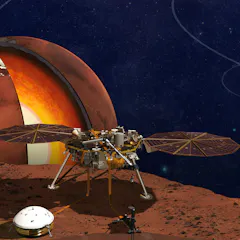
The InSight Lander mission to Mars is preparing for launch in May 2018. But there are seven (or eight) other planets to explore: why have we such a hang up on Mars?
Top contributors
-

Professor of Geochronology, Curtin University
-
Professor of Geology, Adelaide University
-
Professor of Palaeobiology, University of Leicester
-
ARC Future Fellow and Associate Professor in Igneous Petrology/Volcanology, The University of Queensland
-
Professor in Earth Sciences, Nanyang Technological University, Singapore, and Emeritus Professor of Mineral Physics, University of Cambridge
-
Professor of Earthquake Science, The University of Melbourne
-
Professor of Geophysics, University of Sydney
-
Associate Professor, Earth and Planetary Sciences, Curtin University
-
Professor of Planetary Geosciences, The Open University
-
Senior Curator of Geosciences, Museums Victoria Research Institute; Monash University
-
Professor in Earth & Climate Science, University of Southampton
-
Harold T. Stearns Professor of Earth Science, Wesleyan University
-
Adjunct professor, UNSW
-
Redmond Barry Distinguished Professor Emeritus, The University of Melbourne
-
Professor of Earth and Space Sciences, University of Washington