
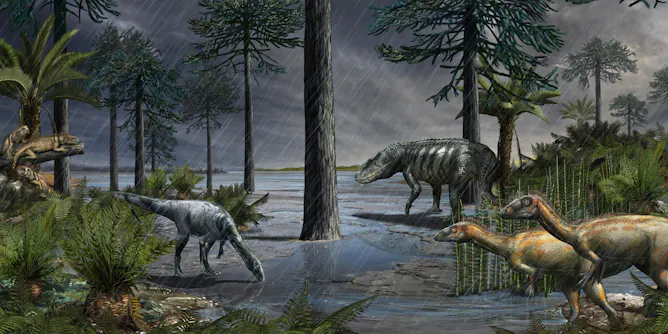
Our new research has discovered how a series of volcanic eruptions 233 million years ago fundamentally changed life on Earth.
Articles on Geology
Displaying 241 - 260 of 461 articles
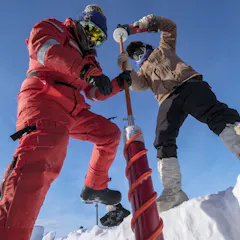
Ice cores can preserve evidence of ‘black swan’ events like pandemics and droughts, but the glaciers from which they are collected are disappearing.
The updated methods are providing a clearer picture of how Earth and its inhabitants evolved over the past 60,000 years - and thus, providing new insight into its future.
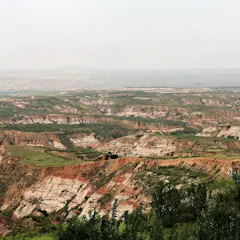
A big dip in the Earth’s crust may record an ancient continental collision from the dawn of plate tectonics.

Born on July 30, 1920, geologist and cartographer Tharp changed scientific thinking about what lay at the bottom of the ocean – not a featureless flat, but rugged and varied terrain.
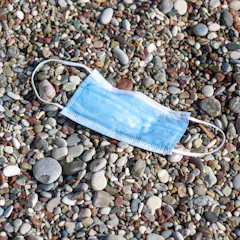
They will find minimal traces of the virus itself, but lots of PPE.

Europe imports the majority of its lithium, an essential material for the energy transition, yet is home to significant deposits.
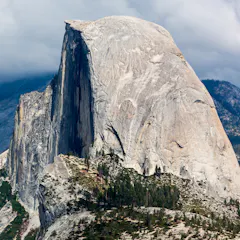
How the earliest continents formed has been a matter of debate. Analysis of zircons in Canada and Australia suggest that those historical processes are similar to current tectonic movements.

Scientists have now dated the ‘Great Oxidation Event’ to just before the planet’s first ‘snowball’ period.

New research on the Late Devonian extinction suggests the ozone layer could be naturally depleted as the temperature rises.
New research confirms that massive plumes of buoyant hot rock once rose from near the Earth’s core to the surface and triggered vast volcanic eruptions - and that New Zealand sits on top of one.
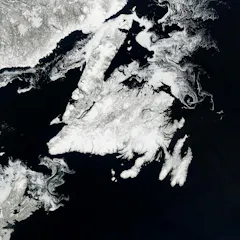
New research has found that the continents ended up where they are today because of previous plate tectonic processes that controlled how Pangaea broke apart.
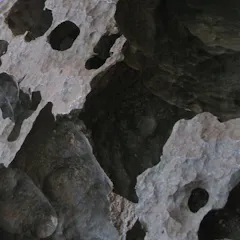
Tomanowos, aka the Willamette Meteorite, may be the world’s most interesting rock. Its story includes catastrophic ice age floods, theft of Native American cultural heritage and plenty of human folly.
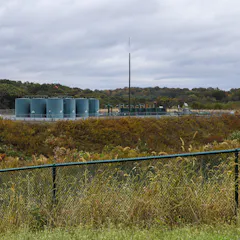
Fracking in Pennsylvania has led to disadvantages in state school districts.
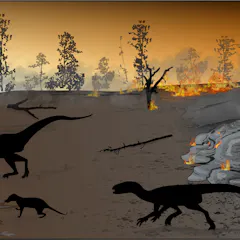
These trackways offer rare insights about ancient life in a stressful, hostile environment during the Early Jurassic.
The term Anthropocene - previously known only to geologists and academics - has hit the mainstream. Now it’s being tweeted as shorthand for the negative effects humans have had on the planet.
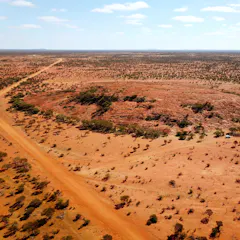
The Yarrabubba asteroid landed 2.2 billion years ago. Around the same time, the icy Earth went through a big thaw.
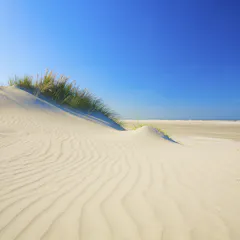
Sand may seem abundant when your toes are buried in it, but it’s becoming scarce along many coastlines around the world.
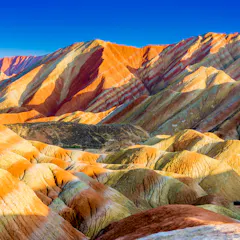
Non-living nature such as rocks, landforms, soil and water form the Earth’s ‘geodiversity’ - a crucial part of the planet’s life support system.
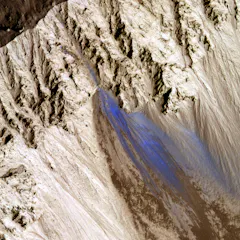
New research on landslides on Mars could help protect against devastating landslides on Earth.
Top contributors
-

Professor of Geochronology, Curtin University
-
Professor of Geology, Adelaide University
-
Professor of Palaeobiology, University of Leicester
-
ARC Future Fellow and Associate Professor in Igneous Petrology/Volcanology, The University of Queensland
-
Professor in Earth Sciences, Nanyang Technological University, Singapore, and Emeritus Professor of Mineral Physics, University of Cambridge
-
Professor of Earthquake Science, The University of Melbourne
-
Professor of Geophysics, University of Sydney
-
Associate Professor, Earth and Planetary Sciences, Curtin University
-
Professor of Planetary Geosciences, The Open University
-
Senior Curator of Geosciences, Museums Victoria Research Institute; Monash University
-
Professor in Earth & Climate Science, University of Southampton
-
Harold T. Stearns Professor of Earth Science, Wesleyan University
-
Adjunct professor, UNSW
-
Redmond Barry Distinguished Professor Emeritus, The University of Melbourne
-
Professor of Earth and Space Sciences, University of Washington