
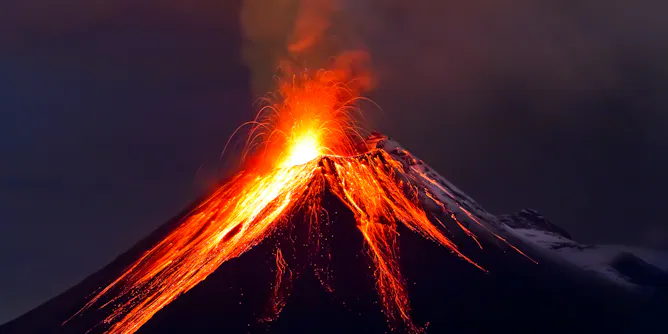
Scientists have found a way to narrow down the best signs that a specific volcano is about to blow.
Articles on Geology
Displaying 381 - 400 of 461 articles
Too much fertiliser can kill all life in parts of the ocean. It has happened before – and could do so again.
There’s no need for manufactured debates about a new geological era – we should just get on with the business of solving our problems.
We’re in a new geological era, say scientists.
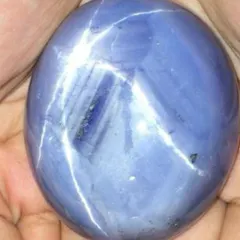
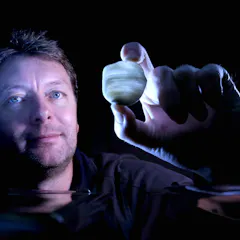
The world’s biggest known sapphire was formed and shaped by natural processes millions of years ago.
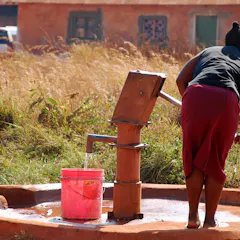
The digging of wells in Africa has often been thought of as the solution to helping rural women walking to get water, but they may cause more harm than good.
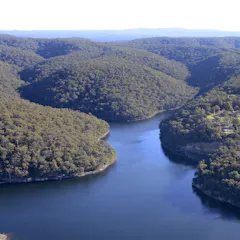
A new technique that uses lasers to determine the composition of groundwater is helping us protect that most precious resource.
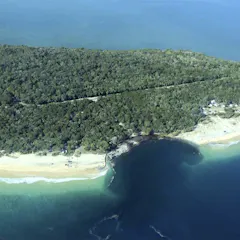
The beach collapse at Inskip in Queensland might look like a sinkhole, but it was likely triggered by very different forces.
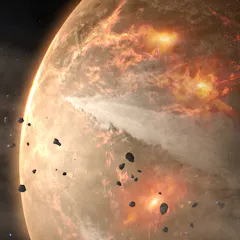
The early solar system was a busy place with plenty of meteorite impacts on the new planets and moons. But finding evidence of such impacts on Earth can be tricky.
Earthquake monitoring can now detect a quake and warn people before it arrives.
The molecular clock is helping us deepen our knowledge of evolution and completing the tree of life. But how does it actually work?
Glaciers once covered most of Earth’s surface and reflected the sun’s heat back into space.
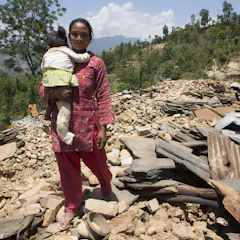
New research shows the earthquake that struck central Nepal in April this year was only a partial rupture of the fault line, meaning another strong quake could be due in future.
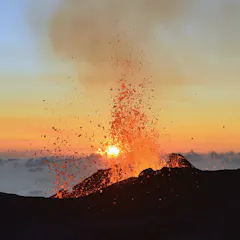
What happens beneath the surface before a volcano erupts? Can we predict when one will blow? And how can typhoons and melting glaciers contribute to big eruptions?
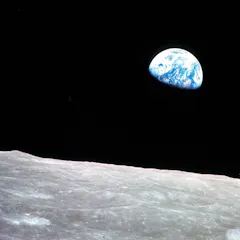
The moon might harbor bits of the Earth that blasted off our planet billions of years ago. These lunar time capsules could hold secrets about conditions here at home back when life was first emerging.
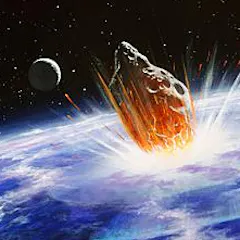
With most species out of the way, remaining plants and animals rush to evolve into the ecological gaps.
Stalagmites in Scottish preserve 3,000 years of climate history, suggesting human migration is linked to wet and dry periods.

If the biblical flood occurred just a few thousand years ago, that doesn’t leave enough time for the geologic history we see in rocks and fossils.
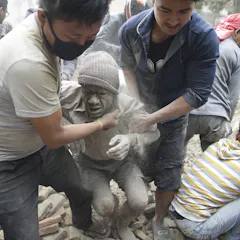
Seismic activity and poor buildings have come together again with fatal consequences.
The largest meteorite impact site in the world may be right here in central Australia.
Top contributors
-

Professor of Geochronology, Curtin University
-
Professor of Geology, Adelaide University
-
Professor of Palaeobiology, University of Leicester
-
ARC Future Fellow and Associate Professor in Igneous Petrology/Volcanology, The University of Queensland
-
Professor in Earth Sciences, Nanyang Technological University, Singapore, and Emeritus Professor of Mineral Physics, University of Cambridge
-
Professor of Earthquake Science, The University of Melbourne
-
Professor of Geophysics, University of Sydney
-
Associate Professor, Earth and Planetary Sciences, Curtin University
-
Professor of Planetary Geosciences, The Open University
-
Senior Curator of Geosciences, Museums Victoria Research Institute; Monash University
-
Professor in Earth & Climate Science, University of Southampton
-
Harold T. Stearns Professor of Earth Science, Wesleyan University
-
Adjunct professor, UNSW
-
Redmond Barry Distinguished Professor Emeritus, The University of Melbourne
-
Professor of Earth and Space Sciences, University of Washington