
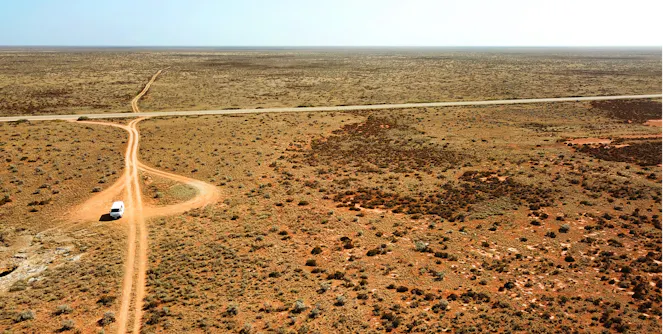
When borders reopen, take an Aussie road trip and explore the continent’s unique geology, from meteorites in the Nullarbor Plain to rock formations that are billions of years old.
Articles on Geology
Displaying 221 - 240 of 461 articles
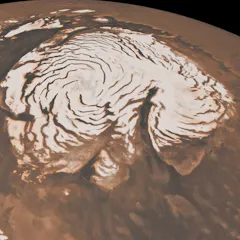
New results show why and how water is disappearing from Mars atmosphere.
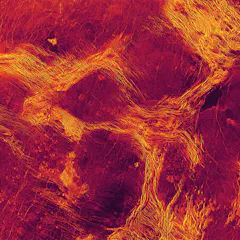
Researchers used decades-old radar data and found that some low-lying areas of Venus’ crust are moving and jostling. This evidence is some of the strongest yet of tectonic activity on Venus.
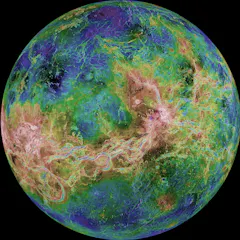
Two new NASA missions – VERITAS and DAVINCI+ – are headed to Venus. The missions will use radar and a probe to learn about Earth’s hard-to-study and potentially prophetic neighbor.
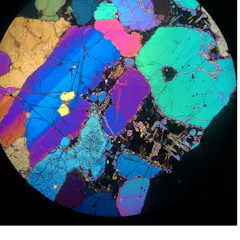
I look at fragments of the Earth’s mantle under a microscope to learn how fast molten rock moves from deep in the Earth to the surface. This can help us prepare for future volcanic eruptions.
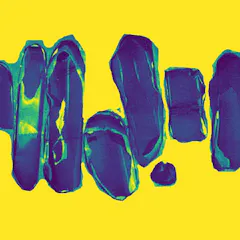
Evidence from the Pilbara region suggests Earth in its youth behaved very differently to how it does today, and had more water within it than previously thought.
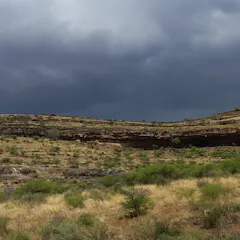
People were drawn to Ga-Mohana for many reasons. Surface water was likely among them.

Lightning strikes may have helped spark life on Earth, and may be continuing to help life start on other Earth-like planets.
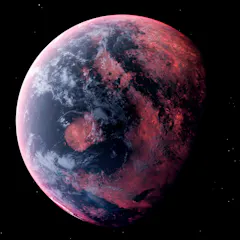
The rocks provide rare evidence of a time when Earth’s surface was a deep sea of incandescent magma.
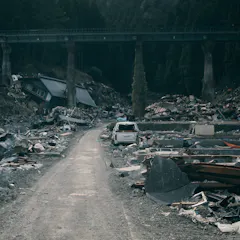
The fault line that ruptured causing the Fukushima disaster hadn’t done so for over 1,000 years.

This discovery will shape the hunt for life on exoplanets.

When sea sediment melts inside the Earth, it helps tectonic plates slide over one another smoothly.
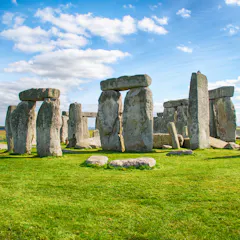
A remarkable set of discoveries has confirmed that parts of Stonehenge first stood 140 miles away at Waun Mawn, west Wales.
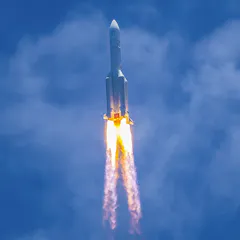
If China succeeds, it will be the first country ever to visit and land on Mars on its first try.
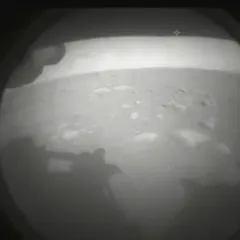
NASA’s Mars 2020 mission has arrived and landed the Perseverance Rover on the red planet. The rover’s goal is to collect rock and soil samples to be brought back to Earth in the future.
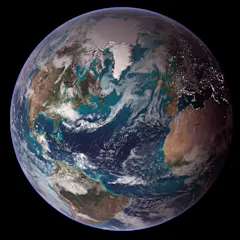
The presence of water on the Earth’s surface is the result of a subtle balance between different mechanisms in the atmosphere and below the surface.
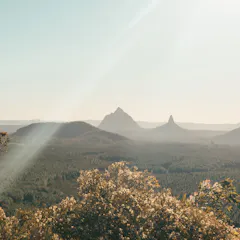
From far north Queensland to the southern tip of Tasmania, there is a common geological mechanism that links Eastern Australia’s volcanic history.
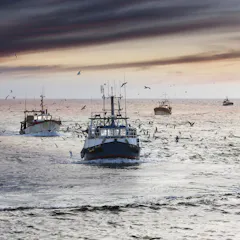
The Atlantic Ocean is still growing physically, but humans are over-harvesting its rich fisheries. The most famous one – North Atlantic cod – has become a textbook example of harmful overfishing.
In what could be described as a rather difficult adolescence, Earth earliest continents remained in flux — disappearing and reappeared over 1.5 billion years before finally gaining form.
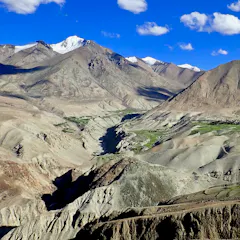
Earth’s magnetic field locks information into lava as it cools into rock. Millions of years later, scientists can decipher this magnetic data to build geologic timelines and maps.
Top contributors
-

Professor of Geochronology, Curtin University
-
Professor of Geology, Adelaide University
-
Professor of Palaeobiology, University of Leicester
-
ARC Future Fellow and Associate Professor in Igneous Petrology/Volcanology, The University of Queensland
-
Professor in Earth Sciences, Nanyang Technological University, Singapore, and Emeritus Professor of Mineral Physics, University of Cambridge
-
Professor of Earthquake Science, The University of Melbourne
-
Professor of Geophysics, University of Sydney
-
Associate Professor, Earth and Planetary Sciences, Curtin University
-
Professor of Planetary Geosciences, The Open University
-
Senior Curator of Geosciences, Museums Victoria Research Institute; Monash University
-
Professor in Earth & Climate Science, University of Southampton
-
Harold T. Stearns Professor of Earth Science, Wesleyan University
-
Adjunct professor, UNSW
-
Redmond Barry Distinguished Professor Emeritus, The University of Melbourne
-
Professor of Earth and Space Sciences, University of Washington