

Coastal erosion more than doubled after the Kaikōura earthquake. New research suggests it could erase evidence of past quakes, leaving gaps in the geological record.
Articles on Geology
Displaying 1 - 20 of 461 articles
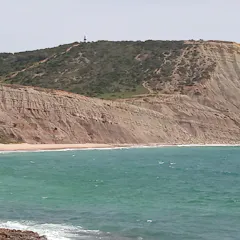
Our study found fossils in the Algarve that, according to previous records, had no business being there.

Tectonic plates may have allowed life to form on Earth – but exactly when they started moving is a long-standing mystery.
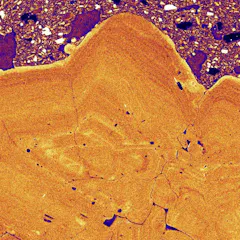
Calcium chemical map of plagioclase crystals from Tuzgle volcano, obtained using X-ray fluorescence microscopy at the Australian Synchrotron.
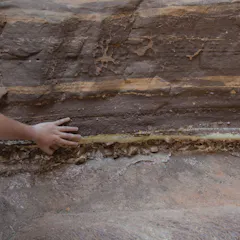
The Great Unconformity is a mysterious gap of hundreds of millions of years in Earth’s geological history – and new research may have finally explained it.
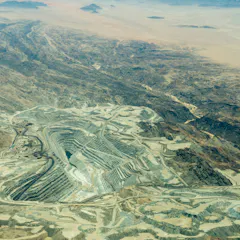
Public engagement is about listening, not just explaining the science.
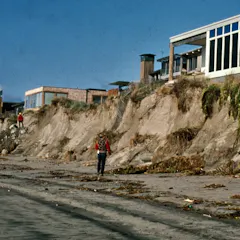
The destructive 1982-83 El Niño, then the strongest on record, eroded cliffs, leaving homes hanging precariously over the edges. A coastal scientist explains the escalating risks.
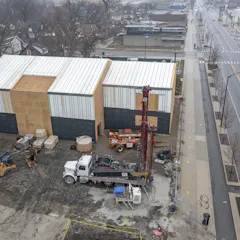
Rocks deep underground can be used to hold heat until it’s needed.
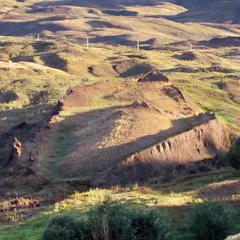
A formation known as Durupınar, just a few miles from the Iranian border in Turkey, has been associated with Noah’s Ark for nearly 70 years.
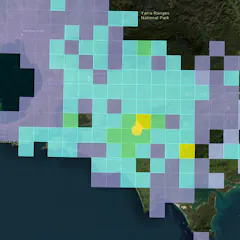
There’s a reason why Gippsland gets so many earthquakes, compared to most of Australia.
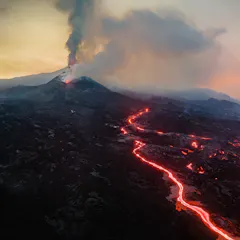
By observing the tree-ring-like growth records present in volcanic crystals, geologists are able to track volcanic activity and reconstruct the steps leading up to eruptions.
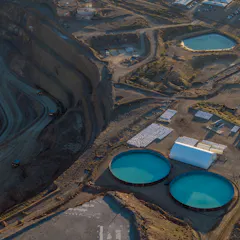
Today, China controls the vast majority of rare earths processing. That gives it enormous political leverage, and its trade truce with the US involving those minerals expires Nov. 10, 2026.

It might appear featureless, but one of the world’s largest limestone regions hides a remarkable underground world.
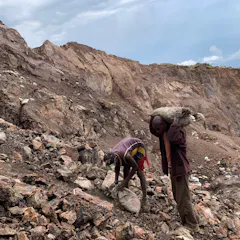
The amount of undeclared uranium from the DRC’s cobalt mines could – if processed – produce enough material for 600-1,500 nuclear weapons.
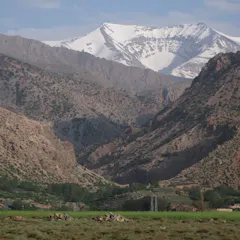
Africa has some of the world’s most important geological landscapes, yet they remain under-represented in digital geoheritage research.
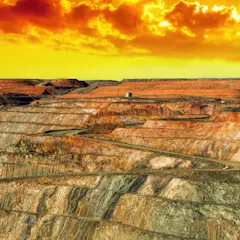
New research argues no other concept reflects our planet-wide transformation in its proper context of deep time.
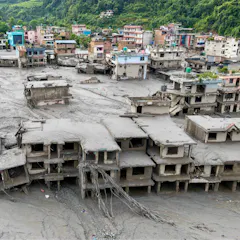
A geologist explains how thawing permafrost and melting ice are increasing the risk of destructive floods in the Himalayas and other high mountain regions around the world.

The tracks are the first to be found in Canada from this time period.
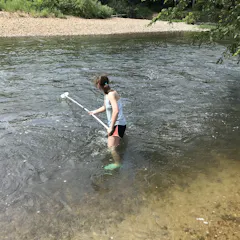
A fish-finding expedition not only detects unexpected species but also uncovers a living link to Missouri’s geological past.
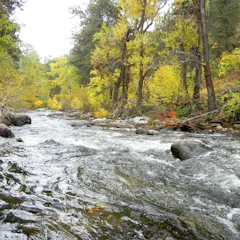
Understanding what happened in these forests 56 million years ago may help humanity recognize similar thresholds before we cross them again, the lead author of a new study writes.
Top contributors
-

Professor of Geochronology, Curtin University
-
Professor of Geology, Adelaide University
-
Professor of Palaeobiology, University of Leicester
-
ARC Future Fellow and Associate Professor in Igneous Petrology/Volcanology, The University of Queensland
-
Professor in Earth Sciences, Nanyang Technological University, Singapore, and Emeritus Professor of Mineral Physics, University of Cambridge
-
Professor of Earthquake Science, The University of Melbourne
-
Professor of Geophysics, University of Sydney
-
Associate Professor, Earth and Planetary Sciences, Curtin University
-
Professor of Planetary Geosciences, The Open University
-
Senior Curator of Geosciences, Museums Victoria Research Institute; Monash University
-
Professor in Earth & Climate Science, University of Southampton
-
Harold T. Stearns Professor of Earth Science, Wesleyan University
-
Adjunct professor, UNSW
-
Redmond Barry Distinguished Professor Emeritus, The University of Melbourne
-
Professor of Earth and Space Sciences, University of Washington