
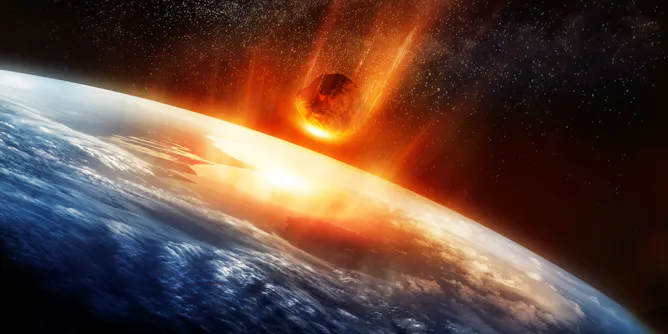
Research suggests a new threat to life on Earth from the meteorite’s crash: Via seismic waves, the impact triggered massive undersea eruptions, as big as any ever seen in our planet’s history.
Articles on Geology
Displaying 321 - 340 of 461 articles
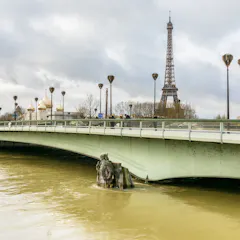
It was the Seine’s rise and fall, in response to heavy rain, that inspired our current understanding of river systems.
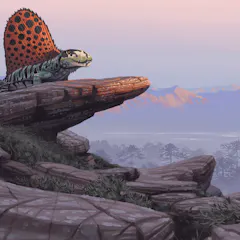
A drying climate caused a mass extinction among plants, but paved the way for the ancestors of modern reptiles, mammals, and birds.
Scientists believe since 2010 we have entered the sixth period of mass extinction. CO2 emissions will change the lives of plants and animals in the next three to four decades.
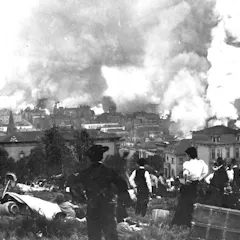
According to current forecasts, California has a 93 percent chance of an earthquake with magnitude 7 or greater occurring by 2045. Early warning systems, now in development, could limit casualties and damage.
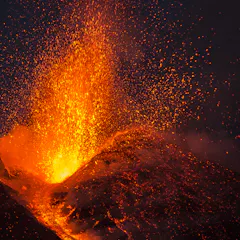
A new study has found a way to predict eruptions at Mount Etna within two weeks.
The world is made of tiny building blocks called ‘elements’. Scientists have worked out how fast some elements change into other elements. That gives us a very big clue about how old the Earth is.

A watershed scientist explains why post-wildfire landscapes are so susceptible to landslides – and why those risks are poised to rise.

In response to mudslides that have killed at least 20 people in Southern California, a geologist calls for more resources to study and map landslide hazards so residents can understand the risks.
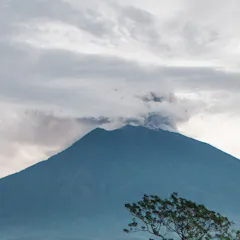
‘Volcano forensics’ involves a mixture of modern day monitoring and analysis of past eruptions. Geologists use volcanic rocks as a kind of time capsule to assess what happened previously.
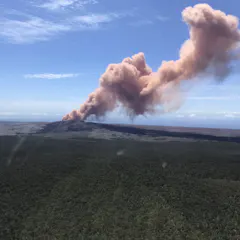
How do scientists predict volcanic eruptions? To do so with accuracy, they need to know the individual volcano and its history very well.
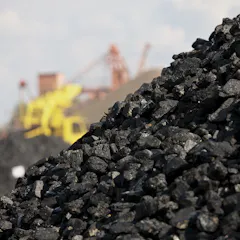
The legacy of the dirtiest of fuels – coal – has the potential to deliver a low carbon energy future.
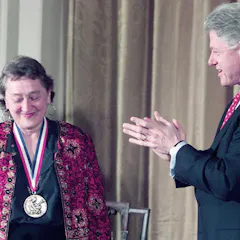
Lynn Margulis (1938-2011) was a courageous scholar whose remarkable work on the role of symbiosis in evolution stands as a magisterial contribution of science.
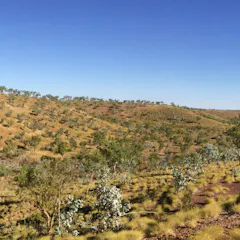
The world’s oldest known material is from Western Australia. But for much of Australia’s geological past, the eastern states simply didn’t exist. They’re relative newcomers to our ancient continent.
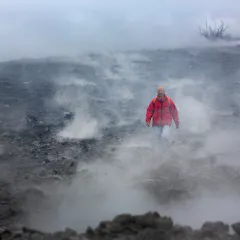
Volcanologists study the formation and eruptions of volcanoes - surely one of the most interesting jobs around. However, it can also be very dangerous.
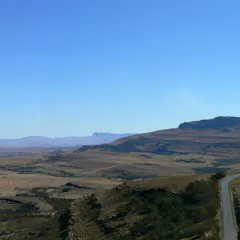
The earth’s own magnetic field offers a useful way to measure the age of rocks - information that can help unpack ancient events and aid our understanding of the present.

Latest development in ‘Crete feet’ find serves as a reminder of the challenges facing dig sites.
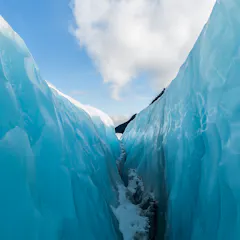
Earth’s thermostat can fail spectacularly at times. Around 700 million years ago, huge volcanic eruptions triggered “Snowball Earth”.
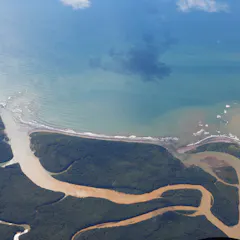
A special combination of rain, rocks and subsea volcanoes makes the sea salty.
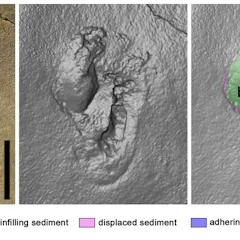
A new study can’t rule out the possibility that human ancestors lived on Crete at the same time as they evolved in Africa.
Top contributors
-

Professor of Geochronology, Curtin University
-
Professor of Geology, Adelaide University
-
Professor of Palaeobiology, University of Leicester
-
ARC Future Fellow and Associate Professor in Igneous Petrology/Volcanology, The University of Queensland
-
Professor in Earth Sciences, Nanyang Technological University, Singapore, and Emeritus Professor of Mineral Physics, University of Cambridge
-
Professor of Earthquake Science, The University of Melbourne
-
Professor of Geophysics, University of Sydney
-
Associate Professor, Earth and Planetary Sciences, Curtin University
-
Professor of Planetary Geosciences, The Open University
-
Senior Curator of Geosciences, Museums Victoria Research Institute; Monash University
-
Professor in Earth & Climate Science, University of Southampton
-
Harold T. Stearns Professor of Earth Science, Wesleyan University
-
Adjunct professor, UNSW
-
Redmond Barry Distinguished Professor Emeritus, The University of Melbourne
-
Professor of Earth and Space Sciences, University of Washington