
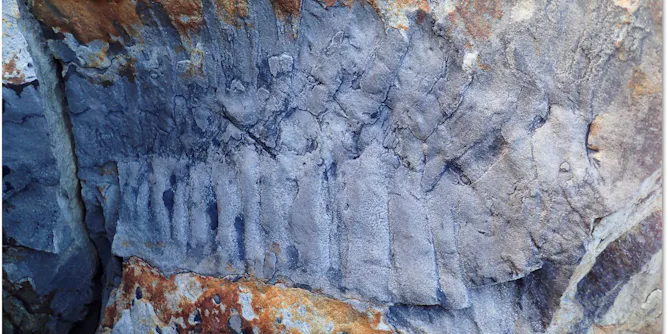
Why our chance discovery of an Arthropleura as long as an alligator, while on holiday on a beach in northern England, was such a landmark moment.
Articles on Geology
Displaying 201 - 220 of 461 articles
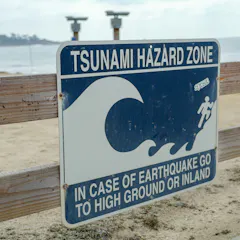
Tsunamis aren’t just bigger-than-average waves. Triggered by undersea earthquakes or volcanic eruptions like the one in Tonga, they are fast, massive and potentially destructive. Here’s why.
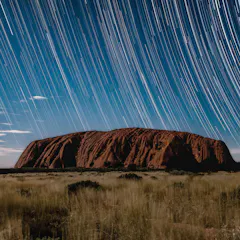
Continents colliding, mountains rising and falling, and remarkable strength. The story of Australia’s most iconic mountain is truly magical.
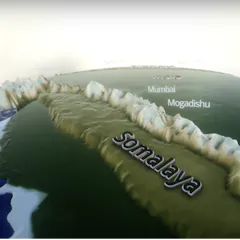
Why we are predicting the mountains of the far future, and what it can tell us about the world today.
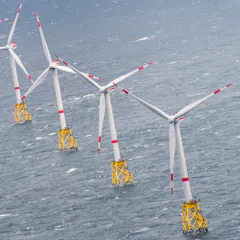
Millions of years of on-off ice ages have left behind a mix of different sediments.
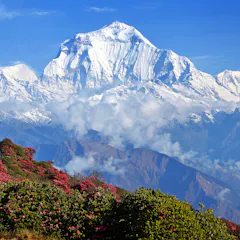
Mountains can’t be created without lubricant, and 2 billion years ago that lubricant was graphite produced by the carbon broken down from layers of dead plankton on the ocean floor.

What climate changes in the distant past can tell us about the near future.
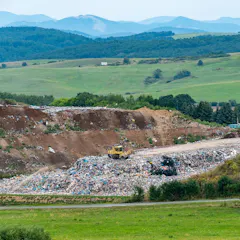
Although alternative terms have been suggested, the Anthropocene captures the magnitude of the crisis we face.
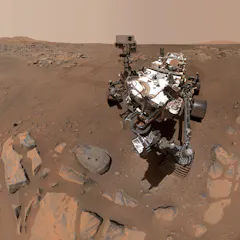
Perseverance and its helicopter sidekick, Ingenuity, have been on Mars for nearly nine months. The duo have taken rock samples, performed first flights and taken images of the delta in Jezero Crater.

This article was based on research that has been retracted. See editor’s note.

A previously unknown filtering process inside some volcanoes can cause magma to shoot out like champagne from a bottle - and perhaps even make it easier to forecast when a volcano is about to erupt.

Prehistoric hand and footprints analysed by a team of researchers are an early example of art.

From the tallest cliff in the solar system to its largest impact basin, geological processes on other worlds are very similar to those on our own planet.

Greenland’s conditions were once similar to those of a greenhouse. Volcanoes swelled the land, constricted seaways and gigatonnes of greenhouse gases were released into the atmosphere.

Indigenous artists have been engraving rock shelters for millennia - long before the Kimberley’s celebrated rock art paintings. Now the rocks’ natural coatings are yielding clues to the engravings’ creation.
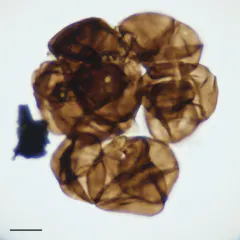
When plants started growing on land, they changed the world. Ancient fossil spores hint at how and when they did it.
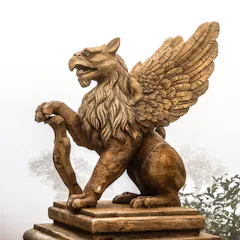
People tell tales to explain what they see – centuries later, scientists try to map handed-down myths onto real geological events.
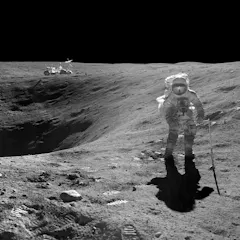
Without a magnetic field, the Moon’s surface is exposed to solar wind. These could have been depositing resources like water and potential rocket fuel on the Moon’s surface for billions of years.
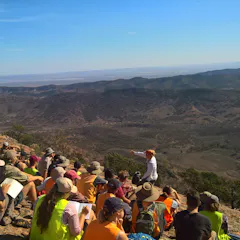
Earth scientists are on the skilled occupation list for immigration even as universities cut back in this area. The problem lies with a funding model that offers no incentive to lift graduate numbers.
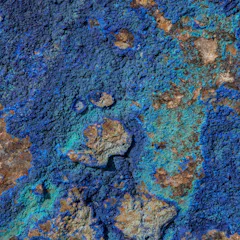
Using geology and AI, a virtual model of how the Earth’s tectonic plates have evolved can help reveal deposits of copper.
Top contributors
-

Professor of Geochronology, Curtin University
-
Professor of Geology, Adelaide University
-
Professor of Palaeobiology, University of Leicester
-
ARC Future Fellow and Associate Professor in Igneous Petrology/Volcanology, The University of Queensland
-
Professor in Earth Sciences, Nanyang Technological University, Singapore, and Emeritus Professor of Mineral Physics, University of Cambridge
-
Professor of Earthquake Science, The University of Melbourne
-
Professor of Geophysics, University of Sydney
-
Associate Professor, Earth and Planetary Sciences, Curtin University
-
Professor of Planetary Geosciences, The Open University
-
Senior Curator of Geosciences, Museums Victoria Research Institute; Monash University
-
Professor in Earth & Climate Science, University of Southampton
-
Harold T. Stearns Professor of Earth Science, Wesleyan University
-
Adjunct professor, UNSW
-
Redmond Barry Distinguished Professor Emeritus, The University of Melbourne
-
Professor of Earth and Space Sciences, University of Washington