
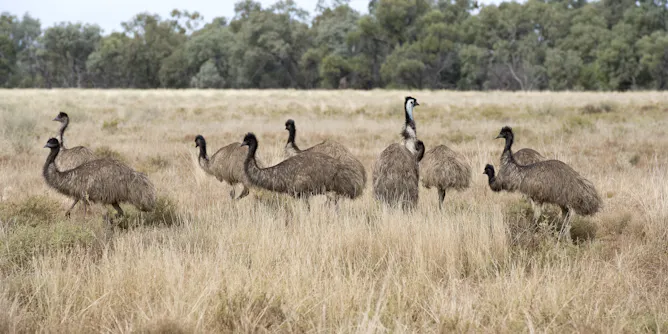
Tasmania’s emus were hunted to extinction in the mid-1800s but we could have them back – and their return could help other species survive climate change.
Articles on Extinction
Displaying 141 - 160 of 426 articles
Rodents are the most numerous – and least studied – of all Earth’s mammals.
The planet is entering its sixth mass extinction event. This global nature summit is our best change to stop this tide of destruction.
New research finds nearly 30% of land animals could disappear form their local area by 2100 due to climate change and habitat destruction. This is more than double previous predictions.
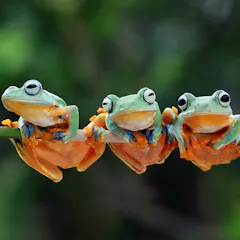
Negotiators hope to put humanity on a path to harmonious coexistence with nature by 2050.
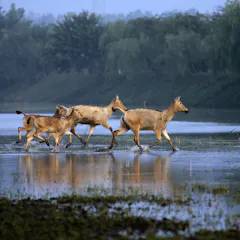
China has rich natural resources and is seeking to play a leadership role in global conservation, but its economic goals often take priority over protecting lands and wildlife.
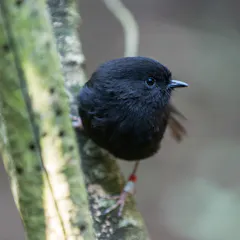
Inbreeding usually leads to an accumulation of genetic defects, but evolution on a small archipelago may have helped the severely inbred Chatham Island black robin to avoid this fate.
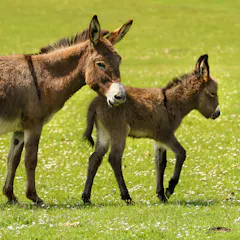
The embryo is frozen in liquid nitrogen until a suitable female donkey is found to grow it into a baby.

Only insects populations can compare to rising human numbers.
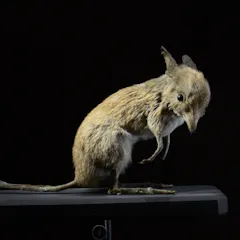
38 mammals have been driven to extinction since colonisation, and many more are close to joining them. We have the solutions at hand, but warnings continue to be met with mediocre responses.
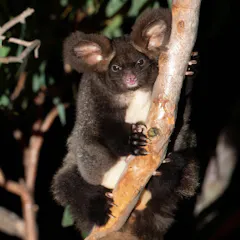
Yes, the new threatened species plan is better. But it’s nowhere near enough to actually prevent Australian species from dying out
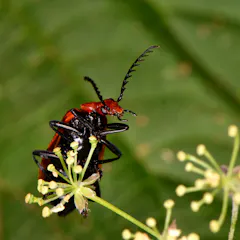
Climate change is exposing animals to temperatures outside of their normal limits – a new study has found that insects have a particularly weak ability to adjust.
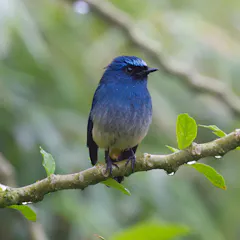
The pet trade threatens to decimate some species – and dull nature’s colour palette.

Millions of years on. modern frogs and toads still haven’t learnt you can have too much of a good thing.
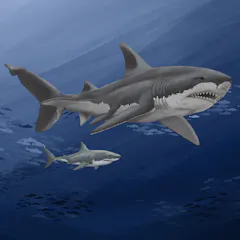
Megalodon, the world’s largest known shark species, swam the oceans long before humans existed. Its teeth are all that’s left, and they tell a story of an apex predator that vanished.
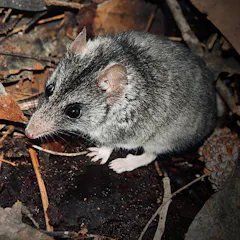
The findings underscore the importance of acting immediately to protect threatened species from predators in the wake of catastrophic natural events.
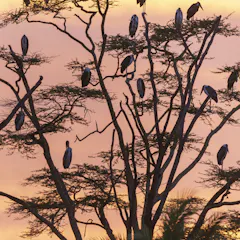
As a major conference on the global biodiversity crisis opens in Montreal, a conservation biologist explains how ideas about protecting nature have evolved over the past 40 years.
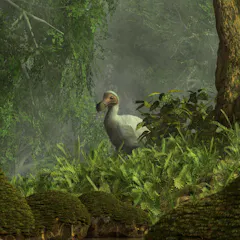
Species are declared extinct when there have been no verifiable sightings for 50 years. Declaring a species extinct has implications for conservation efforts and policies.
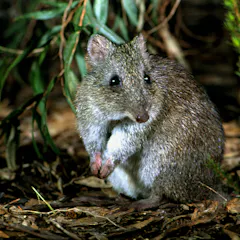
The hardest to save will be five reptiles, four birds, four frogs, two mammals and one fish, for which there are no recent confirmed records of their continued existence.
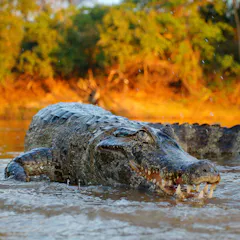
More than half of all crocodile species are a high priority for conservation according to the assessment.
Top contributors
-

Professor of Conservation Biology, Charles Darwin University
-
Professor in Wildlife Ecology and Conservation, School of Life & Environmental Sciences, Deakin University
-
Professor of Conservation and Sustainable Livelihoods, Charles Darwin University
-
Matthew Flinders Professor of Global Ecology and Node Leader in the ARC Centre of Excellence for Indigenous and Environmental Histories and Futures, Flinders University
-
Professor in Conservation Science, School of the Environment, The University of Queensland
-
Professor of Wildlife Conservation, Australian National University
-
Distinguished Professor of Ecology, Fenner School of Environment and Society, Australian National University
-
Associate Professor in Vertebrate Palaeontology, Flinders University
-
Professor, Urban Ecology and Biodiversity, The University of Melbourne; RMIT University
-
Professor in Conservation Science, School of Ecosystem and Forest Science, The University of Melbourne
-
University Fellow in Biodiversity, Charles Darwin University
-
Professor of Environmental Management, The University of Queensland
-
Lecturer in the School of Applied Sciences, Edinburgh Napier University
-
Honorary Research Fellow, University of Sydney
-
Senior Lecturer, Public Sector Management, School of Business, UNSW