
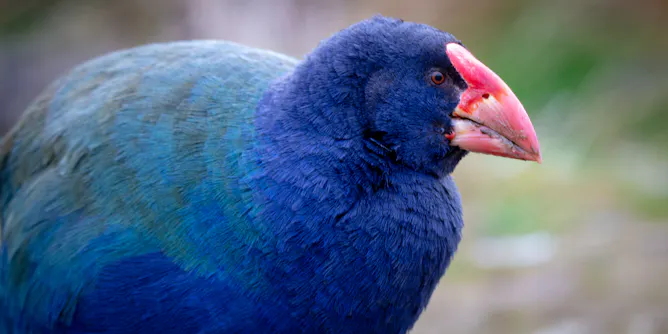
Evolution towards flightlessness has been much more common through history than scientists once thought.
Articles on Extinction
Displaying 201 - 220 of 426 articles

Driven by a desire to eliminate pain, some people have shockingly advocated taking the rest of nature with us.
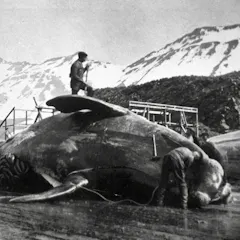
For 200 years, a small number of countries have exploited the marine wildlife of Antarctica, often with devastating impact on their populations.
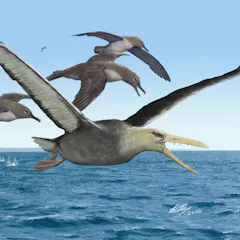
Paleontologists have discovered fossil remains belonging to an enormous ‘toothed’ bird that lived for a period of about 60 million years after dinosaurs.
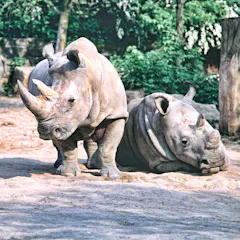
By unlocking the full potential of rhino ovaries, we hope to produce enough eggs to revive the northern white rhino in the wild.
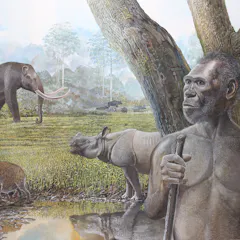
Several theories have suggested either humans, climate change or both drove megafauna extinctions in Southeast Asia. Our newest work suggests otherwise.

The world missed all 20 targets for stemming the tide of biodiversity loss. But there has been some progress over the last decade.

Microfossils offer up an array of information to scientists, like the time periods in which they lived and how environments have changed.
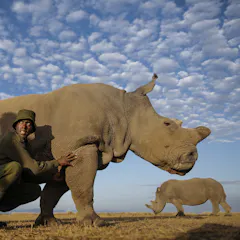
A conservation scientist interviewed on the programme says Sir David tells it like it is.
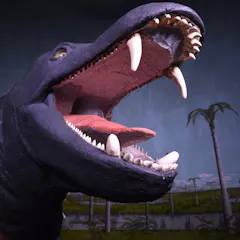
Museums around the world have been grappling with the issue of diorama removal.
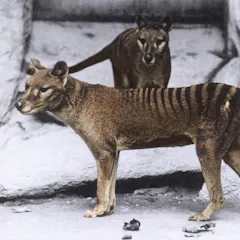
The “Tasmanian tiger” was hunted to extinction based on its perceived size as a predator big enough to take sheep. But it seems this was just a tall tale, and the thylacine weighed just 16.7kg.

Twenty of these freshwater fish species have a 50% or greater probability of extinction within the next 20 years.

Recent reports of dramatic declines in insect populations have sparked concern about an ‘insect apocalypse.’ But a new analysis of data from sites across North America suggests the case isn’t proven.

When the dinosaurs went extinct, some species took over the world. Adaptability, not survivability, explains why.
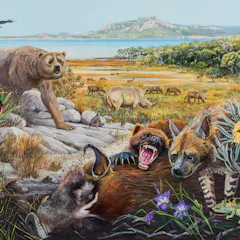
The teeth and limb bones we studied help to understand the role and lifestyle of these species in extinct ecosystems.

Frogs are harvested as food by the millions every year. A new study shows that uncontrolled frog hunting could drive some populations to extinction by midcentury.
Large numbers, huge ranges, and adaptibility make the human species very difficult to eradicate

What drives people to garden isn’t the fear of hunger so much as hunger for physical contact – and a longing to engage in work that is real.
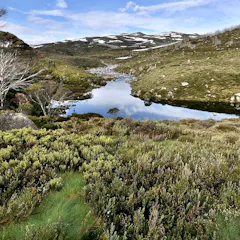
The NSW government is soon expected to grant environmental approval to Snowy 2.0. But that process should be halted.
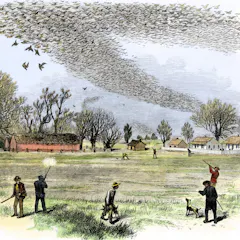
For decades, the extinction of passenger pigeons has been explained by two theories of human impact. New research shows one of these theories is now more compelling than the other.
Top contributors
-

Professor of Conservation Biology, Charles Darwin University
-
Professor in Wildlife Ecology and Conservation, School of Life & Environmental Sciences, Deakin University
-
Professor of Conservation and Sustainable Livelihoods, Charles Darwin University
-
Matthew Flinders Professor of Global Ecology and Node Leader in the ARC Centre of Excellence for Indigenous and Environmental Histories and Futures, Flinders University
-
Professor in Conservation Science, School of the Environment, The University of Queensland
-
Professor of Wildlife Conservation, Australian National University
-
Distinguished Professor of Ecology, Fenner School of Environment and Society, Australian National University
-
Associate Professor in Vertebrate Palaeontology, Flinders University
-
Professor, Urban Ecology and Biodiversity, The University of Melbourne; RMIT University
-
Professor in Conservation Science, School of Ecosystem and Forest Science, The University of Melbourne
-
University Fellow in Biodiversity, Charles Darwin University
-
Professor of Environmental Management, The University of Queensland
-
Lecturer in the School of Applied Sciences, Edinburgh Napier University
-
Honorary Research Fellow, University of Sydney
-
Senior Lecturer, Public Sector Management, School of Business, UNSW