
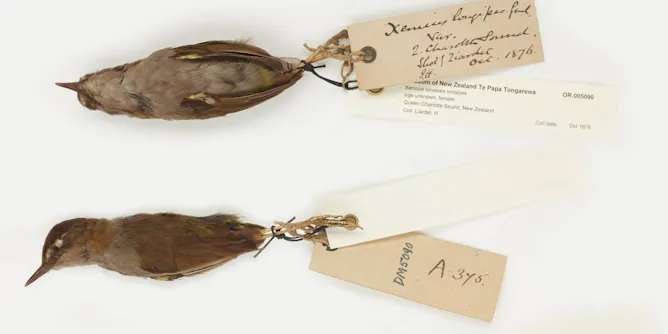
Using ancient DNA from museum specimens, we’ve tracked the evolutionary history of NZ’s bush wrens – and found a new family member.
Articles on Extinction
Displaying 1 - 20 of 426 articles

When rats and mice are introduced to islands, they can eat native invertebrates to extinction. When rodents are eradicated, recovery begins.
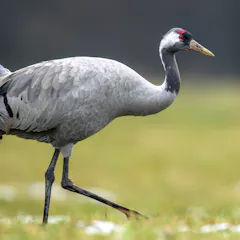
The research shows that two crane species were actually the same one.

Isolation has been both blessing and curse for the wildlife of both countries.
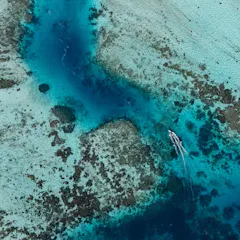
A new study examines ecosystems and species that are thriving against the odds.
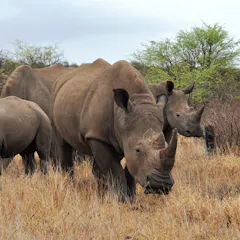
Large animals such as rhino and elephant need to be moved carefully, if they are relocated to a new reserve.

Native bees pollinate many of Australia’s unique plants and help entire ecosystems thrive.

The stories of a whale, a panther and a butterfly help explain why new interpretations of the Endangered Species Act could be catastrophic for species’ survival.

The catastrophic story is familiar, but the insight, and the ending, offer an opportunity, and perhaps motivation, for modern readers.
Insects are under threat partly because of man-made climate change, heatwaves and intensive farming.
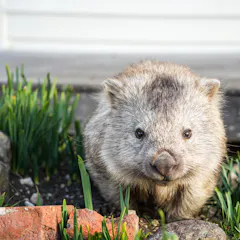
A new study reveals thousands of native animals are taking up residence in Australian homes.
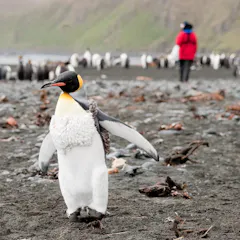
The federal government’s actions could leave the island’s wildlife more vulnerable to H5N1.

A new study has found that Tasmanian tigers had an adaptation found in no living carnivorous mammal.
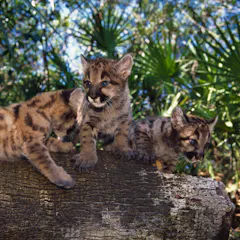
Four experts explain what genetic health is and why it matters for our most vulnerable wildlife.
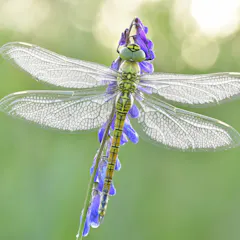
When we lose insect species without even knowing they existed, we will never know where they lived, what they looked like, how they interacted with other species or the impact they had on ecosystems.
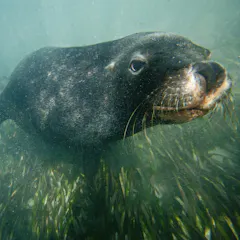
We should not wait for perfect certainty. It’s time to act before catastrophe.

The pint-sized pookila faces uncertainty in Queensland, as two experts explain.

Four experts explain how we can protect the rare – and increasingly at risk – spidery wattle.

A new study challenges conventional thinking about what drove the extinction of megafauna.

New Zealand’s well-documented fossil and living marine fauna allows scientists to explore drivers of extinction risk that are relevant globally.
Top contributors
-

Professor of Conservation Biology, Charles Darwin University
-
Professor in Wildlife Ecology and Conservation, School of Life & Environmental Sciences, Deakin University
-
Professor of Conservation and Sustainable Livelihoods, Charles Darwin University
-
Matthew Flinders Professor of Global Ecology and Node Leader in the ARC Centre of Excellence for Indigenous and Environmental Histories and Futures, Flinders University
-
Professor in Conservation Science, School of the Environment, The University of Queensland
-
Professor of Wildlife Conservation, Australian National University
-
Distinguished Professor of Ecology, Fenner School of Environment and Society, Australian National University
-
Associate Professor in Vertebrate Palaeontology, Flinders University
-
Professor, Urban Ecology and Biodiversity, The University of Melbourne; RMIT University
-
Professor in Conservation Science, School of Ecosystem and Forest Science, The University of Melbourne
-
University Fellow in Biodiversity, Charles Darwin University
-
Professor of Environmental Management, The University of Queensland
-
Lecturer in the School of Applied Sciences, Edinburgh Napier University
-
Honorary Research Fellow, University of Sydney
-
Senior Lecturer, Public Sector Management, School of Business, UNSW