

2016 was the world’s warmest year on record, due in part to a very strong El Niño event. But 2023 (and 2024) could beat that record – what should we expect?
Articles on Wildfires
Displaying 301 - 320 of 587 articles

Creating a federal agency — let’s call it the Emergency Management Agency of Canada or EMAC — would support comprehensive emergency management as Canada faces more and more natural disasters.

Predicting how wildfires will behave is a complex endeavour, and requires sophisticated simulation models.

Answers to some of the most common questions about wildfire smoke, health risks and the air quality situation affecting most of North America.

Building a culture where fire is respected rather than feared is essential to maintain resilient landscapes.

A ‘greenhushing’ campaign is targeting insurers, who have the power to accelerate the transition to cleaner energy in how they write policies and invest.

There is an alarming lack of disaster preparedness plans in Canada that consider the unique risks and needs of unhoused people during wildfires.

Fireworks can frighten wild and domestic animals, start wildfires and affect some people’s mental health.

School systems need to wake up from ‘business as usual’ learning. Teachers can draw on terror management theory in their work on the front lines with students navigating the climate crisis.

Fires in Canada have sent smoke across several US states, leaving cities including New York, Chicago and Denver with some of the worst air quality in the world – even far from the flames.

High-risk, high-uncertainty events like earthquakes tend to fall out of view when we are occupied with more predictable seasonal events like wildfires, which have very visible effects on our lives.
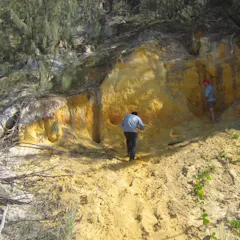
Until now, a limitation of records of past fires is that these have come from sediments laid down in lakes and bogs. Records for dryland regions have been lacking, but dune deposits can fill the gap.
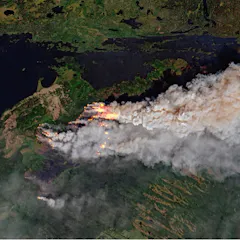
North America’s boreal forests have been burning a lot, probably more and more over the past 60 years. Yet the long-term trend indicates that they are burning less than they were 150 years ago.
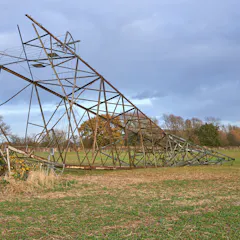
Extreme weather is a threat to the UK’s electricity system – and climate change is likely to make it even worse.

New research shows that northern peatlands may not help regulate our climate by the end of the century.
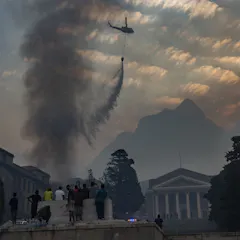
Autumn extreme fire weather around Cape Town in South Africa has become 90% more likely in a warmer world.
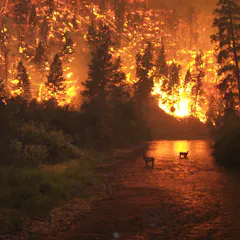
Fires here can affect meltwater timing and water quality, worsen erosion that triggers mudslides, and much more, as two scientists explain.
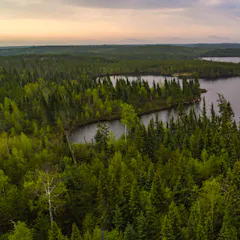
Canada’s boreal forest is affected by global warming, climate change and the frequency of forest fires.
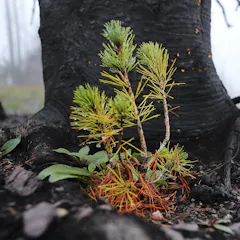
Over 50 fire ecologists across the Western U.S. took an unprecedented look at how forests in thousands of locations are recovering from fire in a changing climate. The results were alarming.
New research shows boreal forests comprised 23% of global wildfire emissions in 2021, up from 10% in a typical year.
Top contributors
-

Professor of Pyrogeography and Fire Science, University of Tasmania
-
Associate Professor of Civil Engineering, Boise State University; United Nations University
-
Professor of Civil, Environmental and Ecological Engineering, Purdue University
-
Professor of Geography and Director of the Centre for Wildfire Research, Swansea University
-
Professor of Engineering, University of California, Merced
-
Assistant Professor of Environmental and Radiological Health Sciences, Colorado State University
-
Fellow, Queen's Institute for Energy and Environmental Policy, School of Policy Studies, Queen's University, Ontario
-
Tenured Scientist (IMB-CSIC, Spain) & Honorary Associate Prof. (SU, UK), Swansea University
-
Wildfire Specialist, University of California Cooperative Extension; Adjunct Professor at the Bren School, University of California at Santa Barbara, University of California, Santa Barbara
-
Emeritus Professor of Life Sciences, Arizona State University
-
Professor of Geology and Environmental Geosciences, University of Dayton
-
Professor, Disaster & Emergency Management, Faculty of Liberal Arts & Professional Studies & Director, CIFAL York, York University, Canada
-
Professor of Fire Ecology, University of Montana
-
Research Fellow in Environmental Science, University of Tasmania
-
Reader in Cultural Geography and Communication, University of Westminster