
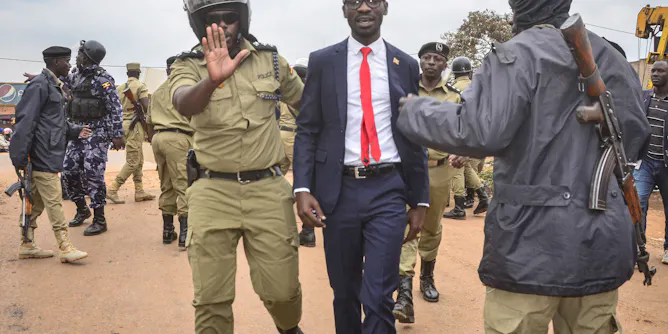
In surpassing opposition stalwart Kizza Besigye, Robert Kyagulanyi has done what many Ugandans thought impossible. But can he topple Museveni?
Articles on Uganda
Displaying 241 - 260 of 476 articles

In some countries there appear to be mismatches between lists of essential medicines and lists of registered medicines.

Research on the genetic basis of mental illness has so far largely excluded anyone who is not of European heritage.
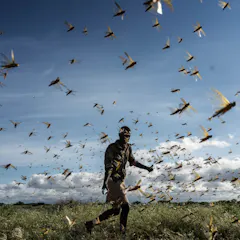
The best option to manage desert locusts is to manage them at their breeding sites with sustainable options, such as biopesticides.
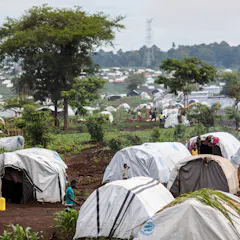
The country has been praised for the humane treatment of its vast refugee population. Now questions arise about how it can continue to do so without without assistance from aid workers.
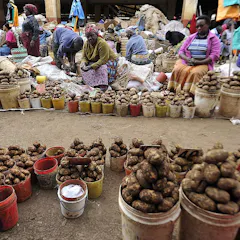
Potato cyst nematodes suppress crop growth and can cause huge yield losses of up to 80%, and even total crop failure.
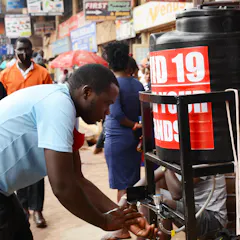
Debate is raging as to whether Uganda can hold a scientific election, preceded by mass media and digital campaigns.
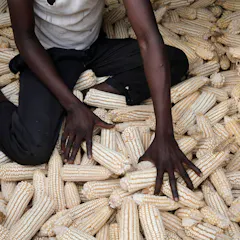
Low productivity is one of the biggest challenges facing Uganda’s maize industry. But smallholder farmers still won’t adopt improved seed.
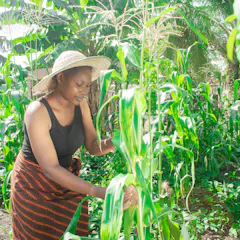
Africa is far from having an ageing farming population. What is missing is a critical mass of skilled, young farmers with access to finance who could drive productivity in farming.

Kampala, like many other cities in sub-Saharan Africa, has a critical data gap on the scale and magnitude of air pollution.
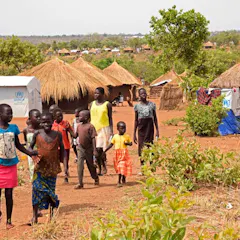
Refugees invest a great amount of effort in solving disputes among themselves, and with surrounding host community members.
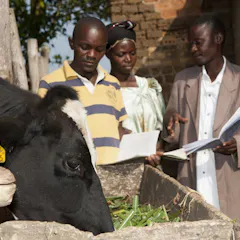
Many of the tools needed to tap into the potential of Africa’s livestock sector exist already.
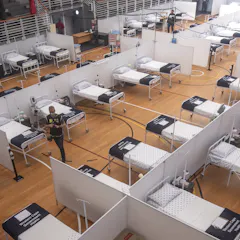
Involving senior health science students in the everyday practice helped address the workload in facilities, improved quality of patient care, and increased patient and staff satisfaction.
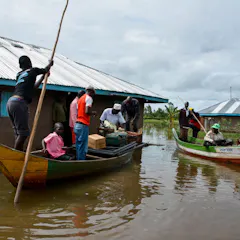
The flooding has affected water resources, agriculture and food security, health and sanitation, fisheries, and energy and infrastructure.
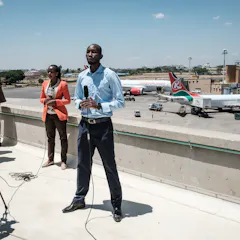
Peace journalism is more than mediating or preventing conflict. It’s also about the dignity and agency of the affected populations.
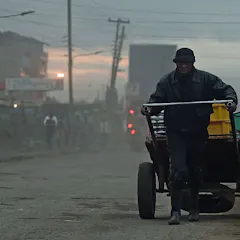
We found that air pollution levels in Nairobi increased by 182% over the study period, Kampala by 162% and Addis Ababa by 62%.

The fact that teachers in Uganda’s rural schools weren’t trained in the local language means they can’t teach children in their mother tongue and this leads to poor literacy acquisition.
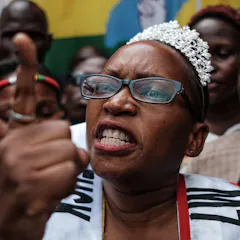
When protesters strip naked to amplify their political voice, it is often a last resort within very restrictive regimes.

The relationship between the country’s security forces and the civilian population has always been uneasy.

Africa is facing a profound crisis that could set its development back a generation. It needs a solution to its debt problems that doesn’t cripple countries.
Top contributors
-

Professor in International Development, University of Antwerp
-
Research associate at African Centre for Cities, University of Cape Town
-
Lecturer in Law, University of East London
-
Research Fellow at the Centre for Planetary Health and Resilient Conservation Group, Griffith University
-
Professor and Chair, Southwestern Environmental Science and Policy, Northern Arizona University
-
Health Systems Researcher, Makerere University
-
Professor/Senior Research Fellow, Centre for Advancement and Senior Non-Resident Fellow, Global Development Policy Center, Boston University of Scholarship, University of Pretoria
-
Lecturer, Department of African Languages, Makerere University
-
Professor of International Relations, Norwegian University of Life Sciences
-
Professor of Anthropology and International Development, The University of Western Australia
-
Senior Researcher at the Feinstein International Center, Tufts University, and Research Associate at the Refugee Studies Centre, University of Oxford
-
Professor of World Politics, SOAS, University of London
-
Postdoctoral Research Associate, King's College London
-
Lecturer and Senior Research Fellow at the South African Research Chair in International Law (SARCIL), University of Johannesburg
-
Professor of Democracy, University of Birmingham